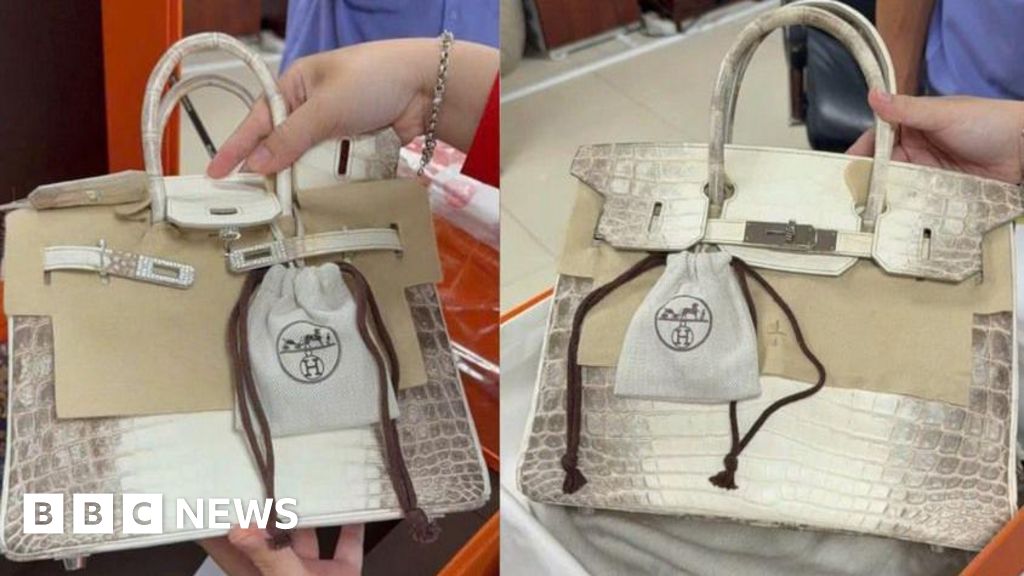
Two confiscated Hermès Birkin bags linked to jailed Vietnamese businesswoman Truong My Lan sold for more than $535,000 at government auction, with the top bag fetching $440,144 and the other $94,858. The sale highlights the strong secondary-market demand for ultra-luxury handbags, but the broader article centers on Lan’s fraud conviction, life sentence, and $27 billion reparations order. Market impact is limited and mostly relevant as color on luxury resale pricing.
This auction is less about handbags than about the monetization quality of confiscated assets in weak-rule-of-law jurisdictions. The fact that trophy luxury goods clear instantly at multiples of guide price tells you there is still a deep global bid for portable, recognized stores of value, even when provenance is politically toxic. That matters because it creates a liquidation playbook for governments: high-status consumer assets can be converted to cash quickly, but only when brand equity and scarcity are intact.
The second-order effect is on luxury pricing discipline, not demand destruction. Scarcity is being reinforced at the top end because restricted distribution plus publicized resale outcomes strengthen the “investment” narrative for ultra-high-net-worth buyers, while counterfeiters and gray-market resellers are pressured by the visibility of record auction clears. Over time, that supports secondary-market confidence for the broader handbag ecosystem and favors platforms and auction intermediaries with authentication credibility over mainstream retail.
The governance angle is more important for EM financials than for luxury itself. Large asset seizures and forced sales are a reminder that accounting opacity and politically connected credit allocation can unwind abruptly; in markets with state-directed banks, the stock of hidden leverage can surface as delayed liquidation value, not just loan losses. If anything, this is a mild negative for domestic confidence in Vietnam’s banking system and a reminder that headline asset recoveries can lag the true hole in the balance sheet by years.
Contrarian takeaway: the market may underappreciate how durable the ultra-luxury resale floor is, even in stressed or stigma-laden sales. The relevant catalyst is not macro income growth but continued validation of secondary-market pricing through marquee auctions; if more seized trophy goods are sold, it can tighten the bid for rare Hermès references and keep annual appreciation elevated. The risk is policy-driven supply growth from additional confiscations, which would pressure only the more common reference pieces, not the truly scarce limited editions.
AI-powered research, real-time alerts, and portfolio analytics for institutional investors.
Request DemoOverall Sentiment
neutral
Sentiment Score
-0.10
