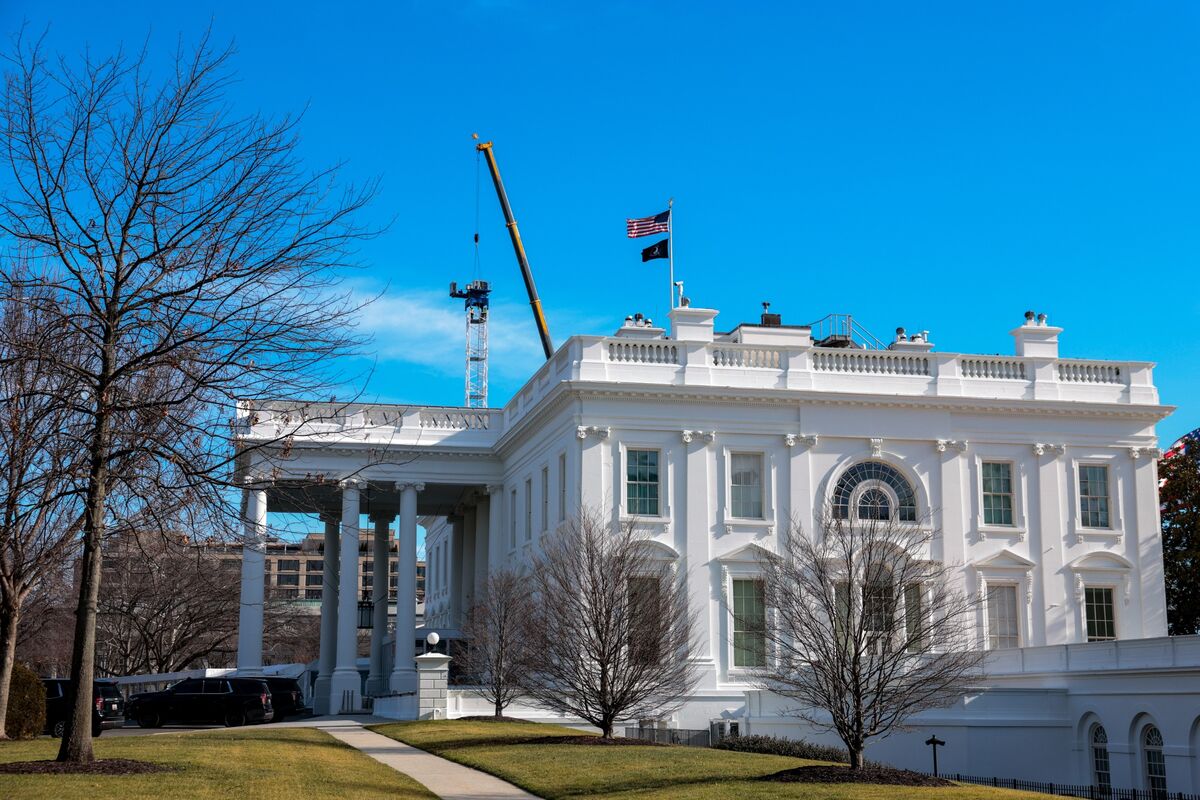
A Republican plan to earmark federal funding for President Donald Trump’s planned ballroom hit a temporary procedural roadblock in the US Senate after the parliamentarian said it did not comply with Senate budget rules. Republicans may rewrite the bill to address the issue, so the funding effort is not dead, but it is delayed. The article is primarily procedural and political, with limited immediate market implications.
This is less a market-moving fiscal event than a reminder that the next phase of Trump-era domestic spending fights will be filtered through procedural choke points, not just partisan control. The immediate beneficiary is the Senate institution itself: if the parliamentarian’s ruling stands, it raises the cost of using budget vehicles for symbolically loaded projects and increases the odds that Republicans either dilute the funding, repackage it, or delay it until a more permissive legislative window. That makes the relevant market signal one of timing slippage, not outright cancellation.
The second-order effect is on contractors and adjacent suppliers with exposure to federal discretionary and capital spending. Even a small headline project can become a template fight, which matters because agencies and contractors prefer predictable appropriations over bespoke political earmarks; the uncertainty premium could show up first in procurement timelines, not earnings. If this morphs into a broader rules dispute, it modestly improves the negotiating position of firms tied to standard authorization channels and hurts names that rely on politically contingent project awards.
The key catalyst is whether Republicans rewrite the bill cleanly within days or let it stall into a longer procedural battle. A fast rewrite would make this a noise event; a prolonged fight would reinforce the view that fiscal policy under this Congress will be highly erratic, which can lift volatility in rate-sensitive infrastructure and defense-adjacent exposures. The contrarian view is that the market is likely underpricing how quickly bipartisan appetite for procedural normalcy can reassert itself once symbolism is stripped away.
On balance, this is a low-direct-impact but useful read-through for legislative process risk: the bigger trade is not the ballroom itself, but the signal that politically motivated spending proposals now face higher procedural drag and more headline risk before becoming actual appropriations.
AI-powered research, real-time alerts, and portfolio analytics for institutional investors.
Request DemoOverall Sentiment
neutral
Sentiment Score
-0.10
