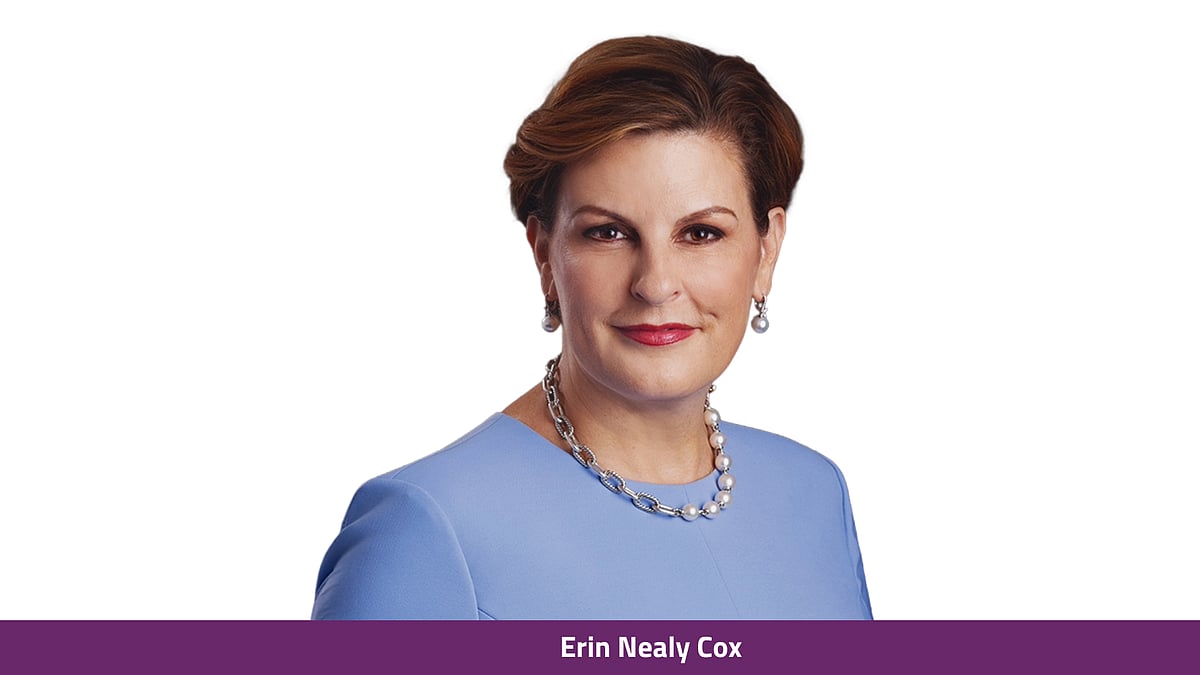
Walmart has appointed Erin Nealy Cox as Executive Vice President of Global Governance, Chief Legal Officer, and Corporate Secretary. Cox brings experience as a former U.S. Attorney (Northern District of Texas), senior cybersecurity and risk advisory roles at McKinsey and Stroz Friedberg, and current board service at Sally Beauty, signaling a strengthening of Walmart's legal, compliance and cybersecurity leadership. The hire is strategically positive for governance and risk management but is a routine corporate appointment unlikely to materially move Walmart's financials.
The appointment of a heavyweight legal/cyber governance leader materially shifts Walmart’s optionality around higher-risk, higher-return initiatives. Practically, stronger in-house regulatory and incident-response capability should compress expected legal reserve volatility and cut tail exposure to multi-quarter fines or protracted investigations; conservatively, this can translate into a 50-150 bps reduction in earnings volatility over 12–36 months, allowing management to push more revenue-accretive projects without pricing in an enforcement tax.
On cybersecurity and data-privacy, improved governance shortens mean-time-to-contain for incidents and strengthens negotiating position with carriers; that can lower cyber-insurance premiums and indemnity costs by a meaningful margin (we estimate 10–30% on policy renewals within 12–24 months) and reduce probability-weighted loss severity for consumer data incidents. That lower expected loss enables faster rollouts of payments, loyalty, and healthcare services — initiatives that add small but sticky revenue per customer (we model +20–50 bps revenue/customer over 2 years if execution accelerates).
Second-order winners include large, compliant suppliers and third-party logistics partners who pass compliance audits; smaller vendors face higher friction and will either consolidate or price for compliance, tightening supplier margins upstream. Competitors that historically leaned on legal risk as a deterrent to Walmart initiatives may need to recalibrate — expect a window where Walmart can act offensively on partnerships and rollups before peers upgrade legal defenses.
Key risks: a single material breach or a shift in regulator priorities could erase any near-term governance premium quickly — such reversals occur in days-to-weeks but show up in financials over quarters. Watch legal reserve disclosures, cyber-insurance renewals, and any fast-follow operational announcements (payments, healthcare, M&A) as the 3–18 month catalysts that validate or refute the thesis. The market may underprice the operational optionality embedded in stronger legal/cyber governance, but it can also hand pricing power back in a heartbeat if an enforcement or breach event occurs.
AI-powered research, real-time alerts, and portfolio analytics for institutional investors.
Request DemoOverall Sentiment
mildly positive
Sentiment Score
0.12
Ticker Sentiment
