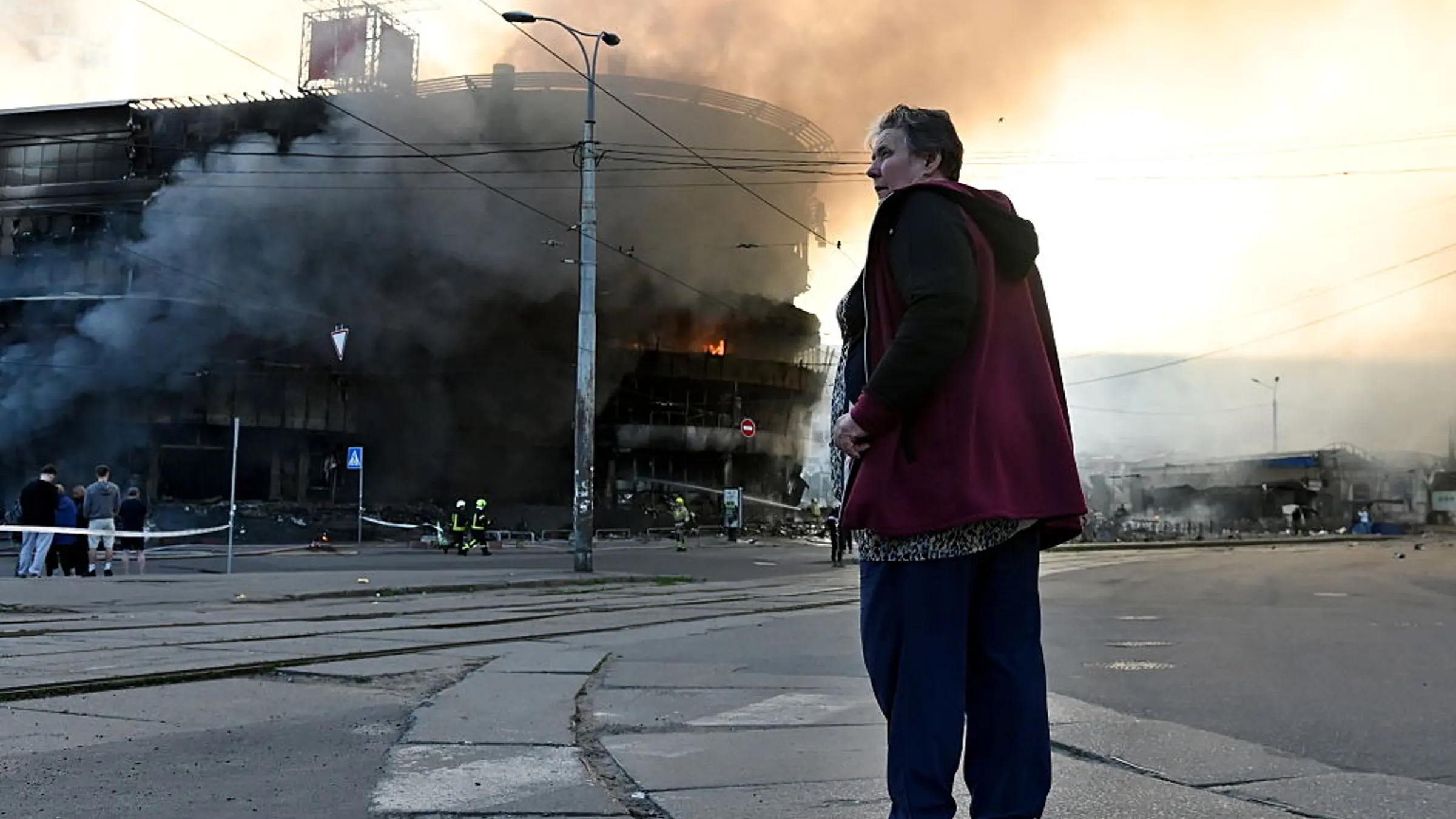
Russia launched one of its largest bombardments of Kyiv since the invasion began, using 600 strike drones and 90 missiles, including an Oreshnik ballistic missile, killing at least four people and damaging schools and residential buildings. Ukraine said it intercepted or jammed 549 drones and 55 missiles, but large-scale hits still occurred, especially in Kyiv amid a shortage of air defense missiles. The escalation and use of a nuclear-capable missile heighten geopolitical risk and underscore Ukraine’s defense vulnerability.
This is less a one-off escalation than evidence that the war is becoming a capital-intensive competition between offensive mass and defensive inventory. The key market implication is that the marginal value of advanced air defense rises faster than the headline intensity of the conflict, because the defender is now being forced to spend scarce interceptors against a broader target set while the attacker can substitute cheap drones for expensive missiles. That dynamic is structurally bullish for European air-defense primes and munitions names, but it also means any short-dated relief rally in risk assets tied to an imminent ceasefire is vulnerable.
The second-order damage is to critical infrastructure confidence rather than just physical assets. Repeated strikes on power, water, transport, and schools raise the probability of localized outages, labor disruption, and municipal budget stress, which can quietly impair reconstruction cadence and foreign direct investment even if frontline geography is unchanged. Over a 3-6 month horizon, the bigger risk is not only damage to Ukraine, but political pressure inside Europe to accelerate stockpiling and domestic production, pulling procurement forward for years.
The market may still be underpricing the asymmetry between attacker and defender procurement lead times. Russia can demonstrate capability with a handful of high-end systems, but NATO replenishment and interceptor production are the bottleneck; that supports a persistent bid under defense supply-chain equities, especially where order books are already stretching. The contrarian view is that the headline shock could be overdone for broad risk assets if investors assume immediate Western escalation: history suggests more spending on air defense and munitions, not a step-change in cross-border spillover, unless there is a direct attack on a NATO asset or a sustained disruption to Black Sea logistics.
AI-powered research, real-time alerts, and portfolio analytics for institutional investors.
Request DemoOverall Sentiment
extremely negative
Sentiment Score
-0.95
