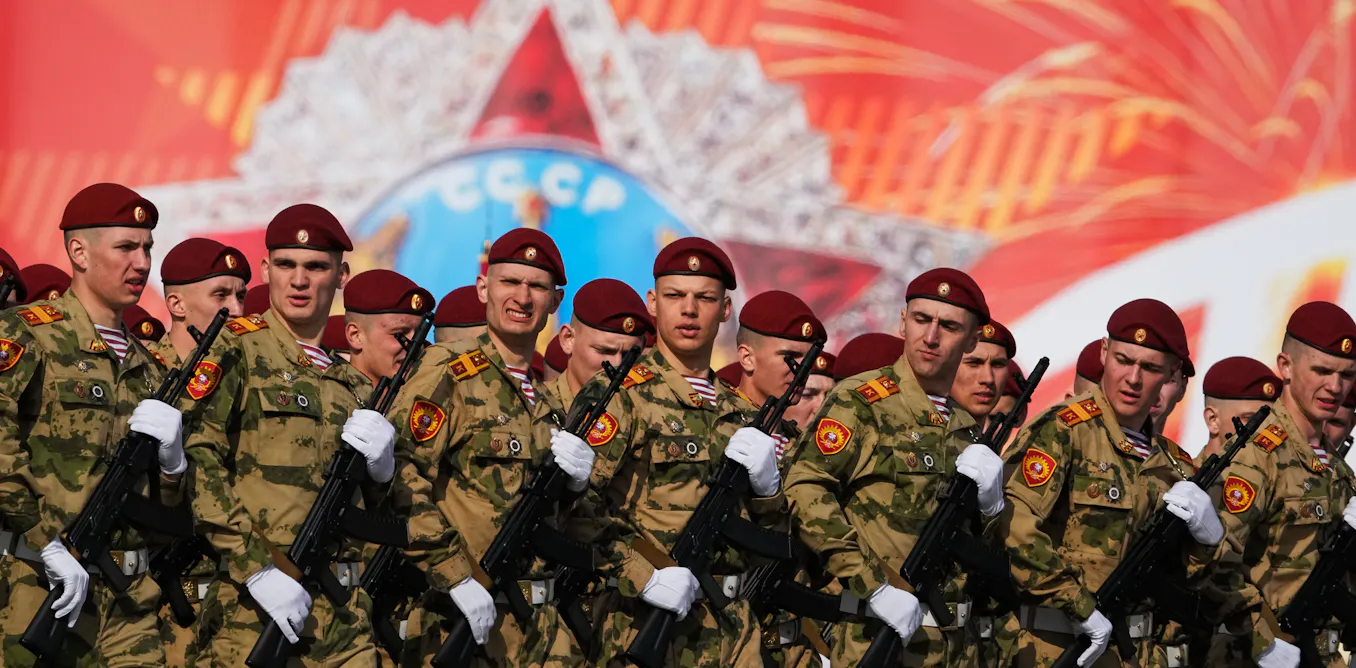
Russia has sharply scaled back its May 9 Victory Day parade, with no heavy military hardware for the first time in 20 years and tighter security measures including airport shutdowns and mobile internet restrictions. The article highlights Ukraine’s expanding deep-strike capability, claimed Russian drone losses of 33,000 in March, and signs of strain inside Russia, including weaker recruitment, labour shortages, negative growth, and high inflation and interest rates. The geopolitical risk narrative is negative for Russian stability and keeps the war’s escalation risk elevated.
The market implication is not simply “Russia looks weaker”; it is that Ukraine has shifted the cost curve of the war from linear attrition to episodic disruption. Once a state’s capital rituals, airport networks, and mobile connectivity all need active shielding, that introduces a persistent political-security tax that compounds over months, not days. The near-term loser is any asset tied to a clean “wartime normalization” narrative in Russia: logistics, domestic carriers, insurers, and banks exposed to higher administrative friction and lower consumer confidence.
The bigger second-order effect is on Putin’s bargaining power. If Moscow can no longer guarantee internal control during a symbolic holiday, it is less credible in threatening escalation to force talks on its terms; that should marginally improve Ukraine’s negotiating leverage even if the front line remains largely static. For energy and industrial supply chains, the key risk is not a sudden embargo but a rising probability of intermittent infrastructure sabotage that can force precautionary shutdowns, temporarily tightening regional diesel, aviation fuel, and refined-product balances in Europe.
The contrarian read is that this is still a war of adaptation, not terminal decline. Russia’s industrial base and coercive apparatus can absorb embarrassment for a long time, so the investable edge is in duration-sensitive exposures, not directional macro calls. The more durable signal is Ukraine’s ability to scale domestic production and export military know-how, which creates a medium-term beneficiary set in European defense, drone components, secure comms, and cyber resilience, while leaving Russia-related risk premia elevated but not yet non-linear.
AI-powered research, real-time alerts, and portfolio analytics for institutional investors.
Request DemoOverall Sentiment
mildly negative
Sentiment Score
-0.35
Ticker Sentiment
