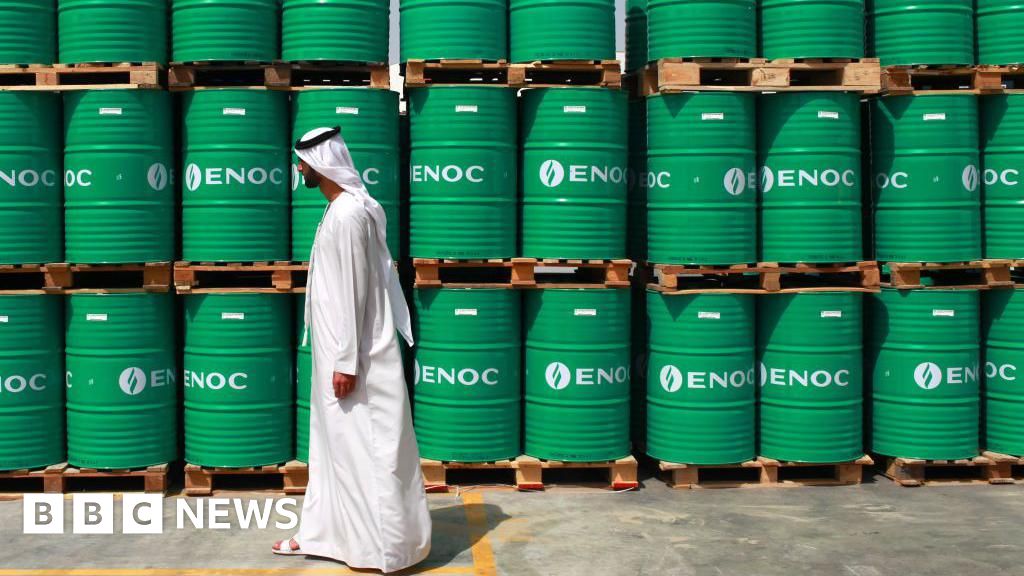
The UAE’s abrupt exit from Opec is a significant structural shift for global oil markets, as it removes one of the bloc’s key swing producers and could eventually enable output to rise toward 5 million barrels per day. The move may intensify pressure on Saudi Arabia and raises the risk of an Opec price war, even as current Strait of Hormuz disruptions keep markets focused on near-term supply risk. Longer term, the article argues the decision could accelerate downward pressure on oil prices if Gulf tensions ease and UAE exports expand through new pipelines.
The strategic takeaway is not the headline departure itself but the signaling effect on OPEC’s internal discipline. If a high-capacity, relatively diversified member is now willing to monetize spare capacity outside the cartel, the marginal cost of cohesion rises materially for Saudi Arabia and weaker producers, and the market should start pricing a more fractured supply regime over the next 6-18 months. That lowers the credibility of any future coordinated cuts and increases the odds of more volatile, policy-driven oil pricing rather than a stable cartel floor.
Second-order winners are not just producers with low lifting costs, but also non-OPEC exporters and infrastructure owners positioned to absorb incremental flows. If Emirati volumes migrate toward seaborne or pipeline routes, the hidden beneficiaries are Gulf logistics, port throughput, tankers, and midstream operators with exposed spare capacity; the losers are higher-cost OPEC members whose fiscal breakevens leave them unable to sustain a price war for long. The sharper the Saudi response, the more the pain propagates into EM sovereign spreads, local currencies, and subsidy-intensive domestic demand across the Gulf and beyond.
The key risk is that the market is too focused on the near-term Strait disruption and underpricing a post-crisis oversupply shock. A resolution of shipping bottlenecks can flip the tape fast: supply normalization plus UAE capacity expansion creates a plausible path to much lower prices over the next 2-4 quarters, especially if demand slows on electrification and macro weakness. That said, the move is not one-way; any escalation that constrains Gulf exports, even briefly, can overwhelm the longer-term bearish setup and keep prompt prices elevated.
Consensus may be assuming OPEC is still the primary price setter, when in reality it is increasingly a volatility regime rather than a control regime. That makes long-vol structures more attractive than outright directional bets, because the path likely features sharp spikes on geopolitical headlines followed by lower trading ranges once volumes normalize. The market may also be underestimating how quickly diversified Gulf producers can use cheaper capital and superior infrastructure to outlast quota-disciplined peers in a renewed price war.
AI-powered research, real-time alerts, and portfolio analytics for institutional investors.
Request DemoOverall Sentiment
mildly negative
Sentiment Score
-0.15
