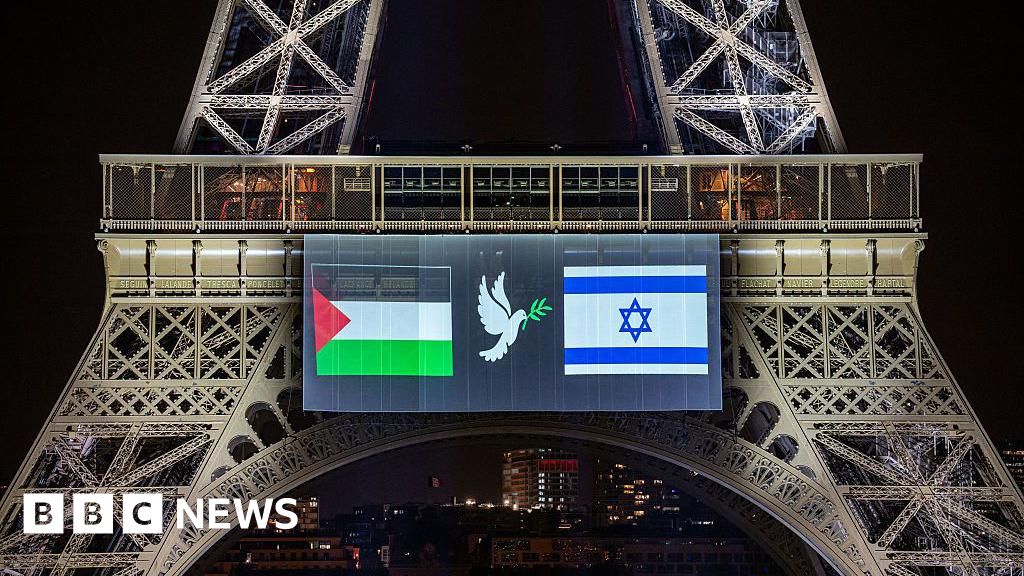
France, a permanent UN Security Council member, is formally recognizing a Palestinian state, describing it as a "necessity" and the "beginning of a political process" for a two-state solution, despite strong condemnation from Israel and non-participation from Germany, Italy, and the US. This diplomatic move, supported by several other European nations, signifies a growing divergence in international policy regarding the Israeli-Palestinian conflict and increases pressure on Israel amidst toughening EU rhetoric.
France's formal recognition of a Palestinian state, a move supported by several other European nations, marks a significant diplomatic divergence among G7 and UN Security Council members. This action, described by President Macron as a "necessity," is explicitly opposed by key allies including the US, Germany, and Italy, who argue that recognition should be the outcome of a peace process, not a precursor. This split signals escalating international pressure on Israel, which has denounced the move as a "reward for Hamas." The toughening rhetoric from EU officials and criticism from within Germany, one of Israel's closest European allies, further underscore a shifting European stance. Macron has outlined a conditional, three-stage plan beginning with a ceasefire and hostage release, which introduces a structured but uncertain pathway. However, the policy faces domestic political opposition in France and has triggered protests in Italy, indicating that this diplomatic gambit carries considerable political risk and its impact on the ground remains highly uncertain.
AI-powered research, real-time alerts, and portfolio analytics for institutional investors.
Request DemoOverall Sentiment
mixed
Sentiment Score
-0.10
