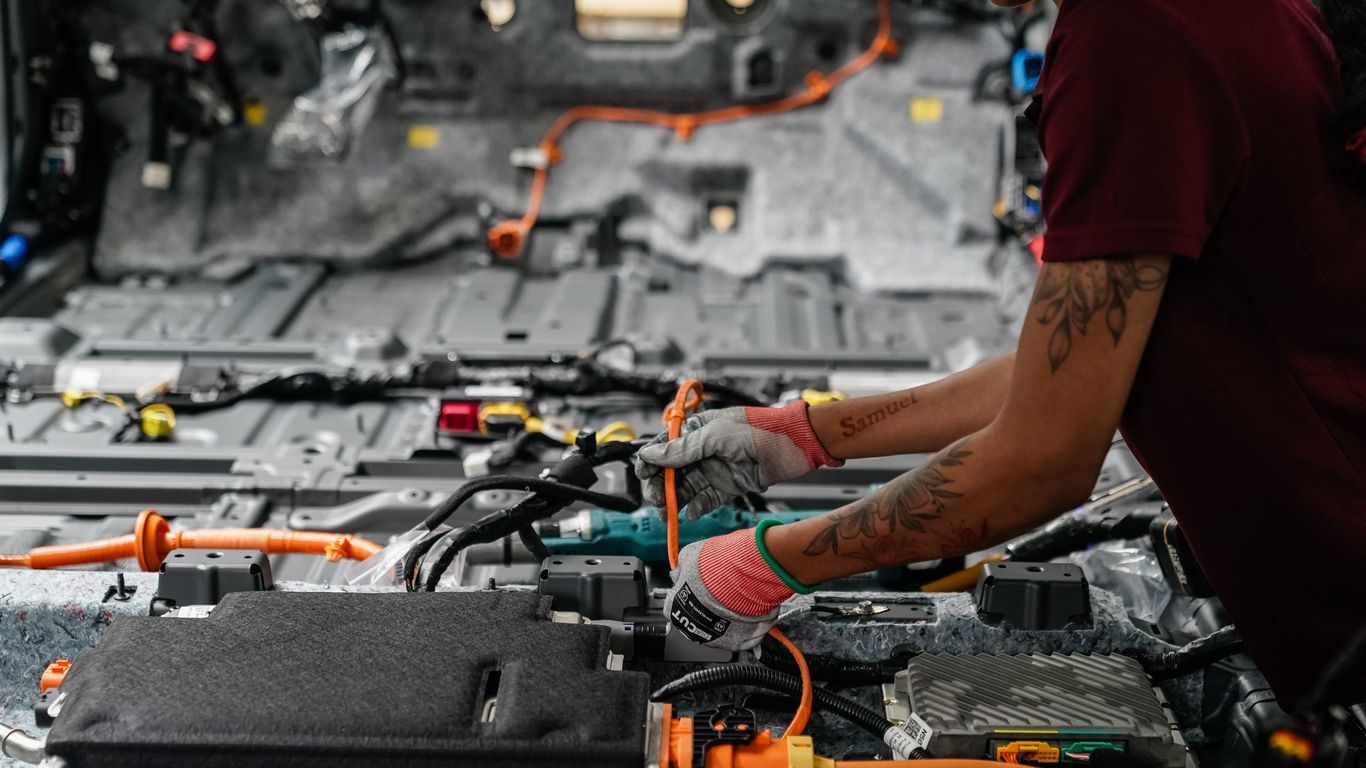
U.S. Homeland Security arrested approximately 560 Korean workers at Hyundai's Georgia battery plant, including those from its joint venture with LG Energy Solution, due to alleged improper work permits, immediately pausing construction on the facility. This incident underscores a critical tension in U.S. economic policy, as it pits the drive for domestic manufacturing investment, exemplified by Hyundai's $26 billion commitment, against stringent immigration enforcement. The situation highlights challenges for foreign direct investment in advanced sectors requiring specialized technical expertise that companies argue is scarce domestically and difficult to import under current visa policies, potentially chilling future projects.
The arrest of approximately 560 Korean workers at the Hyundai-LG Energy Solution joint battery plant in Georgia has triggered an immediate halt to construction, creating significant operational risk for Hyundai's $26 billion U.S. investment strategy. This event highlights a critical conflict in U.S. economic policy, where the objective to onshore advanced manufacturing, particularly for the electric vehicle supply chain, is directly undermined by stringent immigration enforcement. The core issue revolves around the alleged use of short-term travel authorizations (ESTA) for specialized engineers instead of H-1B visas, a workaround that companies argue is necessary due to a domestic skills gap in advanced battery technology and the difficulty in securing appropriate work permits. The large-scale, coordinated nature of the raid introduces a new level of legal and project execution uncertainty for foreign firms, potentially creating a chilling effect on future foreign direct investment in capital-intensive, high-tech sectors within the U.S.
AI-powered research, real-time alerts, and portfolio analytics for institutional investors.
Overall Sentiment
moderately negative
Sentiment Score
-0.50
