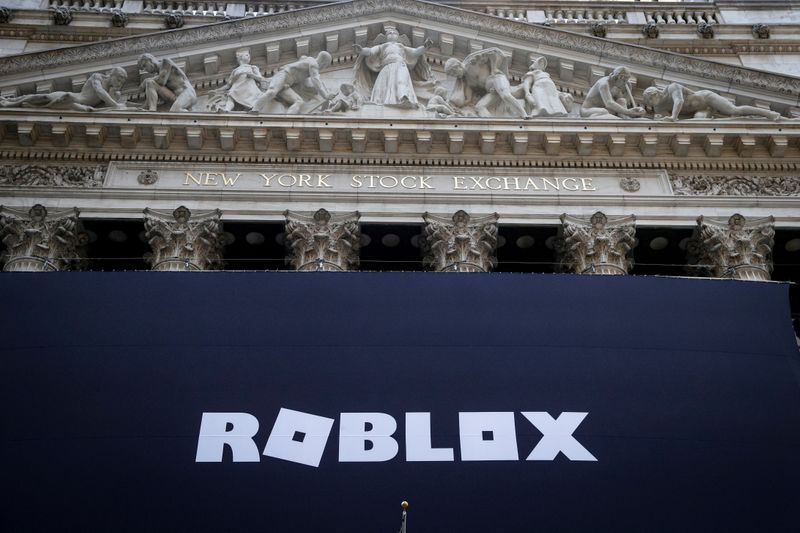
Roblox cut full-year bookings and adjusted EBITDA guidance by 11% and 25% at the midpoint after reporting Q1 2026 EPS of -$0.35, beating the -$0.41 estimate but missing revenue at $1.4B versus $1.74B expected. UBS lowered its price target to $49 from $74 and kept a Neutral rating, citing age-verification rollout friction and higher safety spending; other firms also cut targets. The stock has fallen 51% over six months and trades near its 52-week low, reflecting pressure on growth and profitability.
The key market issue is not the headline reset itself, but that the company is effectively trading through a credibility gap: management is asking investors to underwrite a multi-year re-acceleration story while near-term product changes are intentionally suppressing engagement. That creates a classic “good long-term, bad short-term” setup where multiple compression can continue even if fundamentals stabilize, because the next few prints are likely to show the costs of safety, verification, and discovery changes before any payoff is visible.
Second-order winners are the platforms that monetize older, lower-friction users and those with less exposure to identity/safety overhead. If younger-audience gaming spend migrates away from this ecosystem even temporarily, ad-tech, app discovery, and creator-economy names with cleaner retention curves could see share gains; the hidden loser is not just bookings, but the willingness of developers and creators to invest against a platform whose rules are still moving. The guidance cut also raises the bar for sentiment recovery across the interactive entertainment group, because investors will now discount every “trust and safety” initiative as a potential growth tax.
The contrarian view is that the selloff may be partially self-correcting if the market has already priced in a prolonged degradation in bookings and margins. When a stock trades near cycle lows after repeated estimate cuts, the next catalyst is often not better growth, but a smaller-than-feared moderation in churn and user friction once the verification rollout is absorbed. That said, the path to upside likely requires two or three quarters of evidence that discovery changes are improving conversion per user, not just headline bookings stabilization.
From a timing standpoint, the highest-risk window is the next 1-2 quarters, when comparables, product transitions, and safety spend overlap. The cleaner upside scenario is 6-12 months out if aged accounts reduce policy uncertainty and re-open monetization, but the market may demand proof sooner. If engagement metrics don’t inflect by late summer, the stock can remain a value trap rather than a rebound candidate.
AI-powered research, real-time alerts, and portfolio analytics for institutional investors.
Request DemoOverall Sentiment
strongly negative
Sentiment Score
-0.55
Ticker Sentiment
