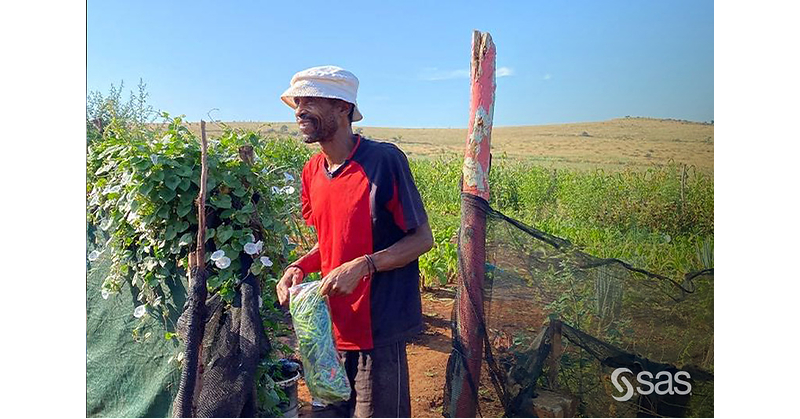
SAS said its “Data for Good” initiative, in partnership with dataDecisions.ai and The Dream, used advanced analytics on micro-farm data near South Africa to guide crop selection and planting timing across four seasons. The program aims to improve yields and economic returns while strengthening food security and helping farmers better allocate limited water and labor without expensive sensors or digital infrastructure. The article is mainly a case-study with limited direct financial implications for markets.
This is not a near-term P&L event for SAS; it is a low-cost credibility signal around product capability and brand positioning. The only investable read-through is to firms that can monetize decision support at scale — precision-ag hardware/software, agronomic data platforms, and rural finance rails — because the economic value sits in distribution, recurring transaction data, and financing, not in a one-off model demonstration.
The key question over 1-3 months is whether the workflow proves sticky after the pilot season. If farmers improve crop mix but still lack working capital, buyer access, or logistics, the uplift will be temporary and non-recurring; that makes the commercial payoff look more like grant-funded consulting than software ARR. Over 6-18 months, the thesis only matters if analytics is bundled with credit/offtake, which could create a compounding loop for input distributors and lenders rather than for the AI vendor itself.
Consensus is likely over-reading the ESG/AI angle and underweighting fragmentation: smallholder agriculture is notoriously hard to monetize, and most pilots do not become scalable revenues. The contrarian upside is not in the analytics brand, but in the layer that converts better crop decisions into payable orders, repayment data, and insurance underwriting. If that layer does not emerge, this stays a marketing story with minimal public-market impact.
AI-powered research, real-time alerts, and portfolio analytics for institutional investors.
Overall Sentiment
mildly positive
Sentiment Score
0.12
Ticker Sentiment
