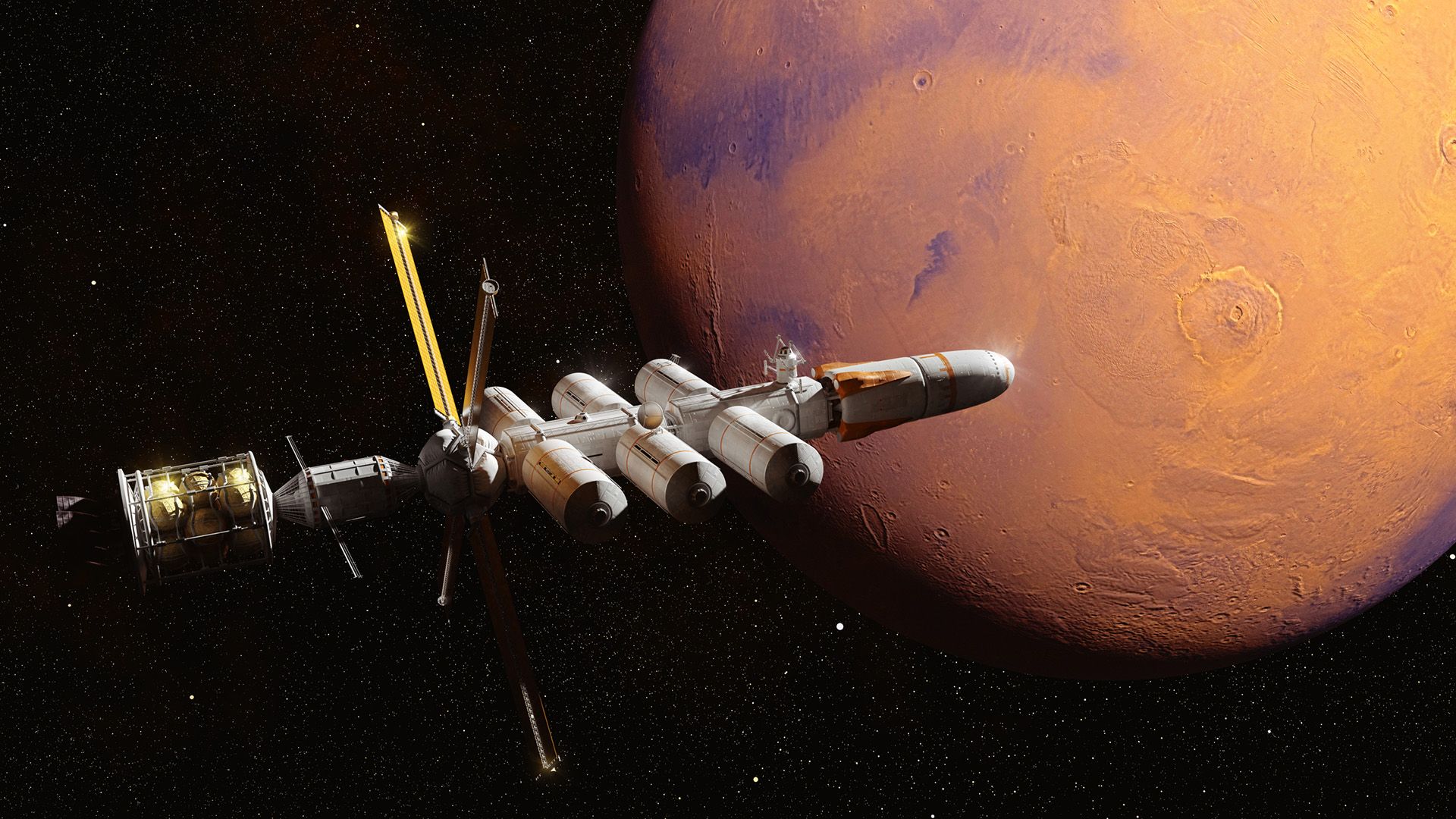
A new study suggests asteroid-derived orbital geometry could enable Mars round trips in as little as 153 days, versus current timelines of nearly three years. The paper identifies a 2031 launch window that could support a faster mission using near-term technology, though it remains theoretical and depends on spacecraft and propulsion constraints. The work is scientifically notable but unlikely to have near-term market impact.
The investable read-through is not “Mars travel is faster,” but that the constraint set for deep-space logistics may shift from pure propulsion to route optimization and mission scheduling. If trajectory design can reliably compress travel windows, the second-order beneficiary is any platform that can monetize higher launch cadence, higher payload efficiency, or reusable upper-stage performance — because the economic value of each incremental km/s of delta-v rises sharply when mission duration drops from years to months. That creates a wedge for launch providers and in-space transportation primes versus legacy contractors optimized around slower, bespoke mission profiles.
The key bottleneck is not theoretical geometry; it is thermal protection, entry/landing energy, and human-system survivability. Fast transfers push reentry velocities and landing loads into regimes that favor expendable high-end hardware and autonomous systems, which should advantage firms with reusable heavy-lift plus advanced avionics rather than pure GEO/LEO launch capacity. In the near term, this is a narrative catalyst for market sentiment, but the real cash-flow impact is years away unless it directly improves government procurement for cislunar and Mars tech demonstrators.
Contrarian take: the market may overestimate the immediacy of this as a space-theme tailwind. Faster Mars windows do not solve the core economic problem of human Mars missions: surface systems, radiation shielding, life support mass, and abort risk. If anything, the study strengthens the case that near-term value accrues to mission-enabling infrastructure — comms, guidance, thermal protection, autonomous rendezvous, and nuclear power — rather than pure launch hype.
For the broader industrial complex, the more important implication is that mission architectures could become more frequent but smaller, increasing demand for iterative testing and modular space supply chains. That favors suppliers with recurring revenue from sensors, components, and software, while depressing the moat of one-off prime contractors if procurement shifts toward agile, design-to-trajectory offerings.
AI-powered research, real-time alerts, and portfolio analytics for institutional investors.
Request DemoOverall Sentiment
mildly positive
Sentiment Score
0.30
