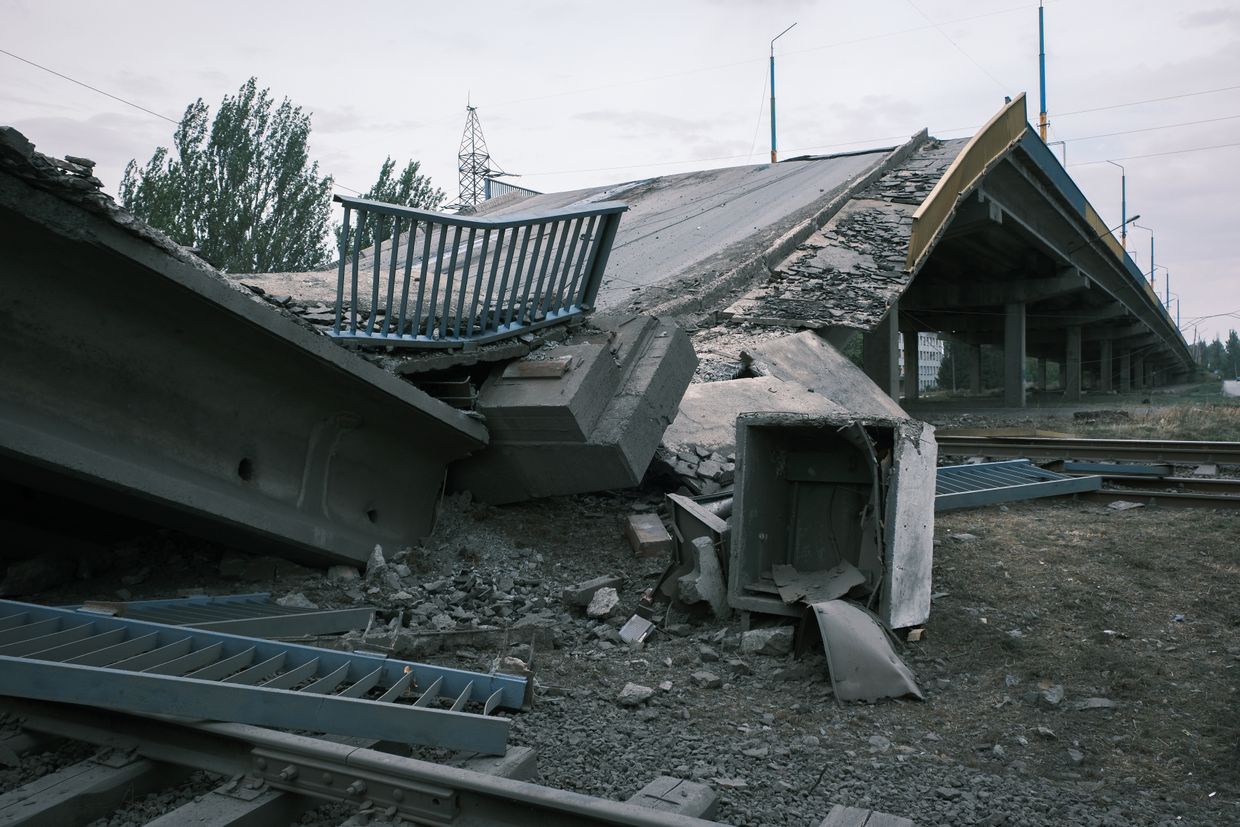
Russian authorities claim decisive control of Pokrovsk after weeks of combat, with videoed flag-raising and independent mapping projects indicating most of the city south of the main railway is under Russian control while Kyiv maintains limited positions north of the line. Nearby Myrnohrad faces a growing threat of operational encirclement as Russian pincers close and the land corridor has effectively been severed, forcing Ukrainian supply by drones and unmanned ground vehicles. The situation represents a tactical setback for Ukrainian forces, raises the risk of further escalation, and is likely to keep investor sentiment toward regional risk and defense/energy exposure on edge.
Market structure: A steady Russian advance around Pokrovsk/Myrnohrad raises near-term demand for artillery, ammunition, loitering munitions, air-defence parts and logistics (3–12 month procurement cycle). Winners: large Western prime defense contractors (LMT, RTX, GD, Rheinmetall RHM.DE) and specialty UAV/EO subsystem suppliers; losers: Ukrainian exporters (agri/logistics), local infrastructure owners and regional EM equities. Expect higher bid pricing power for precision munitions suppliers and spiking spot demand for tactical drones over the next 1–3 months.
Risk assessment: Tail risks include rapid operational collapse or wider escalation triggering secondary sanctions on suppliers, a Russian energy shutdown to Europe, or a negotiated ceasefire that removes demand — each would move markets violently. Immediate (days) — risk-off flows (USD, gold), short-term (weeks–months) — stepped-up EU/US aid contracts and inventory replenishment, long-term (quarters–years) — locked procurement budgets and defense capex. Hidden dependency: logistics (air/sea/rail) and political approvals are the choke points — contracts don’t translate to deliveries instantly.
Trade implications: Tactical trades favor 1–3% long exposure in primes and commodity hedges: buy LMT/RTX/RHM.DE exposure and GLD/TLT as safe havens; use options to cap downside. Pair trades: long defense vs short cyclicals/airlines to capture rotation into security spending. Watch catalysts: US/EU aid votes (next 30–90 days), battlefield breakthroughs, and winter energy demand spikes.
Contrarian view: Consensus prices in sustained tail-risk of full escalation; historically (e.g., Bakhmut) defense rallies often overshoot ahead of actual multi-year contract flows and then mean-revert. If diplomatic talks progress or logistics stall, defense equities can retrace 10–20% from peaks; consider hedged exposure and event-driven sizing rather than outright long-only positions.
AI-powered research, real-time alerts, and portfolio analytics for institutional investors.
Request DemoOverall Sentiment
strongly negative
Sentiment Score
-0.60
