
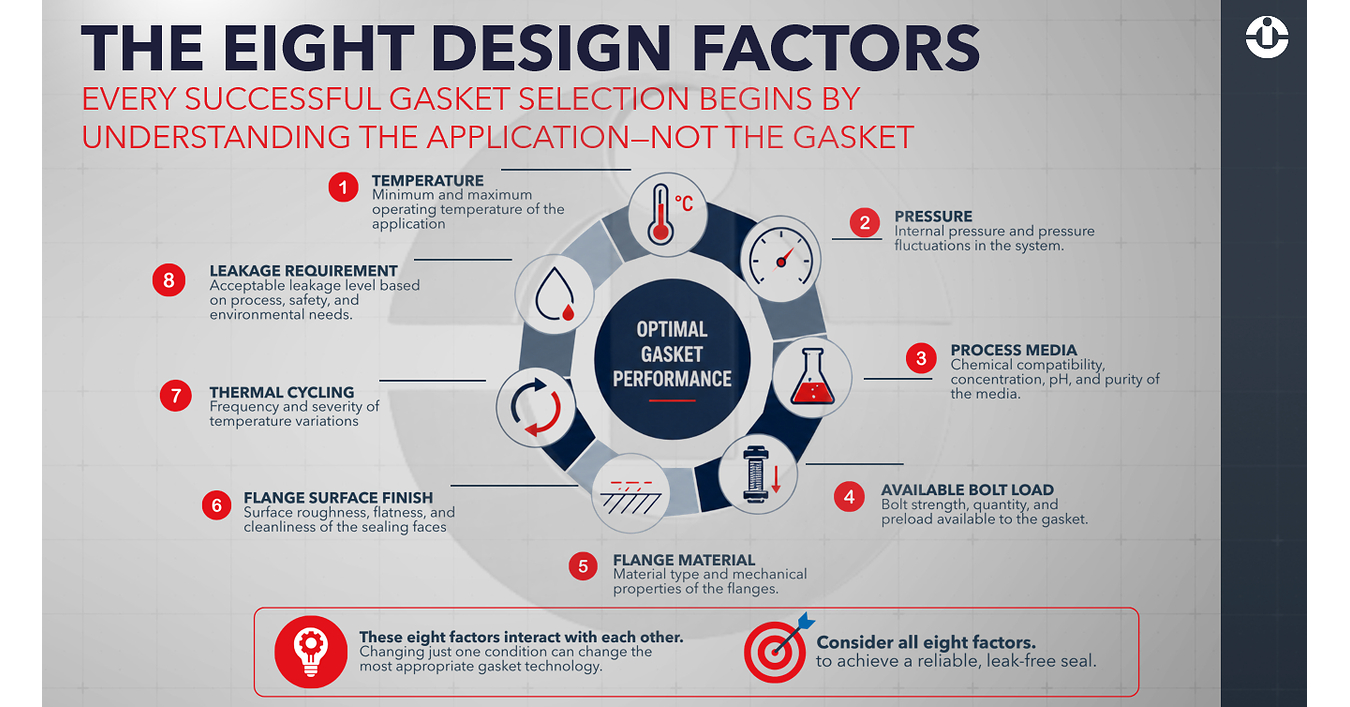
Teadit released an engineering paper focused on industrial gasket selection and long-term sealing reliability for hyperscale data centers. The article highlights that modern campuses are being built with electrical capacities exceeding 1 gigawatt and increasingly rely on robust mechanical pressure boundaries across cooling, water, and on-site power systems. It provides guidance on bolt preload, gasket stress, flange surface finish, thermal cycling, chemical compatibility, and maintenance/installation quality, but does not disclose any financial results or company-specific guidance.
This reads as a specification-driven spend story, not an immediate demand shock. The economic benefit accrues to suppliers that sit closest to the engineering decision stack—fluid handling, valves, pumps, heat exchangers, and field-service/commissioning—because uptime-sensitive operators will pay for margin of safety, installation support, and aftermarket inspection. Commodity gasket makers likely see little near-term revenue lift unless they can prove design-in status at hyperscale reference accounts.
The second-order effect is mix, not volume: data-center mechanical systems are becoming more failure-intolerant, which raises the value of premium materials, training, and maintenance contracts relative to price-led procurement. That favors names with deep technical sales forces and installed-base monetization, while squeezing low-touch distributors and undifferentiated sealing suppliers. The earnings impact should show up over 6-18 months via backlog quality and services attach, not in the next quarter.
Contrarian risk: the market may be overestimating how much of this complexity actually translates into incremental spend, because modularization, prefabricated skids, and alternative cooling architectures can reduce on-site gasketed joints and field labor. If hyperscale capex slows, or if direct-to-chip/immersion adoption reduces traditional chilled-water and fuel-gas interfaces, the thesis weakens. The right falsifier is not the article itself but whether data-center-capex leaders guide to higher mechanical content or, instead, to more standardized builds and lower service intensity.
AI-powered research, real-time alerts, and portfolio analytics for institutional investors.
Request TrialOverall Sentiment
neutral
Sentiment Score
0.00
Ticker Sentiment
