
Surge in gas prices comes as Saginaw full service gas station owner is preparing to retire
Source: WJRT ABC12
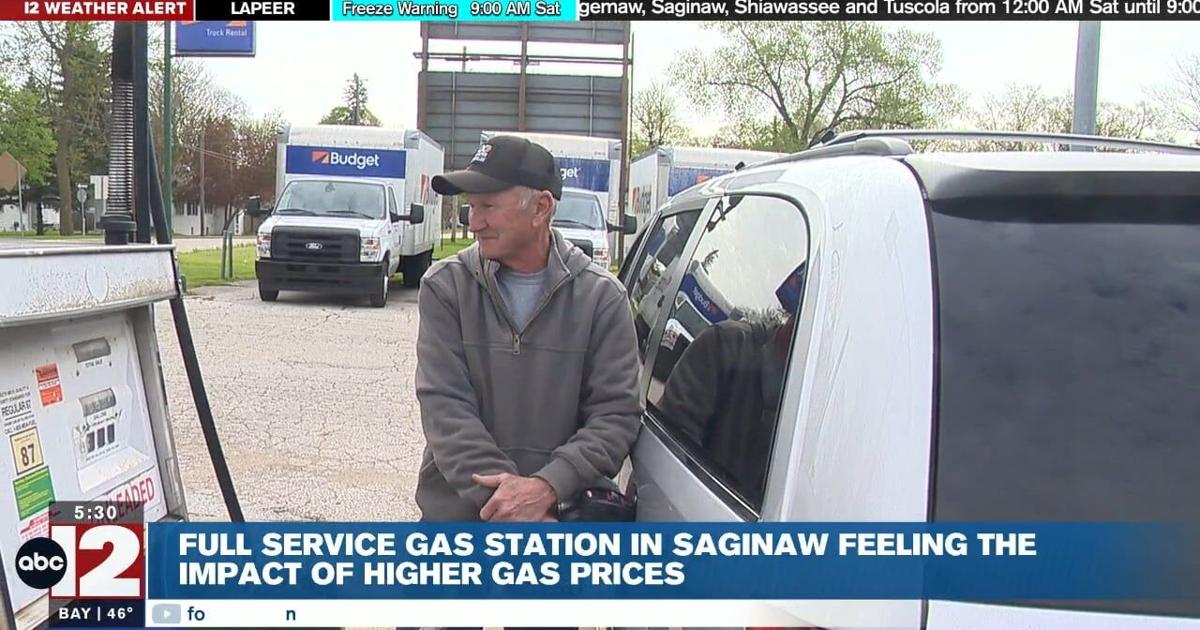
Gas prices have surged to around $5 per gallon at many stations in the Saginaw area, pressuring a longtime full-service station, Wally King Service. Owner Phil King said he is not adding his usual 25-cent full-service markup because the price spike is already hurting customers and the business, and he hopes to sell the company by October. The article highlights strain on fixed-income consumers and small fuel retailers rather than a broader market-moving event.
Analysis
The first-order signal is not "higher gas prices" but a localized margin squeeze on the last-mile retail layer. Independent full-service operators are the most exposed because they have the least pricing power, the highest labor intensity, and no downstream hedges; when pump prices jump quickly, unit volumes often fall before nominal revenue can offset fixed costs. That creates a second-order winner set: nearby self-serve stations, convenience stores, and large fuel retailers with scale and loyalty programs can absorb traffic from price-sensitive customers while independent operators lose market share.
The key risk is duration. If this is a short, weather-driven or distribution-driven spike, the damage is mostly temporary and shows up in days to weeks as lower traffic and weaker discretionary spend in adjacent retail categories. If prices stay near this level for several months, the real economic impact broadens: commute compression reduces miles driven, consumers trade down on nonessential trips, and fixed-income households cut spending elsewhere, which can pressure regional retail, quick-service, and auto-related demand.
The contrarian point is that the market may be overestimating sustained demand destruction from a single local price shock. At this level, consumers often adapt through trip consolidation rather than outright mileage collapse, so volume elasticity may be smaller than headline outrage suggests. The more durable effect is competitive churn: small operators that cannot pass through labor and rent inflation may exit, creating incremental share for larger chains and fueling a medium-term consolidation opportunity in fuel distribution and convenience retail.
For portfolio construction, this is a better relative-value than outright macro trade. The cleanest expression is to be long scale retailers and short fragmented local exposure, because the pain is operational rather than commodity-price beta. The catalyst to monitor is whether the spike persists into the next monthly retail sales print; if it does, spillover into gasoline-adjacent discretionary spend becomes more visible and the bearish consumer read-through gains credibility.
AllMind Terminal
AI-powered research, real-time alerts, and portfolio analytics for institutional investors.
Request TrialMarket Sentiment
Overall Sentiment
mildly negative
Sentiment Score
-0.35
Key Decisions for Investors
- Long COST / short regional independent c-store operators: use a 1-3 month horizon to express the idea that scale, traffic density, and fuel loyalty programs let larger retailers take share when fuel volatility crushes small operators.
- Long XLY put spread or short consumer discretionary basket for 4-8 weeks if gas remains near peak levels; the best risk/reward is on lower-income, high-commute regions where gasoline crowds out discretionary spend fastest.
- Look at long convenience/fuel consolidators (e.g., CASY, SBUX? no direct fuel exposure; prefer CASY) vs. short highly fragmented retail proxies; the trade benefits if smaller stations begin exiting over the next 1-2 quarters.
- Avoid chasing crude beta here; if this is a localized or transitory supply shock, energy majors may not get paid, while consumer/retail losers will underperform more cleanly.
- Set an alert for a 2-4 week retracement in pump prices; if prices normalize quickly, cover any consumer shorts and rotate back into retail names with traffic sensitivity, as the market will likely fade the inflation scare.
More News
- Mass Ukrainian drone attack on Moscow kills two, Russia says
- Street Calls of the Week
- Iran sets terms for US talks as Houthis step up attacks on Saudi Arabia
- Treasury yields are already blowing up the CBO’s long-term forecasts, and experts who previously downplayed U.S. debt fears are now starting to worry
- France’s wine production nears a 70-year low, leaving winemakers with tough choices
- China keeps benchmark lending rates unchanged for 16th month in September