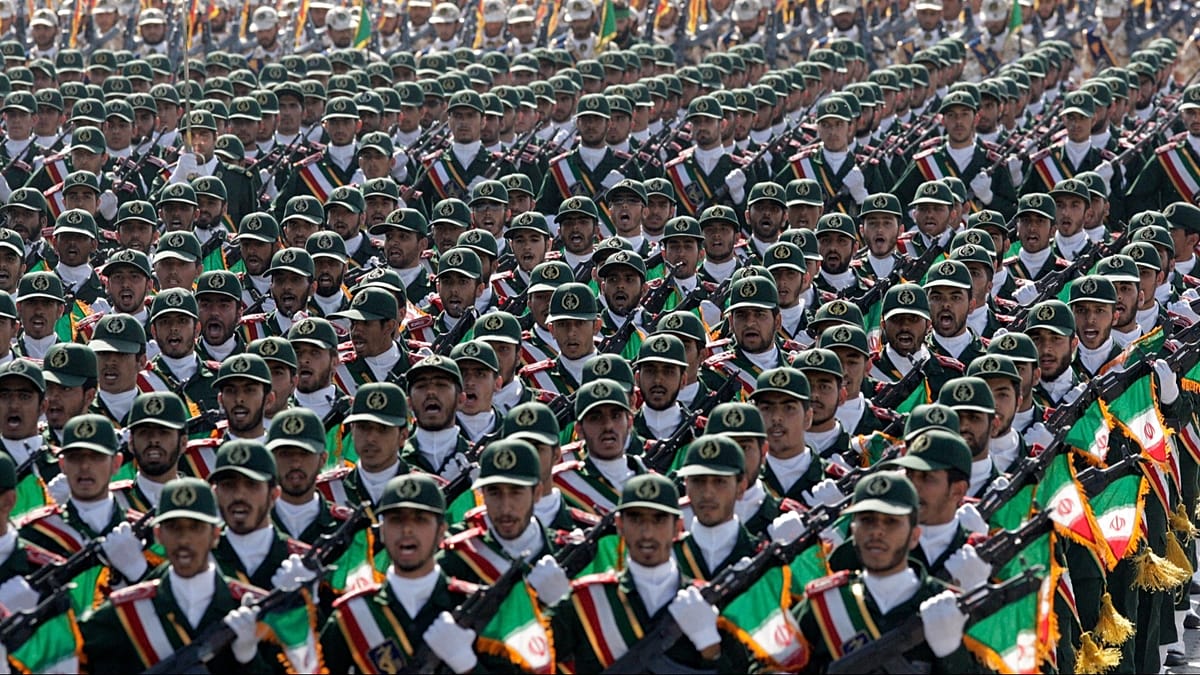
France and Spain have signalled support for adding Iran's Islamic Revolutionary Guard Corps (IRGC) to the EU terrorist list, a step that would impose asset freezes, bans on funding and travel restrictions on IRGC members and requires broad EU agreement. The move follows allegations that the IRGC led violent repression of domestic protests (HRANA reports at least 5,777 killed), supplied weapons to Russia, and attacked Israel; it would align EU policy with the US, Canada and Australia and increases geopolitical and sanction risk for investors with Middle East exposure.
Market structure: An EU designation of the IRGC is largely symbolic but widens legal levers (asset freezes, funding bans) and raises operational friction for firms doing business with Iranian-linked entities. Short-term winners: defense primes and security insurers; losers: regional airlines, shipping, and energy firms with Iran-linked supply chains. Expect a modest risk premium reallocation—a 5–15% bid into defense/security names if designation is coupled with proxy attacks within 30–90 days.
Risk assessment: Tail risks include escalation to Strait of Hormuz incidents or Israel-Iran direct strikes (low-probability, high-impact) that could spike Brent >20% in days and VIX >40. Immediate (days): headline-driven volatility; short-term (weeks–months): oil and insurance premia; long-term (quarters–years): re-routing of supply chains and higher compliance costs for European corporates. Hidden dependencies: European banks and shipping insurers with legacy Iran exposure face second-order de-risking and capital charges.
Trade implications: Tactical plays favor long aerospace & defense (ITA, LMT, RTX) and event-driven oil volatility trades (short-dated Brent call spreads) while hedging with VIX call options. Relative-value: long defense vs short European travel/airlines captures both rerating and demand shock. Size trades to be idiosyncratic: 1–3% portfolio allocations with stop-losses given binary headline risk over 30–90 days.
Contrarian angle: Markets may overpay for symbolism—many IRGC-linked assets are already sanctioned, so pure designation without kinetic escalation could be a sell-the-news event (-5%–10% in defense names). Historical parallels (post-2012 sanctions cycles) show transient commodity spikes that fade in 2–3 months as markets adjust. Risk: premature large longs in defense or oil could underperform if EU action remains strictly symbolic.
AI-powered research, real-time alerts, and portfolio analytics for institutional investors.
Request DemoOverall Sentiment
moderately negative
Sentiment Score
-0.30
