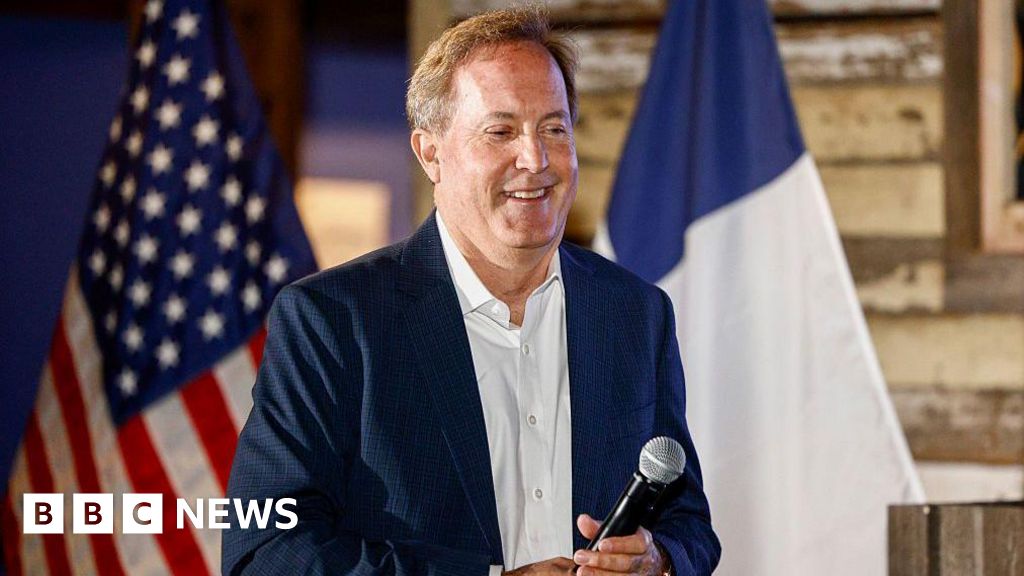
Ken Paxton defeated incumbent John Cornyn in the Texas Republican Senate runoff, setting up a closely watched November general election against Democrat James Talarico. The result underscores the strength of Trump's populist base in Texas and ends a 23-year congressional career for Cornyn, a former Senate GOP leader. Down-ballot, Christian Menefee beat Al Green in Houston's 18th District, while Trump-backed Alex Mealer defeated Briscoe Cain in the solidly conservative 9th District.
Paxton’s win is less about one Senate seat and more about the market price of intra-party control in Texas. The message to Republican officeholders is that alignment with the national populist base now matters more than seniority, fundraising pedigree, or institutional credibility, which increases the odds of additional primary challenges in 2026 and pushes the GOP further toward candidates with higher execution risk and lower general-election quality. For investors, that matters because Texas policy becomes more volatile: governability is still intact, but the median statewide Republican is moving away from business-first pragmatism and toward grievance-driven politics. The second-order effect is on November odds, where the key issue is not whether Democrats win the seat, but whether this becomes genuinely competitive enough to force resource diversion from other Senate targets. A weakened Republican brand in a large, expensive media market raises the expected cost of defending incumbency across the Sun Belt, and could lift the value of Democratic turnout operations in down-ballot races. If Paxton’s legal/personal baggage becomes the dominant general-election variable, the race may look less like a standard Texas referendum and more like a candidate-quality shock that temporarily compresses the state’s GOP structural advantage. The broader signal is that Trump endorsement power is now being shaped by the base as much as vice versa, which reduces the usefulness of top-down endorsements as a forecasting tool. That makes the next 3-6 months more important than the primary result itself: opposition research, national fundraising, and candidate substitution risk will matter more than ideology. The contrarian read is that markets may overestimate flip probability in Texas; even a weak Republican can still benefit from the state’s partisan floor, so the more reliable trade is not a pure blue-sweep thesis but a volatility and resource-allocation story.
AI-powered research, real-time alerts, and portfolio analytics for institutional investors.
Request DemoOverall Sentiment
neutral
Sentiment Score
-0.05
