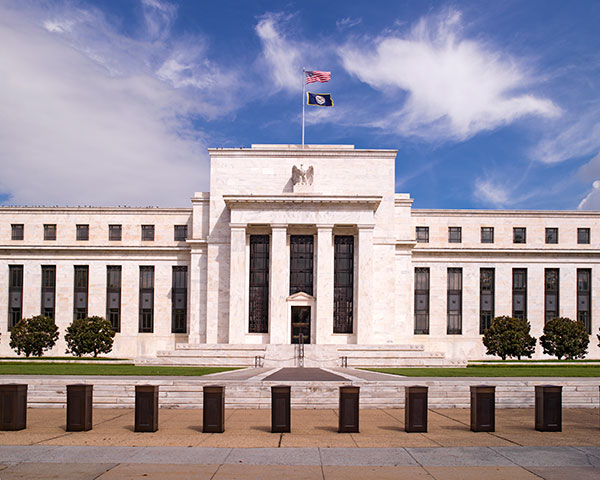
The Federal Reserve announced the 2026 pricing schedule for its payment services, effective January 1, 2026, covering check clearing, ACH, instant payments and wholesale settlement. The Fed expects to recover 108% of actual and imputed expenses (including a private‑sector equivalent return on equity), producing an estimated 0.9% average price increase for established services; the full fee schedule is published on FRBservices.org.
Market structure: A 108% cost-recovery mandate and an average 0.9% fee rise for mature Fed payment services (effective Jan 1, 2026) is a small but explicit nudge to reprice public rails and accelerate migration choices. Winners are scale players (JPM, BAC, WFC) that can absorb or pass through marginal fee increases and private processors (FISV, FIS, FI) that can compete on bundled services; losers are noninterest‑income‑dependent community banks and credit unions where a few bps of margin or fee income matter. Competitive dynamics: the Fed’s push to include imputed ROE signals steady, predictable pricing that reduces one form of regulatory uncertainty but may raise procurement by smaller banks — increasing demand for third‑party outsourcing over 6–24 months.
Risk assessment: Tail risks include (1) operational failures in FedNow or settlement that force sudden private-sector volume shifts, (2) regulatory pushback that forces the Fed to cut prices (revenue shock to Fed services), or (3) accelerated private innovation that bypasses Fed rails. Short-term (days/weeks) market moves should be muted; medium (3–12 months) sees vendor contract renegotiations and budget cycles; long-term (1–3 years) could change infrastructure share materially. Hidden dependencies: fintechs that rely on bank sponsorship (SQ, PYPL) could face higher integration costs if banks tighten access; vendor SOWs and contract churn are key leading indicators.
Trade implications: Direct plays favor scalable processors and large banks — overweight FISV/FIS and large-cap banks (JPM, BAC) on a 6–18 month view; underweight regional bank exposure (KRE or specific small-cap bank names) where fee pass‑through is weakest. Use pair trades (long FISV, short KRE) to isolate payment-infrastructure exposure. Options: express asymmetric upside with 9–15 month call spreads on FISV/FIS (cost <2% portfolio) and buy 3–9 month puts on KRE to hedge near-term margin surprise.
Contrarian angles: The market will likely underreact to the Fed embedding a private‑sector ROE — this normalizes Fed services as a commercial product and could paradoxically strengthen private vendor bargaining (they can sell value beyond clearing). Consensus may overestimate the fee impact; 0.9% is small but the strategic consequence (Fed as a predictable competitor) is underpriced. Historical parallel: the ACH/Check pricing normalization in mid‑2000s didn’t upend processors but shifted contract structures; expect similar multi‑year, asymmetric winners rather than abrupt losers.
AI-powered research, real-time alerts, and portfolio analytics for institutional investors.
Request DemoOverall Sentiment
neutral
Sentiment Score
-0.05
