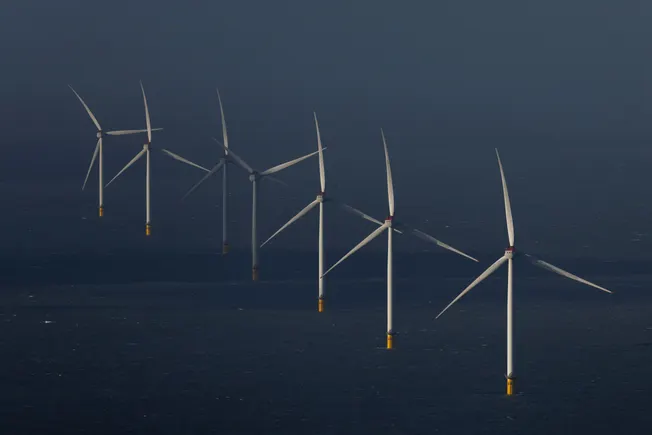
The Trump administration is escalating its opposition to offshore wind projects, exemplified by its intent to revoke permits for New England Wind (2.6 GW) and a stop-work order on Ørsted's 700 MW Revolution Wind, prompting Ørsted to sue citing $1 billion in potential costs. This aggressive stance, which developers claim is politically motivated, is raising significant concerns among analysts and industry groups regarding its broader implications for energy project financing. Experts warn that the unpredictable federal actions could erode trust in permitting processes, increase capital costs across the entire energy sector, jeopardize billions in private investment, and impact grid reliability, as noted by ISO New England.
The Trump Administration is escalating actions against the U.S. offshore wind sector, creating significant regulatory uncertainty and direct financial risk for developers. The administration's intent to revoke the permit for Avangrid's (AGR) 2.6 GW New England Wind project and the issuance of a stop-work order on Ørsted's 700 MW Revolution Wind project—which is reportedly 80% complete—represent a material threat to multi-billion dollar investments. Ørsted has responded with a lawsuit, highlighting approximately $5 billion already spent and potential breakaway costs exceeding $1 billion, alleging the government's action is arbitrary and capricious. The negative sentiment for AGR is explicitly strong (-0.8), reflecting the direct threat to its project. More broadly, analysts warn this interventionism, which developers allege is politically motivated, erodes trust in the federal permitting process for all large-scale energy infrastructure. This could elevate financing costs across the entire energy sector, including fossil fuel and nuclear projects, as lenders re-evaluate the risk of 11th-hour political interference. The issue extends to systemic stability, with ISO New England citing increased grid reliability risks from the project delays and industry groups highlighting a threat to a $25 billion domestic supply chain.
AI-powered research, real-time alerts, and portfolio analytics for institutional investors.
Overall Sentiment
strongly negative
Sentiment Score
-0.80
Ticker Sentiment
