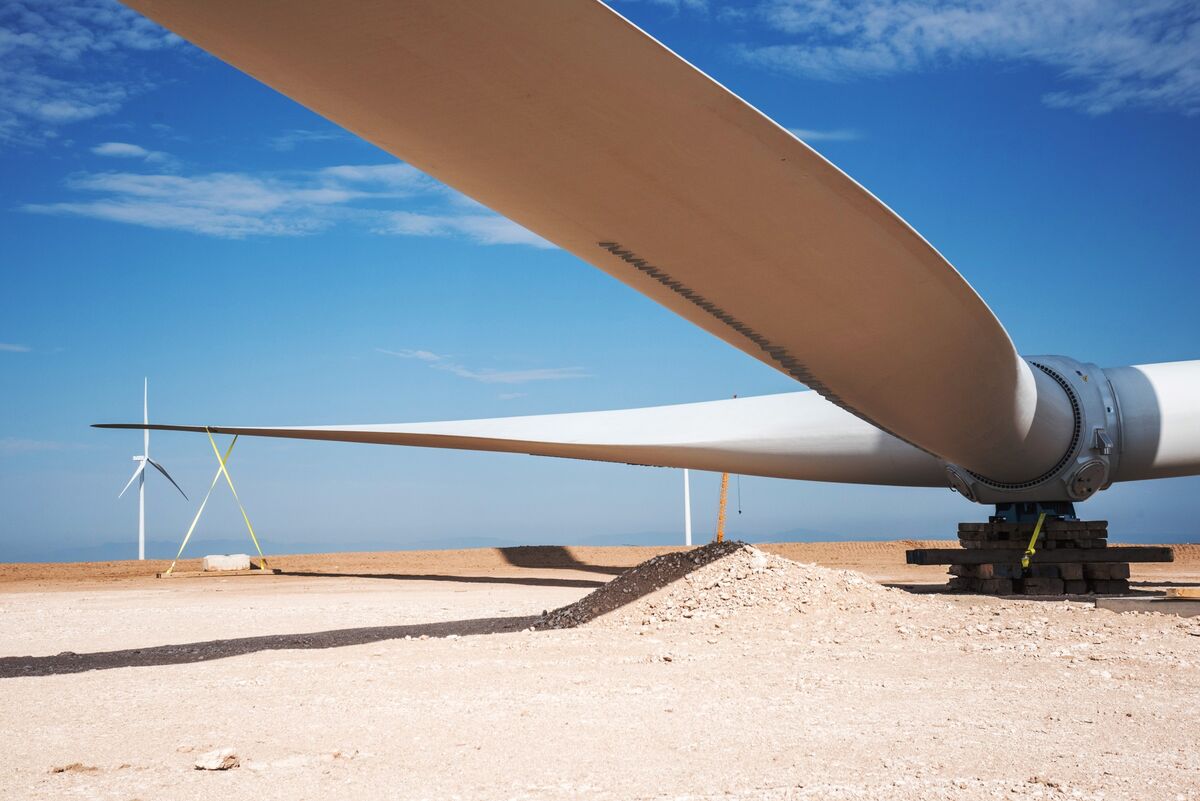
The green economy's market value has reached a record $10 trillion, while revenue from environmental products and services rose to $5.5 trillion last year, the fastest growth since 2022. The figures underscore accelerating demand for climate-related business lines across global listed companies. The report is positive for the sustainability and clean-energy investment universe, though it is more indicative of a long-term trend than an immediate market catalyst.
The bigger takeaway is not that “green” is large, but that it is becoming a self-reinforcing earnings pool rather than a policy-only trade. At this scale, marginal growth in climate-linked revenue starts to matter for capital allocation, index composition, and multiple support across utilities, grid equipment, electrification, efficiency, and industrial automation — especially for firms where these end-markets are now big enough to absorb cyclicality elsewhere.
The second-order winner set is likely upstream of the obvious renewables names: grid interconnection, transformers, switchgear, power management, power semis, and data-center efficiency vendors. Those businesses have tighter bottlenecks and better pricing power than pure-play generation, so the market may still be underappreciating how much of the value accrues to “picks and shovels” suppliers rather than the asset owners taking commodity and policy risk.
The main risk is that consensus overextrapolates a revenue trend into a clean profit trend. Climate-linked demand can keep compounding while margins compress if financing costs stay elevated, subsidies normalize, or utility-scale project pipelines get pushed out by permitting and interconnection delays; that would hit the high-beta renewables complex first, while quality industrial beneficiaries keep outperforming. Time horizon matters: the next 1-3 months are more about multiple expansion on a favorable narrative, but the next 6-18 months will likely separate balance-sheet strength and execution from thematic exposure.
Contrarian view: the trade may be under-owned, but it is not necessarily under-penetrated. A lot of capital already sits in broad ESG wrappers, so the alpha is likely in relative value within the theme, not long-only beta. The market may still be mispricing the durability of infrastructure and equipment earnings versus the fragility of subsidy-sensitive developers.
AI-powered research, real-time alerts, and portfolio analytics for institutional investors.
Request DemoOverall Sentiment
moderately positive
Sentiment Score
0.45
