

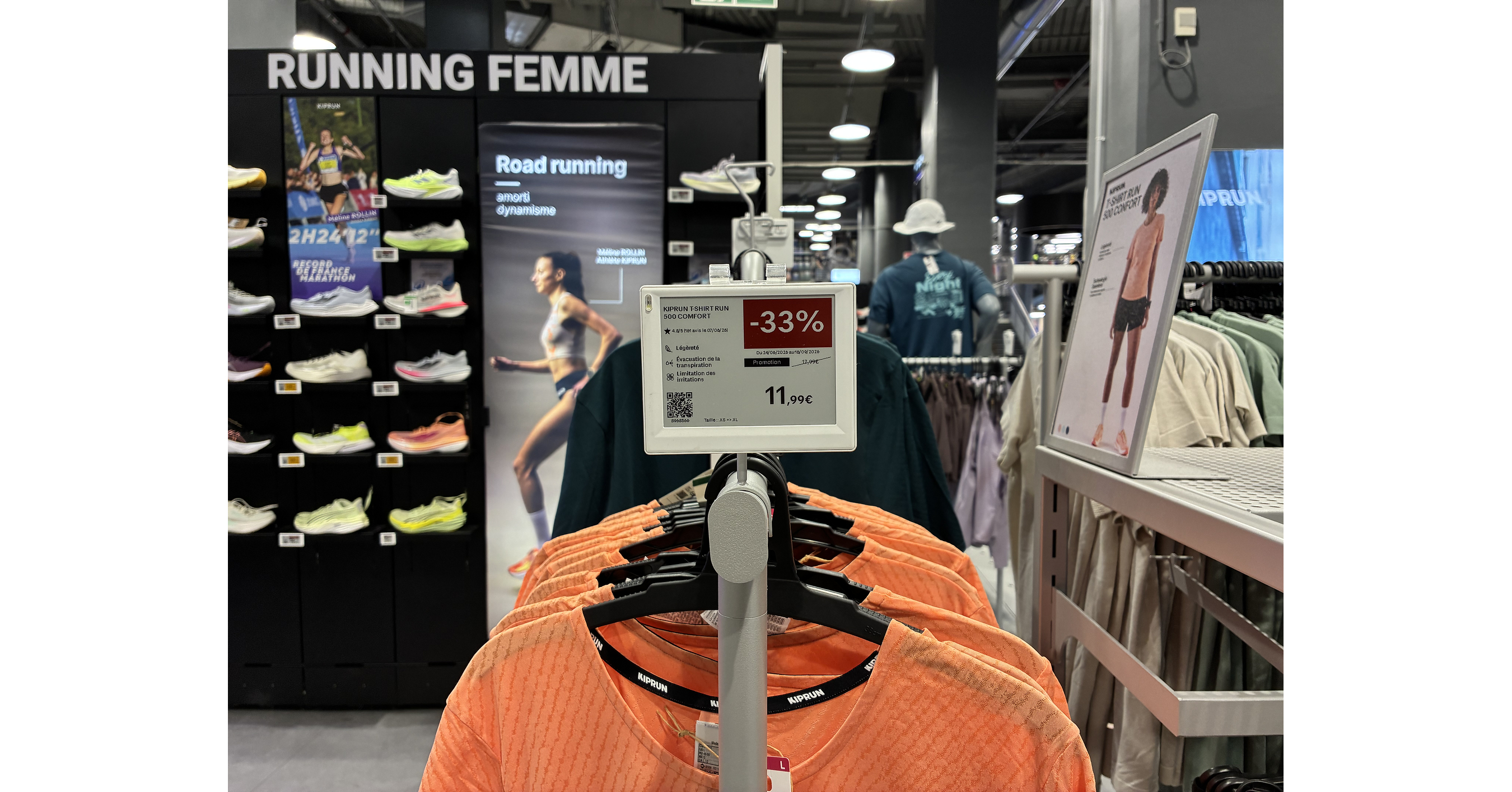
Vusion says Decathlon hit 700 stores using its electronic shelf label (ESL) and pricing automation platform as of Q2 2026, spanning 54 countries across Europe, South America and Asia-Pacific. Vusion attributes the rollout to automated, instant price updates that reduce manual tag changes and nearly eliminate shelf-vs-checkout pricing discrepancies to improve customer trust. The announcement is mainly an operational/technology milestone and is likely to have limited near-term market impact beyond incremental sentiment for Vusion’s retail-digitization positioning.
The key takeaway is not the store count itself, but that a multinational rollout at this scale raises switching costs and makes the platform more defensible versus point-solution ESL vendors. If the deployment is truly standardized across regions, Vusion is moving from project revenue toward a higher-quality, multi-year replacement cycle with better visibility on replenishment and software attach. That is structurally positive for the vendor, but only if gross margin holds and the rollout is not simply a low-margin hardware pull-through.
Second-order, this is a mild validation point for the broader retail digitization stack: network infrastructure vendors and systems integrators benefit when retailers want to avoid ripping out existing Wi-Fi/enterprise gear. Cisco’s Meraki footprint is a small but helpful embedded win, though the financial impact is likely immaterial unless this becomes a repeatable template across large chains. The more interesting competitive effect is on peers with weaker multinational execution; a visible global reference account can pressure pricing and shorten sales cycles for late adopters.
The main risk is that the market overreads a PR into a durable growth inflection. What matters over the next 1-3 months is backlog conversion, store-level economics, and whether management can show incremental wins outside Decathlon; over 6-18 months, adoption depends on retailers keeping ESL payback periods intact despite softer discretionary demand. A reversal would come from evidence of rollout delays, margin compression, or retailer backlash around dynamic pricing/shrink concerns.
AI-powered research, real-time alerts, and portfolio analytics for institutional investors.
Request TrialOverall Sentiment
mildly positive
Sentiment Score
0.25
Ticker Sentiment
