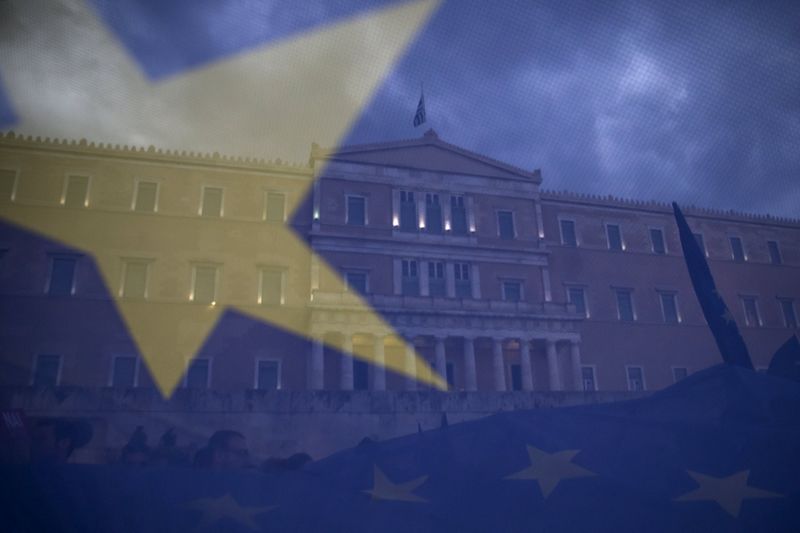
France and Greece extended their 2021 defense partnership for another five years with automatic renewal thereafter, while also signing new agreements on foreign policy, nuclear technology cooperation, a missile refurbishment contract with MBDA, and seven wind projects in central Greece. The article frames the move as part of Europe’s broader push to strengthen defense and strategic industrial capacity amid heightened geopolitical risk. Market impact is likely limited to relevant defense, energy, and industrial names rather than the broader market.
The real signal here is not the geopolitical headline; it is the accelerating European procurement cycle. Defense and dual-use industrial spend is shifting from rhetoric to funded multi-year commitments, which tends to favor prime contractors with capacity, certification, and local-content optionality rather than pure “headline beta” names. That is a second-order positive for European defense supply chains, specialty electronics, and missile subsystems, while it is more mixed for U.S. primes if Europe’s rearmament becomes increasingly localized.
The more interesting hidden angle is capital allocation away from civilian capex toward sovereign resilience. A Franco-Greek push into nuclear technology and wind suggests governments are trying to bundle energy security, industrial policy, and defense under one umbrella, which can extend project duration but also improves funding visibility. In practice, that usually benefits firms with backlog and policy leverage, while punishing smaller contractors that lack balance-sheet capacity to bridge delayed payments or procurement slippage.
On the semis side, the article’s stock-selection bait points to a market pivot where AI monetization broadens from accelerator scarcity to compute orchestration and infrastructure software. If that rotation is real, the market may be underestimating beneficiaries with more diversified exposure than Nvidia alone, especially companies tied to rack-level integration, enterprise AI deployment, or consumer AI engagement monetization. The risk is that this is still a narrative trade: if hyperscaler capex guidance decelerates over the next 1-2 quarters, the AI complex could retrace quickly even if secular demand remains intact.
Contrarian view: the defense and AI themes are both crowded, but the underowned exposure may be in adjacent suppliers and integrators rather than the obvious leaders. The setup favors relative-value longs over outright index chasing, because the strongest companies already have premium multiples and any disappointment in order timing or margin normalization will compress forward returns sharply.
AI-powered research, real-time alerts, and portfolio analytics for institutional investors.
Request DemoOverall Sentiment
mildly positive
Sentiment Score
0.15
Ticker Sentiment
