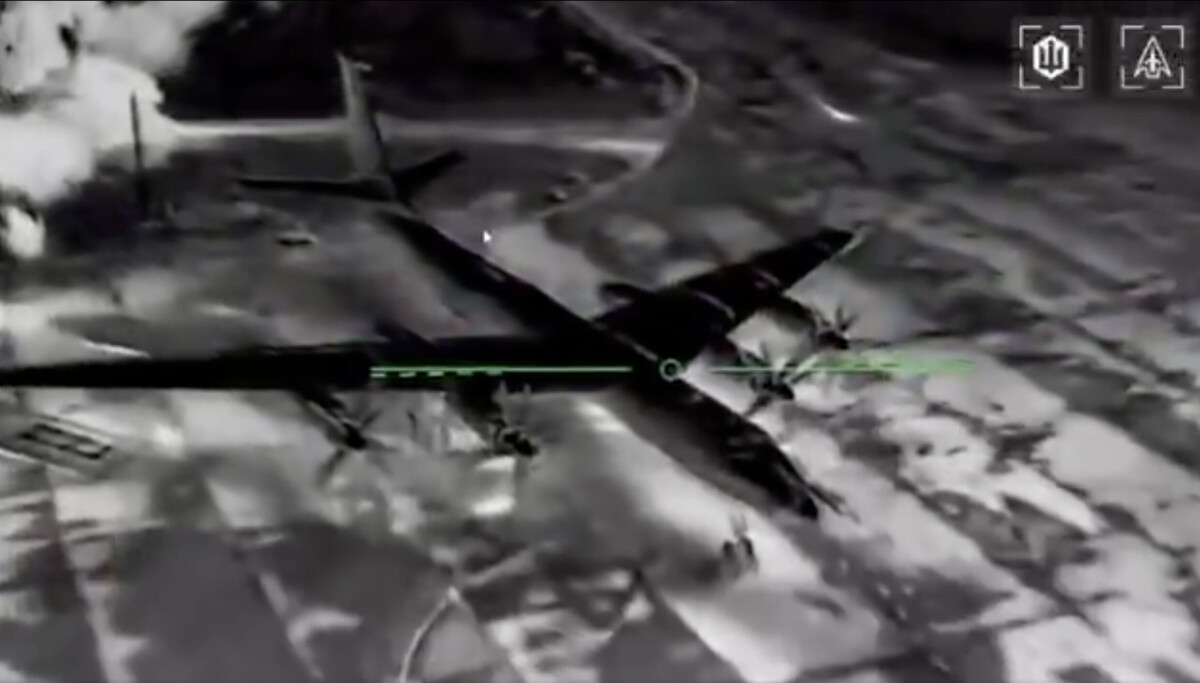
Ukrainian drones destroyed two Russian Navy Tu-142 long-range aircraft at Taganrog Airport, including a rare Tu-142MR strategic communications-relay plane used to maintain contact with nuclear-armed submarines. The loss is described as a significant blow to Russia's Northern Fleet, with only an estimated 12 to 14 Tu-142MR aircraft split between the Northern and Pacific fleets. While the event is military rather than market-driven, it represents a notable degradation of Russia's defense capabilities and strategic deterrence posture.
This is less about immediate battlefield attrition than about degrading a tiny, high-leverage node in Russia’s strategic C2 architecture. The key second-order effect is fleet availability: if a scarce relay platform is removed from the maintenance queue, the remaining airframes must absorb more flying hours, which raises failure rates and compresses the interval to the next maintenance cycle. That creates a slow-burn readiness problem that can persist for quarters, not days, because spare parts, depot capacity, and qualified airframes are all likely bottlenecks.
The market-relevant angle is escalation risk, not direct defense procurement. A strike that impairs the communications chain to ballistic-missile submarines increases the probability of Russian signaling behavior elsewhere—more patrol activity, more air defense posturing, more pressure on Arctic/North Atlantic routes—while also increasing the premium on survivable C2 systems. That typically benefits Western defense primes with exposure to airborne early warning, SATCOM, hardened communications, and ASW, while pressuring transport/logistics names only indirectly through higher insurance and route-risk premiums in polar corridors.
The contrarian view is that the operational damage may be overstated if the aircraft were already effectively offline for years and the strategic communications network has redundant pathways. In that case the true loss is symbolic and replacement demand is delayed, muting the immediate procurement signal. But even if the asset was near end-of-life, destroying it before it re-enters service still tightens an already fragile maintenance ecosystem and raises the expected cost of sustaining the fleet.
Over the next 1-3 months, watch for Russian attempts to disperse remaining long-range naval aviation assets, which would be a tell that survivability concerns are forcing changes in basing and maintenance cadence. Over 6-12 months, the bigger catalyst is whether Moscow allocates budget to rebuild or substitute this niche relay capability; if it does, that would create a small but real demand tail for avionics, secure comms, and aircraft modernization work.
AI-powered research, real-time alerts, and portfolio analytics for institutional investors.
Request TrialOverall Sentiment
strongly negative
Sentiment Score
-0.65
