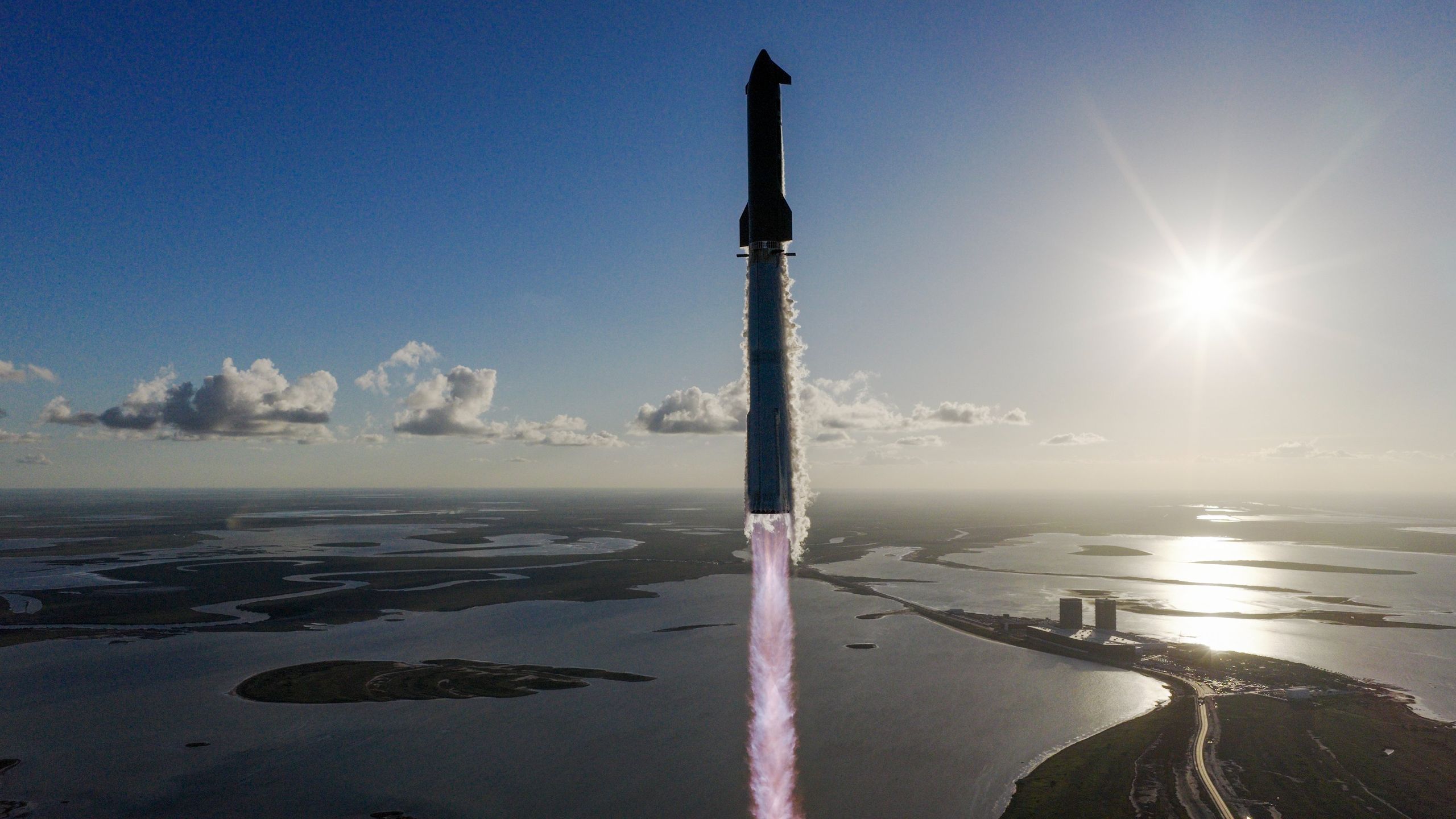
SpaceX is set to fly its first Starship V3 megarocket on May 21 in a suborbital test window opening at 6:30 p.m. EDT, marking the 12th overall Starship flight. The mission will test deployment of 20 dummy Starlink satellites plus two modified real satellites to evaluate heat shield performance and future return-to-launch-site readiness. The article is informational and reflects continued technical progress, but it does not include new commercial or financial disclosures likely to move the stock.
This is less a single-event catalyst than a validation checkpoint for the capital stack behind the entire Mars/Artemis supply chain. A clean V3 debut reduces perceived execution risk for long-duration space infrastructure bets, but the real market read-through is that reusable heavy lift is moving from “science project” toward an industrial cadence problem. That tends to re-rate the ecosystem in stages: first the prime contractor narrative, then launch-adjacent hardware, then downstream payload operators that depend on cheaper and more frequent access to orbit.
The second-order winner is not necessarily the launch provider itself, but the businesses that monetize higher launch frequency without needing perfect launch margins. Think test equipment, RF/optical sensing, thermal protection materials, avionics, and ground systems; their revenue can scale with cadence while the headline program remains volatile. The likely loser set is any incumbent launch or national-security orbital transport platform that competes on price rather than reliability, because a successful V3 expands the credibility gap and pressures pricing power over the next 12-24 months.
Near-term risk is binary: one failure likely matters more than several prior successes because the market will extrapolate a V3 setback into schedule slippage for commercial deployment and lunar-readiness milestones. That would hit adjacent beneficiaries first, as customers defer manifests and procurement decisions. The more subtle tail risk is actually success: if the test is clean, consensus may underappreciate how quickly launch frequency can compress the economics of satellite replacement, in-orbit demonstrations, and payload iteration across the sector.
The contrarian view is that the stock market may already be over-discounting the importance of the first V3 flight itself while underpricing the option value of a faster launch cadence. The right way to play it is not to chase the obvious headline, but to own suppliers and enabling technologies with multiple monetization paths and shorter cycle times. This is a months-to-years theme, but the catalyst window is the next 1-2 launch attempts, where execution will determine whether the story shifts from aspirational to investable at scale.
AI-powered research, real-time alerts, and portfolio analytics for institutional investors.
Request DemoOverall Sentiment
neutral
Sentiment Score
0.15
