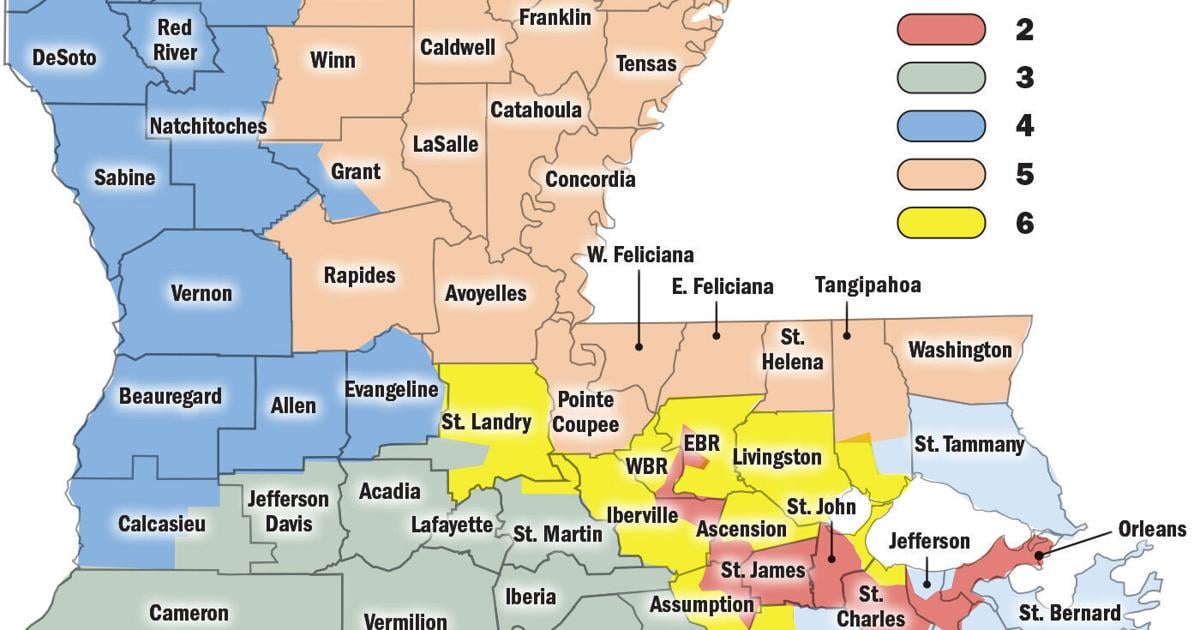
A Louisiana Senate committee passed a 4-3 party-line proposal to redraw the state's congressional map into a likely 5-1 Republican-favoring structure, eliminating one of two majority-Black, Democratic-leaning districts. The map now advances to the full Senate and then the House, where it could still change. The article centers on redistricting, voting rights, and political power rather than direct market-moving financial news.
The market implication is not the district map itself but the signal that Louisiana is willing to absorb legal risk to preserve a 5-1 outcome. That matters because the state is effectively choosing a durable, court-defensible Republican seat configuration over a maximal-gain 6-0 structure, which lowers the probability of an immediate judicial reset and makes the path more investable for GOP incumbents over the next 1-2 election cycles. In other words, the first-order political win for Republicans is smaller than the second-order benefit of certainty.
The clearest second-order beneficiary is any national Republican House strategy that depends on not bleeding seats in the South; a stable 5-1 map is less likely to trigger an expensive, late-cycle candidate scramble than a more aggressive plan that courts litigation. The hidden loser is not just Democratic incumbents, but outside groups and vendors that profit from prolonged redistricting chaos — ad buyers, recount lawyers, and turnout operations all get less valuable if the final map settles early. Volatility should compress once the full legislature advances something closer to this committee version, though headline risk stays elevated until the House and courts are done.
The main tail risk is a court ruling that treats even the 5-1 compromise as impermissibly race-conscious, which would force another redraw and re-open the entire 2026 filing calendar. That is a weeks-to-months catalyst, not a years-long issue, and it is the kind of event that can create sudden donor and candidate reallocation rather than broad equity-market impact. The contrarian point: the consensus is focusing on the loss of a Black district, but the bigger practical question for investors is whether this reduces the odds of a messy, binary legal shock later; if so, the most bearish political trade may actually be the one betting on prolonged uncertainty rather than the map outcome itself.
AI-powered research, real-time alerts, and portfolio analytics for institutional investors.
Request DemoOverall Sentiment
neutral
Sentiment Score
-0.10
