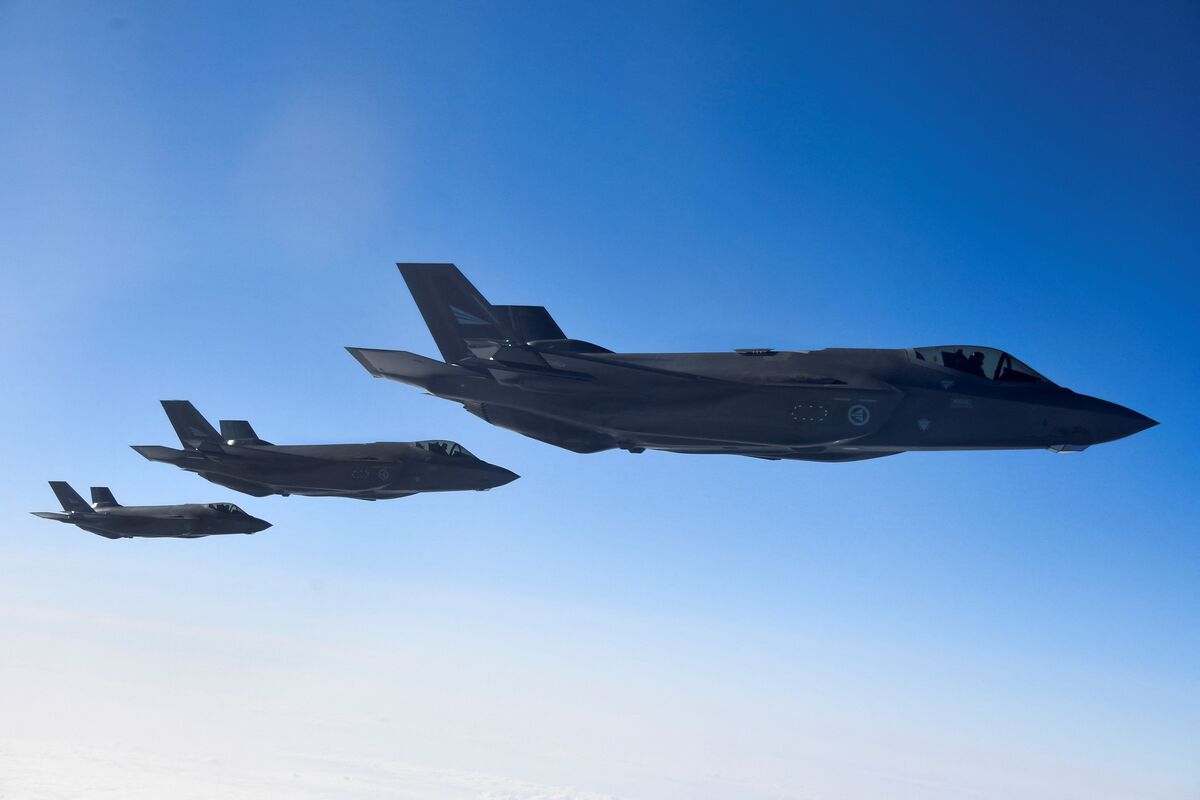
NATO officials said Europe could absorb planned US military cuts by replacing American fighter jets and drones with compatible equipment and expanded data sharing, but acknowledged the continent lacks some of the weapons to do so today. The article highlights a capability shortfall and an unclear replacement path rather than an immediate escalation. The main impact is on European defense readiness and procurement expectations, with limited direct near-term market effect.
The immediate market read is not about a one-off budget line item but about the start of a multi-year European capex cycle. If the U.S. removes high-end enablers, the gap is disproportionately in ISR, airborne networking, EW, and munitions stockpiles — categories where Europe has historically underinvested and where replacement costs are much higher than the headline platform cost suggests. That shifts spend away from traditional hardware procurement toward systems integration, secure comms, sensors, and software-defined command-and-control, which is structurally favorable for firms with NATO interoperability credentials and unfavorable for pure-play platform makers that depend on U.S.-anchored architectures.
Second-order effects likely show up first in procurement urgency, not unit volumes. European ministries can announce commitments quickly, but actual replacement timelines run 12-36 months because of certification, data-link compatibility, and cross-border procurement friction; that delay creates a gap where readiness metrics can worsen before spending improves. The biggest beneficiaries are likely to be primes and subsystem vendors with existing European production footprints, while smaller defense names without export clearances or installed base may get crowded out by incumbent consolidation.
The key risk is that markets overestimate how fast Europe can convert political intent into deployable capability. If U.S. support is reduced faster than Europe can absorb it, the near-term effect is a readiness shortfall that could pressure NATO cohesion and force emergency procurement, but also raise fiscal scrutiny in countries already running tight budgets. Conversely, any de-escalation or a more gradual U.S. drawdown would push this story from an urgency trade into a slow-burn budget narrative, which would compress the multiple expansion for defense beneficiaries.
The contrarian point is that the best equity expression may not be the most obvious large-cap defense names, since those are already pricing in elevated defense spend. The underappreciated winners are in defense electronics, secure communications, and dual-use software where incremental European spending has the highest leverage and where replacement cycles are less visible to the market. That argues for favoring the picks-and-shovels layer over platform exposure, with the trade working more on rerating and backlog visibility than on immediate revenue beats.
AI-powered research, real-time alerts, and portfolio analytics for institutional investors.
Request DemoOverall Sentiment
mildly negative
Sentiment Score
-0.15
