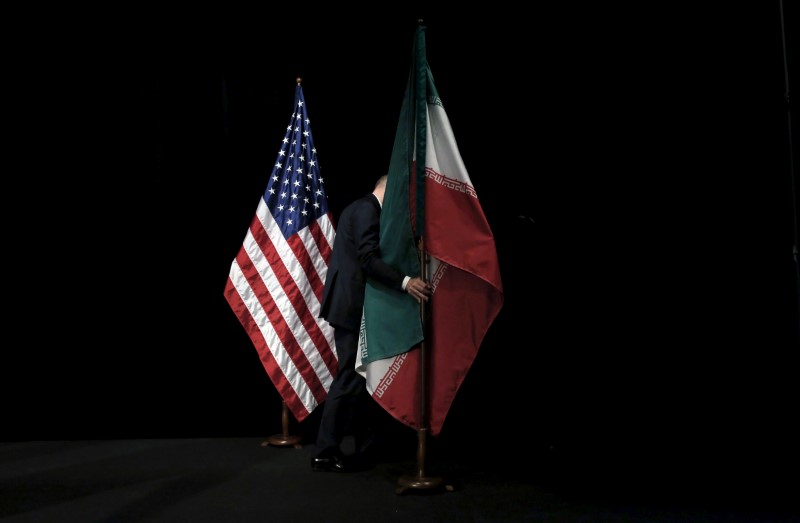
The U.S. will begin enforcing a blockade on maritime traffic entering and leaving Iranian ports from 10 AM ET on April 13, a major escalation that applies to vessels of all nations. The move follows failed U.S.-Iran talks in Islamabad and threatens heightened disruption to shipping through the Gulf, raising oil and broader geopolitical risk. Regional governments are still seeking to restart diplomacy and extend a fragile two-week ceasefire, but near-term market sentiment is clearly risk-off.
This is a classic choke-point shock with asymmetric spillovers: the first-order move is higher freight insurance and regional energy risk premia, but the second-order effect is a forced rerouting of flows through already-constrained alternatives. If access to Iranian ports is restricted while diplomacy remains unresolved, the market should expect a rapid repricing in tanker rates, marine insurance, and Gulf-linked logistics names within days, even before any physical supply disruption shows up in barrels.
The more interesting trade is not just crude higher; it is the widening of spreads across the energy complex. Countries and companies with exposure to Middle East lifting, petrochemical feedstock imports, or Gulf transshipment face immediate margin compression, while Atlantic Basin producers and LNG exporters benefit from substitution demand and the removal of a low-cost supply overhang. The base case is a volatility regime shift, not a one-way oil trend: the market will likely over-discount a sustained blockade in the first 24-72 hours, then reassess if diplomacy reopens a narrow off-ramp.
The hidden risk is demand destruction in Asia and the knock-on effect on global trade finance. A prolonged blockade would not just lift oil; it would tighten working capital for shippers, ports, and commodity traders with longer settlement cycles, creating forced de-risking well beyond the Gulf. Conversely, if talks resume within days, the fastest mean-reversion will likely be in tanker equities and freight derivatives, while upstream energy retains some residual geopolitical premium.
Consensus may be underestimating how quickly policymakers step in to cap the shock if benchmark crude gaps materially higher. That means the best risk/reward is likely in convexity: own instruments that benefit from an immediate spike but have limited downside if the event de-escalates, rather than outright directional longs that require a multi-week crisis to pay off. The market is likely pricing headline risk before confirming supply loss, which creates opportunity for disciplined option structures and relative-value trades.
AI-powered research, real-time alerts, and portfolio analytics for institutional investors.
Request DemoOverall Sentiment
strongly negative
Sentiment Score
-0.82
