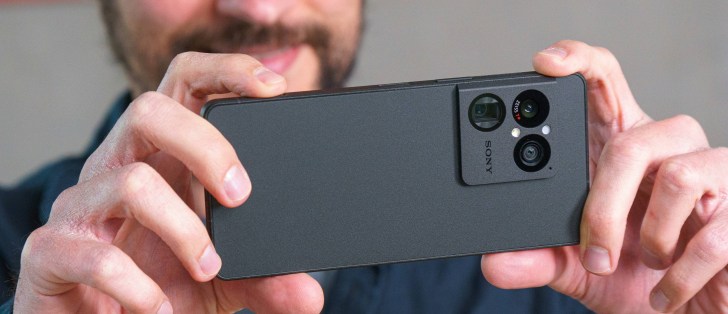
Sony’s Xperia 1 VIII introduces a redesigned telephoto camera, switching from a continuous zoom system to a fixed 70mm lens with a larger 1/1.56" sensor, while the main, ultrawide, and selfie cameras are largely unchanged. Review commentary is mixed: the new telephoto is stronger at native focal length, but zoom beyond that, portraits, and low-light performance remain only average relative to top cameraphones. Video performance is generally better than stills, with 4K120 on all rear cameras and good dynamic range, though detail and stabilization still have some compromises.
Sony is making a pragmatic pivot away from a technically elegant but commercially weak zoom architecture toward a simpler, larger-sensor telephoto. That is a subtle but important signal: the company is admitting that software-denied hardware complexity is not translating into leadership, and it is now optimizing for perceptual sharpness at the native focal length rather than marketing range. In the near term, this should improve the Xperia camera narrative with enthusiasts, but it does not yet create a defensible premium tier because the broader stack still looks dated versus best-in-class imaging systems.
The second-order effect is that Sony is increasingly competing with itself. Its imaging sensors are still embedded across the smartphone ecosystem, so every improvement it makes in handset processing or sensor tuning raises the bar for the rest of the market and potentially accelerates camera parity in mid-to-high-end Android devices. That is a quiet negative for hardware differentiation across OEMs that rely on camera leadership as a feature gate, while creating a modest positive for Sony Semiconductor if the new sensor allocation drives more high-value component demand rather than finished-device margin risk.
The contrarian angle is that the market may overfocus on the telephoto redesign as a product win when the real issue is execution consistency: the imaging stack still looks uneven across focal lengths, lighting conditions, and portrait use cases. If the device gets positive press from native telephoto sharpness, that may be enough to stabilize niche demand, but it is unlikely to move the commercial needle materially unless Sony can convert this into a broader camera ecosystem advantage over the next 2-3 product cycles. The risk is that the new approach simply confirms Sony is no longer chasing a category-defining smartphone camera edge, which limits upside to sentiment rather than share gains.
AI-powered research, real-time alerts, and portfolio analytics for institutional investors.
Request DemoOverall Sentiment
neutral
Sentiment Score
0.10
Ticker Sentiment
