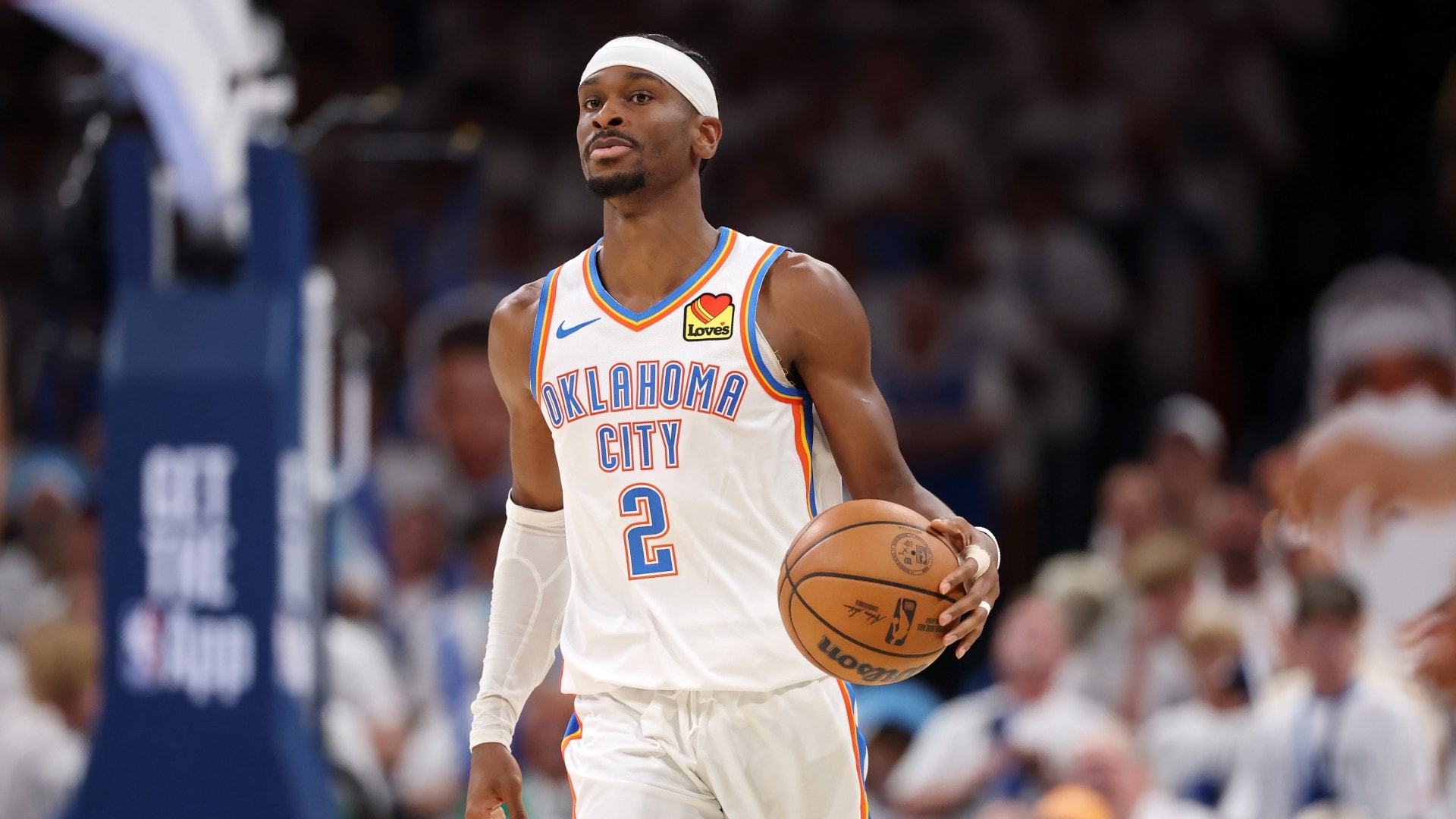
The Oklahoma City Thunder beat the San Antonio Spurs 127-114 to take a 3-2 series lead in the Western Conference Finals, moving one win away from the NBA Finals. Shai Gilgeous-Alexander scored 32 points despite five early turnovers, while Chet Holmgren and Isaiah Hartenstein combined for 28 points and 26 rebounds as Oklahoma City shot 48.2% from the field and 43.8% from 3-point range. The result is positive for team performance and playoff outlook, but it is routine sports news with limited broader market impact.
The signal here is less about a single win and more about Oklahoma City’s ability to change game state when plan A is disrupted. The lineup flexibility is a real postseason edge because it reduces reliance on any one creator or any one coverage; that tends to compound over a series as opponents run out of clean counters. In market terms, the better proxy for durability is not star scoring volatility but the team’s ability to win the non-star minutes through depth, shooting, and defensive connectivity. San Antonio’s path is narrower: their offense can look functional only if the primary star is generating efficient volume without taking over every possession. When the Thunder force that player into free-throw-heavy production and low rim efficiency, it shrinks the Spurs’ margin for error and exposes their secondary shot creation. That dynamic is usually sustainable only for short stretches, so the next game matters more for whether the series extends than for any notion of a true tactical breakthrough. The contrarian read is that this is still not a clean “Thunder solved it” story. A high-variance game with hot perimeter shooting and unusually strong bench scoring can mask fragility, especially if the opponent’s role players regress toward baseline. If the series goes another turn, the more relevant question is whether Oklahoma City’s ball security against pressure deteriorates on the road, because that is the most plausible reversal mechanism over a 1-2 game horizon. From a positioning lens, the more actionable trade is against complacency rather than into certainty: market participants may overprice the closeout probability and underprice a one-game extension that restores series tension. If the Thunder finish quickly, the upside is already mostly in the odds; if the Spurs steal one, the volatility re-rates sharply because depth and bench balance become more valuable in a longer series.
AI-powered research, real-time alerts, and portfolio analytics for institutional investors.
Request DemoOverall Sentiment
mildly positive
Sentiment Score
0.18
