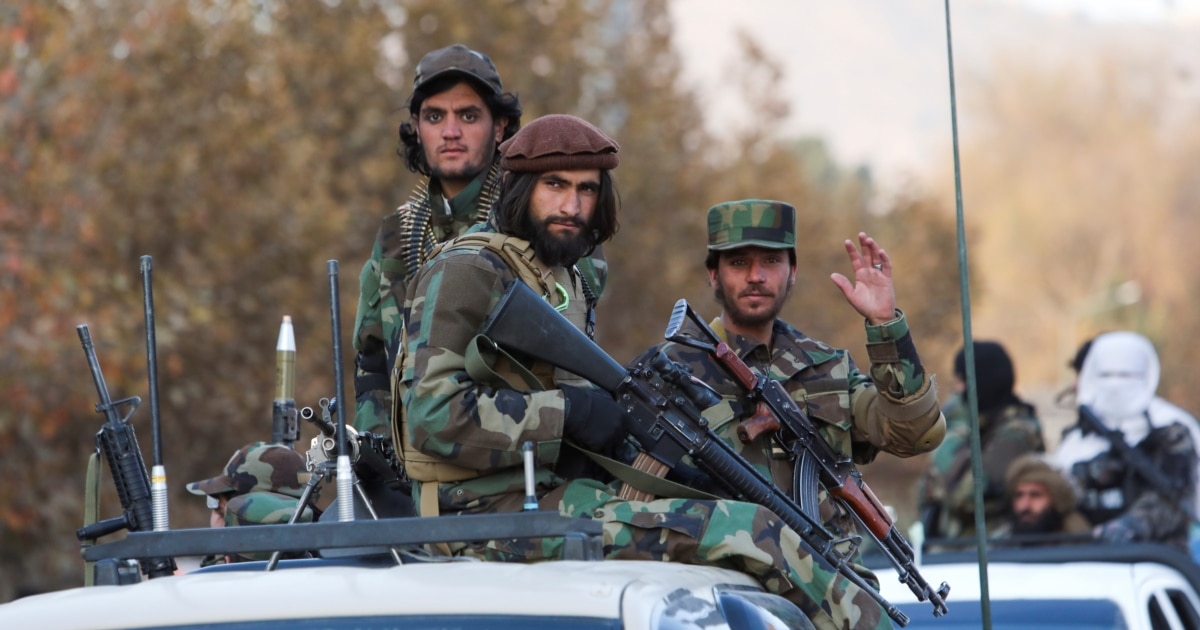
Russia and the Taliban signed a military cooperation agreement on May 27, signaling deeper but still undefined defense ties. The deal appears more symbolic than operational for now, with no disclosed scope and likely limited to maintenance, coordination, or training rather than major arms transfers. Moscow’s war in Ukraine and Western sanctions constrain any meaningful support, while the Taliban seeks diplomatic legitimacy and a broader set of partners.
The market impact is less about immediate arms flows and more about incremental de-risking of Russia’s regional isolation. If this evolves beyond symbolism, the most relevant second-order effect is not a surge in weapons demand, but a modest rerouting of Russian security resources and intelligence bandwidth away from the European theater toward Central Asia, which could marginally alter Moscow’s threat perception and force posture over the next 6-18 months.
The more investable angle is in sanctions leakage and logistics. Any deepening of ties with Kabul raises the probability of gray-zone trade corridors through Central Asia, which can benefit freight intermediaries, rail-linked operators, and local banks with payment-channel exposure, while increasing compliance risk for Western banks with correspondent relationships in the region. The biggest loser is not a named defense prime, but the credibility of the West’s pressure architecture: every additional bilateral deal outside the sanctions perimeter lowers the perceived cost of non-alignment for other frontier states.
A key contrarian miss is that this may be economically trivial but strategically material. Russia does not need to be a large arms supplier for the relationship to matter; even small training, maintenance, or intelligence exchanges can create durable dependency and a platform for future transactions once sanctions conditions change. The real catalyst to watch is any evidence of financing, spare-parts transfer, or transport insurance arrangements, because those would imply transactionality rather than theater and could emerge within weeks, not years.
Tail risk is escalation around IS-K if Moscow uses the relationship to justify a broader security footprint in Afghanistan or Central Asia; that would raise regional risk premia and pressure frontier credit, airlines, and cross-border transport names. The base case remains mostly symbolic, but the option value lies in what the deal normalizes: if recognized and tolerated, it could become a template for other sanctioned states to transact with isolated regimes via low-visibility channels.
AI-powered research, real-time alerts, and portfolio analytics for institutional investors.
Request TrialOverall Sentiment
neutral
Sentiment Score
0.05
