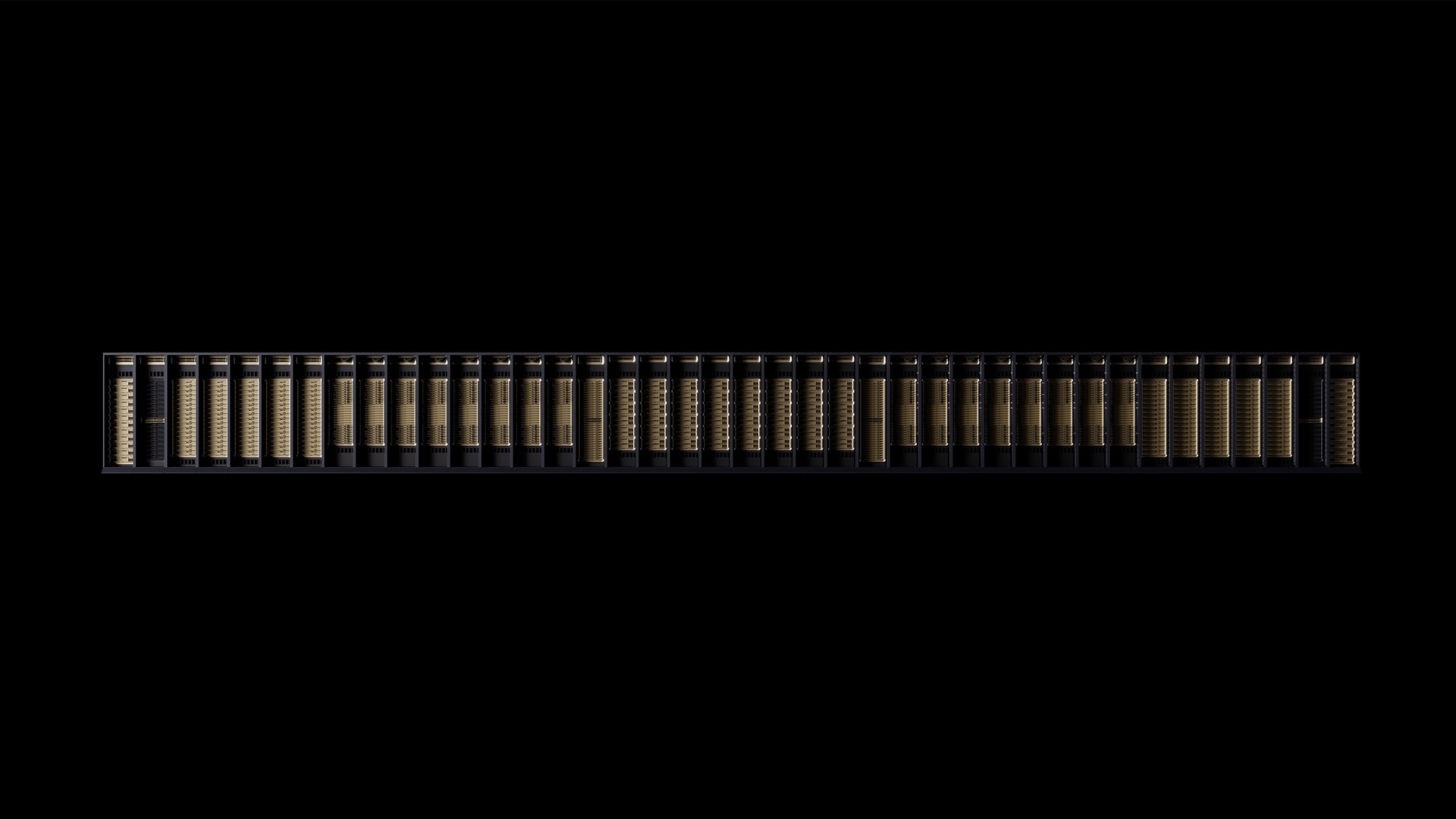
NVIDIA says Vera Rubin is ramping into full production, with production shipments set to begin this fall and 350+ factories across 30 countries building the platform. The new system promises 10x agent throughput versus Grace Blackwell and introduces Spectrum-X Ethernet Photonics, which NVIDIA says delivers 5x better power efficiency and 1.3x faster deployment for million-GPU AI factories. The announcement also highlights broad ecosystem adoption across major server makers and cloud providers, reinforcing NVIDIA’s leadership in AI infrastructure.
This is less about a single product cycle and more about NVIDIA converting AI infrastructure into an industrial standard. The key second-order effect is that the value accrues not just to NVDA silicon, but to whoever can actually absorb the complexity of POD-scale deployment: the ODM/server layer, networking, power, cooling, storage, and security stack. That shifts the bottleneck from “who has the best model” to “who can stand up usable capacity fastest,” which should favor integrators with manufacturing scale and punish smaller AI hardware vendors that cannot clear the operational hurdle.
The networking angle is the most underappreciated catalyst. Co-packaged optics and higher-speed DPUs reduce power and latency constraints, which means the marginal economics of extremely large clusters improve right when hyperscalers are racing to compress token cost. That creates a medium-term demand tailwind for the infrastructure ecosystem, but it also raises the bar for competitors: if the market starts treating this as the default architecture, alternative fabrics and white-box networking stacks become harder to monetize.
For the listed names, the cleanest beneficiaries are the systems integrators and cloud platforms that can book design wins into actual shipments over the next 2-3 quarters. The risk is that enthusiasm for “production ramp” front-runs revenue recognition; the install base can look huge while near-term gross margin remains pressured by configuration complexity, component constraints, and working-capital drag. A second risk is concentration: if hyperscalers decide to internalize more of the stack, some of the ODM upside may be capped despite strong demand.
Contrarian takeaway: the market is likely still underestimating security as a spend category. Confidential computing, tenant isolation, and policy enforcement at rack scale are not add-ons; they are prerequisites for regulated enterprise AI and could become a high-margin attach layer across deployments. If adoption broadens beyond hyperscalers into banks, healthcare, and sovereign clouds, the security/control plane vendors may see more durable revenue than the headline GPU cycle suggests.
AI-powered research, real-time alerts, and portfolio analytics for institutional investors.
Request DemoOverall Sentiment
strongly positive
Sentiment Score
0.82
Ticker Sentiment
