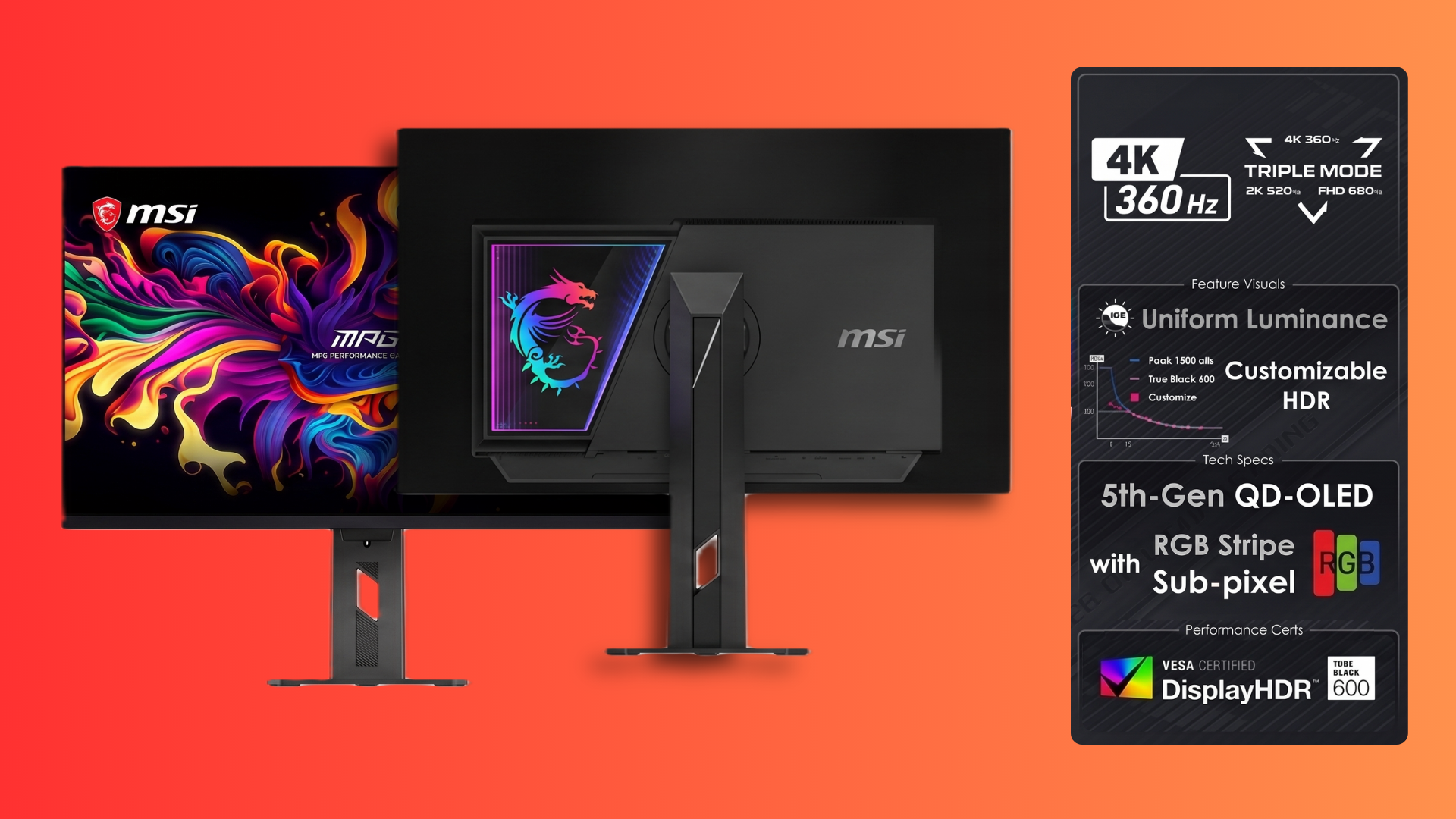
MSI unveiled the MPG OLED 322URDX36, a 32-inch QD-OLED monitor with triple-mode operation: 4K at 360 Hz, 1440p at 520 Hz, and 1080p at 680 Hz. The panel adds several notable upgrades, including Samsung's Penta Tandem QD-OLED stack, VESA DisplayHDR 600 True Black, DisplayPort 2.1 UHBR20, USB-C 98W power delivery, and MSI's DarkArmor film for deeper blacks. The launch is positive for MSI's premium display lineup but is primarily a product announcement with limited near-term market impact.
The economic signal is less about one premium monitor and more about the arms race in display performance shifting from spec-sheet bragging to stack integration. Samsung’s panel advances and MSI’s triple-mode implementation raise the bar for everyone using the same OLED supply chain, but the real beneficiary set is likely broader gaming OEMs that can now justify higher ASPs via genuinely differentiated modes rather than cosmetic refresh-rate inflation. That said, the 1440p middle mode is only valuable if the scaler and subpixel layout produce a perceptibly cleaner image; if not, this becomes a niche enthusiast feature with limited commercial durability.
From a competitive standpoint, the most immediate pressure lands on high-end WOLED and older QD-OLED monitors that compete on peak refresh and HDR claims. The RGB-stripe layout is a subtle but important second-order advantage: it should improve text clarity and desktop usability, which expands the addressable market beyond pure gamers into creator/workstation buyers willing to pay a premium for a single monitor compromise. If that holds in reviews, it meaningfully improves the resale of OLED as a “daily driver” category and supports mix shift toward higher-margin SKUs for panel makers and OEM brands.
The main risk is that the product is over-optimized for headlines and under-optimized for real-world ergonomics. A 1440p mode on a 4K-native panel can backfire if image interpolation looks soft, and any visible brightness pumping or burn-in anxiety will cap adoption outside the enthusiast base. Time horizon matters: near term, this is a sentiment catalyst for the display ecosystem; over 6-12 months, the real test is whether competitors can ship similar feature sets at lower price points, which would compress margins for first movers.
The contrarian view is that the market may be overestimating how many buyers actually value 520-680 Hz modes versus panel consistency, HDR accuracy, and price. If reviews show the 1440p mode is mostly a marketing bridge rather than a usable setting, demand may concentrate in a very small enthusiast cohort and the launch becomes a prestige loss-leader rather than a volume driver. In that case, the broader OLED upgrade cycle remains intact, but the premium attached to the newest generation could fade quickly as the feature set normalizes.
AI-powered research, real-time alerts, and portfolio analytics for institutional investors.
Request DemoOverall Sentiment
moderately positive
Sentiment Score
0.55
