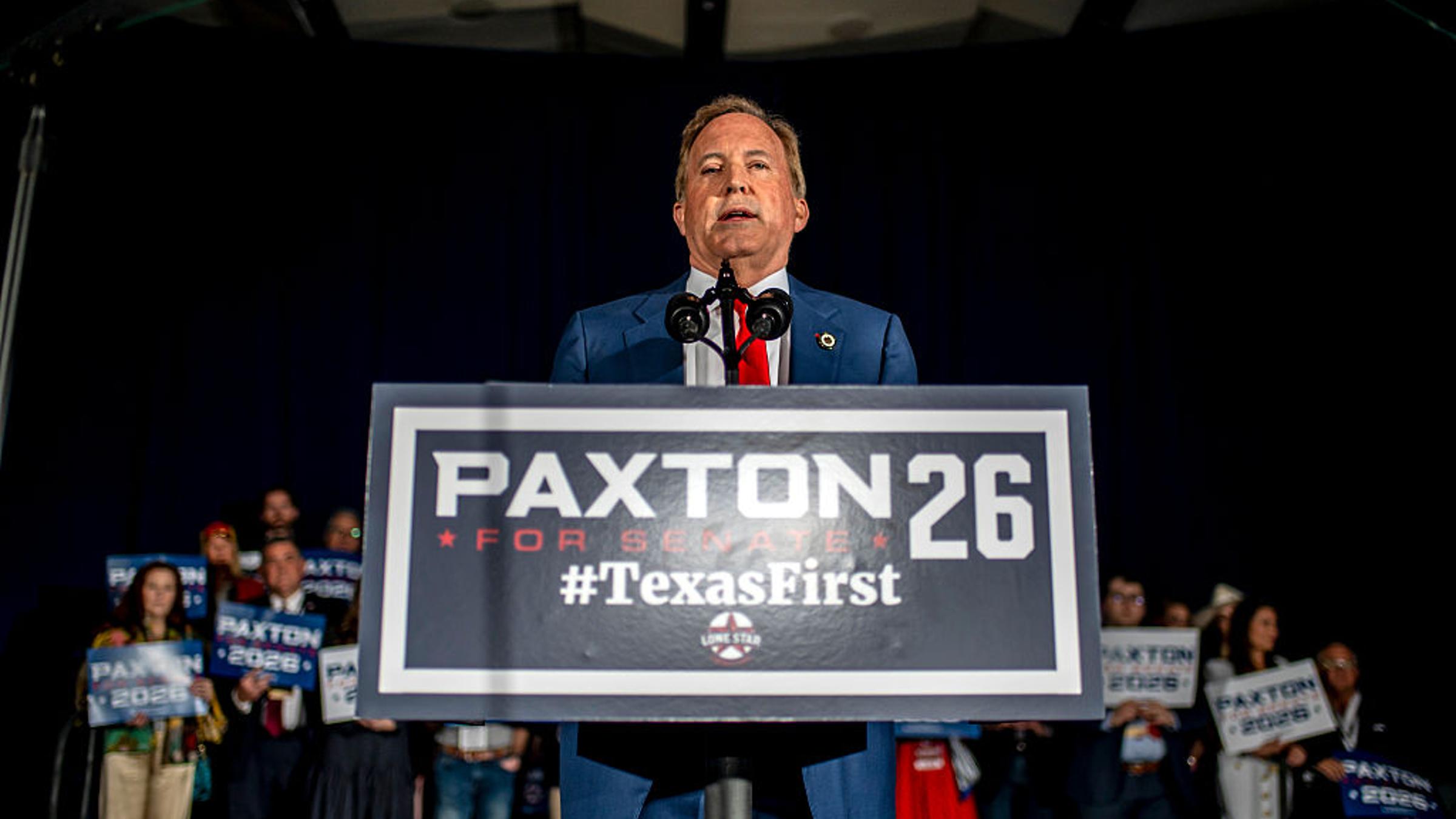
Republicans are facing an estimated $250 million effort to defend Ken Paxton’s Texas Senate seat after spending $90 million in the runoff, crowding out resources for other battlegrounds. Trump’s endorsement helped Paxton defeat John Cornyn, raising Democratic hopes that James Talarico could make Texas competitive and potentially aid down-ballot House races. The article is politically significant but has limited direct market impact.
The immediate market implication is not ideological; it is allocation risk. A forced intraparty fight in Texas effectively turns a once-budgetable Senate defense into a funding sinkhole, raising the odds that national GOP resources get diverted away from marginal states where the median seat is much cheaper to defend or flip. That matters because Senate control is often decided by a handful of races, so a single misallocated cycle can change the probability-weighted value of an entire Congress. Second-order, the bigger political risk is legislative compression: if one party spends heavily to patch a self-inflicted leak, it has less flexibility to bargain on fiscal deadlines, appropriations, and confirmations. That raises the tail risk of more volatility around government funding, debt-ceiling brinkmanship, and oversight confrontation in the next 6-12 months, especially if the Senate majority narrows. Markets usually underprice the downstream effect of a few hundred million dollars in campaign spend because the real economic variable is not ad spend itself, but the odds of policy gridlock and shutdown risk. The contrarian view is that the headline may overstate the general-election danger in a deep-red state. Even a weaker nominee can still benefit from partisan polarization and straight-ticket voting, so the true swing in seat probability may be smaller than activists fear. The more durable effect may instead be inside the GOP: Trump’s ability to discipline incumbents increases, which should keep pro-Trump positioning dominant and make institutional Republican resistance harder going forward. For investors, the cleaner trade is not in direct election names but in policy-volatility hedges. If the Senate math tightens, sectors exposed to federal budget resolution and confirmation gridlock should see a higher dispersion premium, while large-cap defensives with low regulatory beta gain relative appeal. The key catalyst window is the next 3-9 months, as fundraising, polling, and primary fallout translate into measurable shifts in seat odds and shutdown risk pricing.
AI-powered research, real-time alerts, and portfolio analytics for institutional investors.
Request DemoOverall Sentiment
mildly negative
Sentiment Score
-0.25
