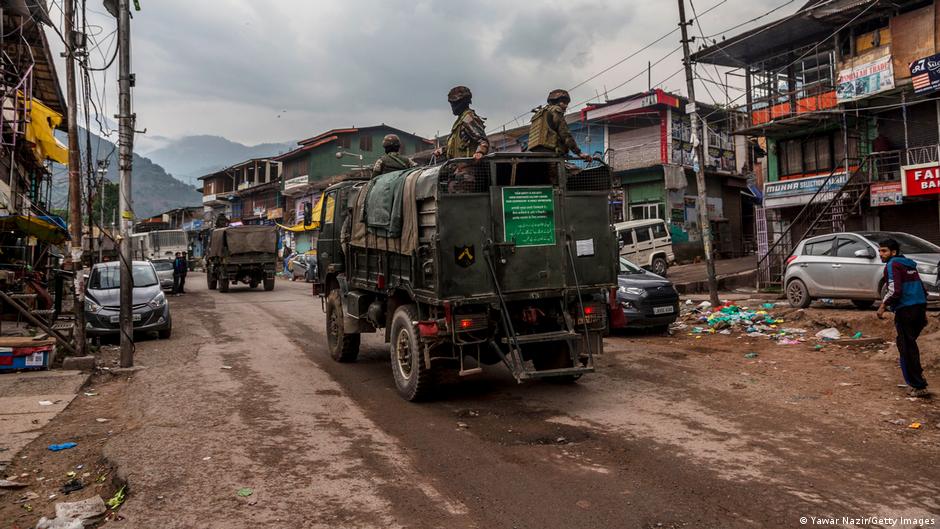
The article centers on the one-year anniversary of the India-Pakistan conflict that followed the Pahalgam attack, with both sides continuing to dispute blame, the ceasefire narrative, and US mediation claims. Modi reiterated India's hard line on terrorism, while Pakistan warned of a forceful response to any future attack. Separately, post-poll violence in West Bengal has left at least five dead and more than 433 people arrested, underscoring elevated domestic political risk in India.
The market implication is not immediate escalation risk so much as a slow-burning premium on Indian sovereign credibility and defense procurement. A government that repeatedly elevates external security narrative after a kinetic episode tends to keep defense capex elevated for multiple budget cycles, which supports domestic primes, electronics, and munitions over imported platforms; the second-order winner is the local supply chain as indigenization becomes politically harder to unwind. That said, the bigger near-term trade is not in India-equity beta but in volatility around any fresh border incident, where headline risk can compress INR and widen CDS before equities fully reprice.
The West Bengal violence is a cleaner read-through for domestic governance risk: localized unrest rarely moves the index, but it can create a tactical overhang for consumer, industrial, and logistics exposure tied to eastern India if it persists beyond days into weeks. The more important signal is that post-poll instability raises the expected policy cost of coalition management, which can delay land, permitting, and infrastructure execution in politically sensitive states. This is a modest headwind for capital goods names with heavy state execution exposure, but a relative positive for firms with diversified geography and central-government order books.
The strongest contrarian point is that the ceasefire narrative dispute matters more diplomatically than economically unless it changes Washington’s willingness to deepen security ties with New Delhi. If the U.S. keeps rewarding Pakistan for crisis mediation, India may respond by accelerating defense self-reliance and reducing tolerance for nonaligned ambiguity, which is bullish for domestic defense but could temper some external financing optimism in India over 6-12 months. The market is likely underpricing this policy ratchet because the immediate violence looks noisy, yet the durable effect is a higher structural floor for defense and internal security spending rather than a one-off event spike.
AI-powered research, real-time alerts, and portfolio analytics for institutional investors.
Request DemoOverall Sentiment
mildly negative
Sentiment Score
-0.20
