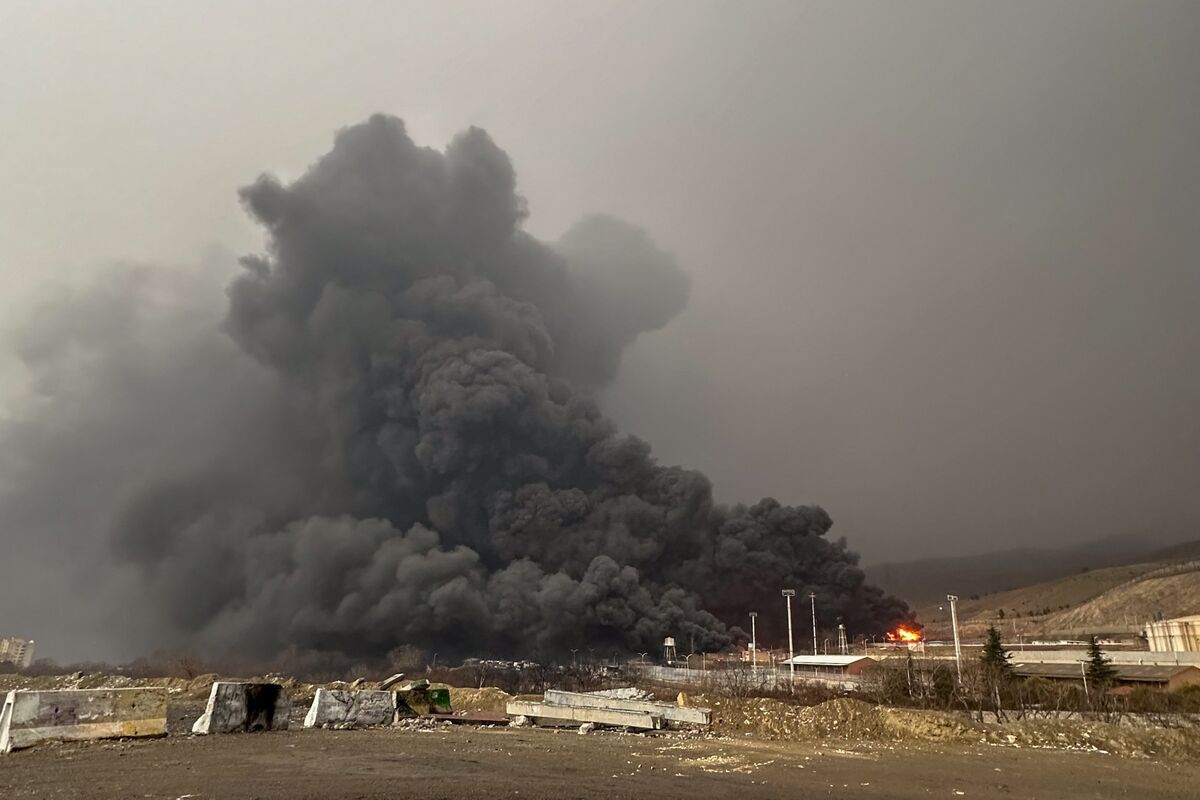
President Trump said the US and Israel are making significant progress against Iran and could end the conflict 'very soon,' and announced the US Navy will escort tankers through the Strait of Hormuz. That messaging reduces near-term oil-shock and commodity-price upside risks after fighting had pushed oil and natural gas prices sharply higher, easing inflation concerns. Market implication: a lower geopolitical risk premium should relieve pressure on energy-consuming sectors and global shipping, while energy and defense-related securities may see short-term repositioning.
Market pricing has likely baked in a short-term risk premium in crude and freight rates that can fall away quickly if credible signals of de-escalation accumulate; that means oil volatility and insurance/freight surcharges are the most immediate mean-reversion candidates over days–weeks. A rapid unwind will compress forward volatility, reduce hedging demand from refiners and shippers, and unlock working-capital relief for container lines and airlines that have been paying elevated bunker and charter rates.
Second-order winners are those with variable fuel or charter exposure and limited terminal asset leverage — think airlines with heavy short-dated fuel hedges and shipping lines with flexible charter fleets — because they realize margin improvement sooner than capital-heavy E&P or integrated majors. Conversely, defense primes and insurers that reprice risk into longer-dated contracts are exposed to a two-way move: their revenue from sustained conflict falls but near-term repricing of risk premia can leave valuations vulnerable to a sentiment pullback.
Key reversal catalysts to monitor are (1) demonstrable normalization of tanker scheduling and Lloyd’s-class insurance premia over 1–6 weeks, (2) coordinated SPR/strategic diplomatic moves that change market expectations within 30–90 days, and (3) a countervailing shock — e.g., proxy escalation or an OPEC+ production response — which could reinflate the risk premium and reverse any unwinds. Position sizing should be front-weighted for the short time-window (2–8 weeks) where information asymmetry and headline-driven flows create the largest P&L opportunities, while tail-hedging for a slower, multi-month re-escalation scenario.
AI-powered research, real-time alerts, and portfolio analytics for institutional investors.
Request DemoOverall Sentiment
mildly positive
Sentiment Score
0.20
