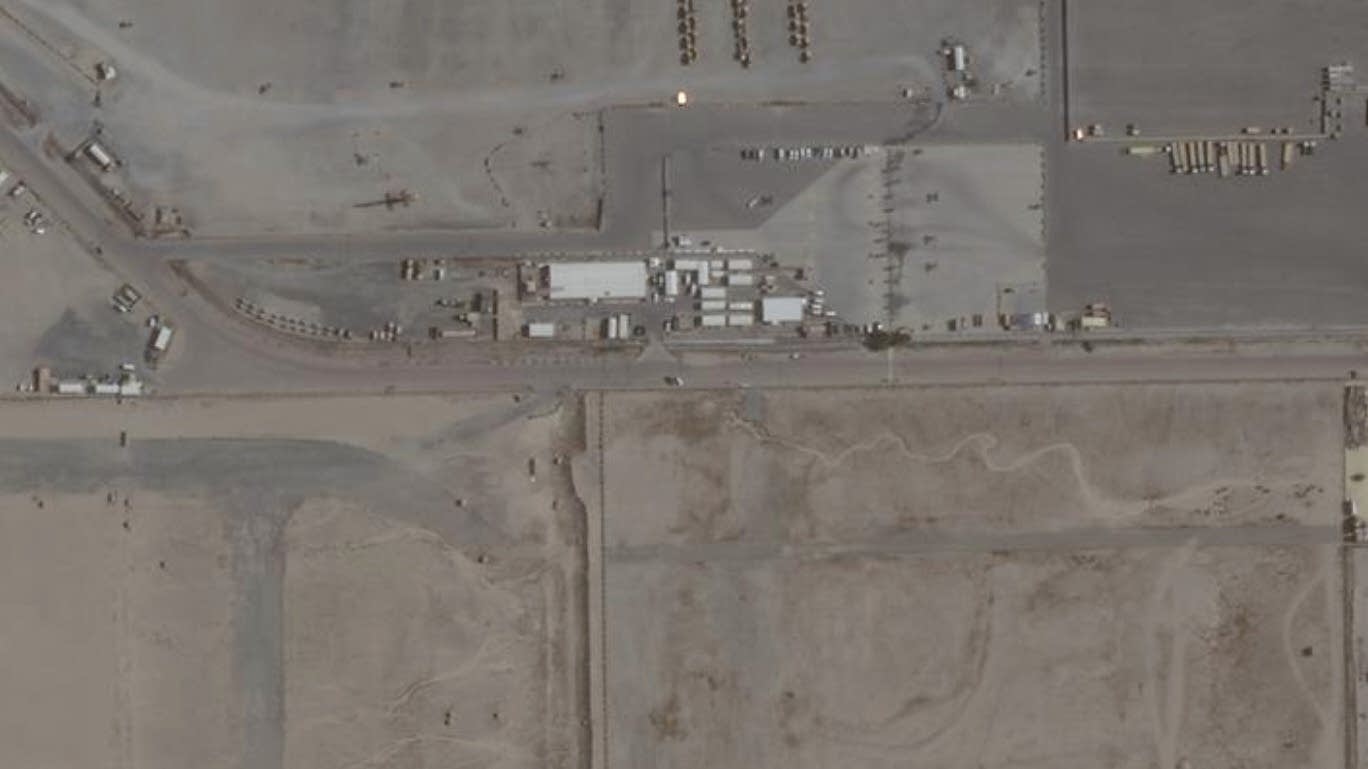
An Iranian drone strike on an operations center at a civilian port in Kuwait killed U.S. soldiers, raising the prospect of heightened U.S.-Iran tensions and potential regional escalation. The attack on port infrastructure creates near-term risk to shipping and logistics in the Gulf and could spur defensive positioning in energy and defense-related assets; investors should monitor developments for potential moves in oil, shipping insurance costs and defense contractors.
Market structure: Immediate winners are defense contractors (LMT, NOC, RTX) and safe-haven commodities (gold) and Treasuries; losers are short-haul travel/cruise/air cargo (UAL, AAL, CCL/RCL) and exposed port/logistics operators (smaller-cap terminal operators/shippers). Pricing power should shift toward insurers and war-risk underwriters (higher premiums) and energy majors (XOM, CVX) if shipping risk grows; freight rates and rerouting costs can lift container/charter rates by a discrete +10–30% on short disruptions.
Risk assessment: Tail risks include a regional escalation that pushes WTI >$120/bbl (low prob, high impact) or attacks on chokepoints that disrupt ~20%+ of Gulf export flows. Time horizons: days — volatility spike, flight cancellations; weeks–months — oil and defense re-rating, insurance repricing; quarters–years — structural lift to defense budgets and persistent higher shipping insurance. Hidden dependencies: war-risk premiums for tankers, port operator contractual indemnities, and NATO/coalition troop posture could rapidly change exposures.
Trade implications: In the short run (0–30 days) expect safe-haven rallies (GLD, TLT) and option vol spikes (VIX). Over 1–6 months, defense equities and selective energy names should outperform; travel and cruise names should underperform until bookings recover >25% month-over-month. Monitor oil at $95 WTI as a tactical trigger for scaling energy exposure and VIX >25 to trim risk-on positions.
Contrarian angles: Consensus will bid defense and energy immediately; the market may over-penalize airlines — a >15% selloff creates a tactical long if bookings normalize within 3 months (historical parallels: short-lived 2003/2019 shocks). Unintended consequence: persistent higher insurance/freight costs can permanently compress margins for integrators (FDX, UPS) and boost freight-forwarding pricing power.
AI-powered research, real-time alerts, and portfolio analytics for institutional investors.
Request TrialOverall Sentiment
moderately negative
Sentiment Score
-0.50
