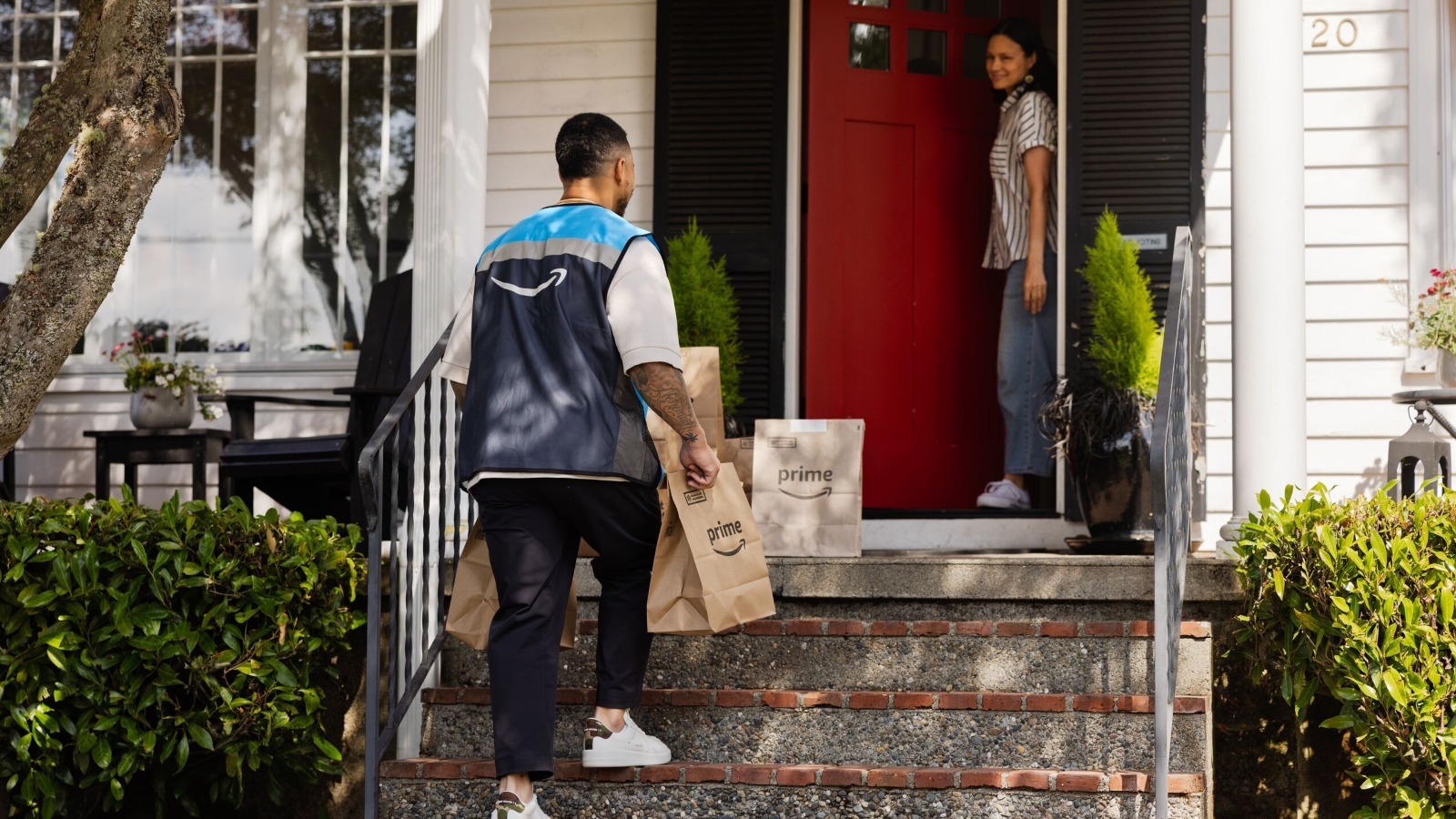
Amazon is doubling down on grocery and fast-delivery operations, reporting over $150 billion in grocery gross sales and 150 million annual grocery shoppers while serving groceries in 5,000+ U.S. cities. It expanded Same-Day Delivery to include perishables in 2025—perishable sales via that channel grew 40x since January 2025—and is testing ultra-fast 30-minute Amazon Now; concurrently Amazon plans to open 100+ new Whole Foods stores (including five more Daily Shop locations by end-2026) after 40% sales growth and 550+ locations. To prioritize formats that scale economically, Amazon will close Amazon Go and Amazon Fresh physical stores and convert select sites to Whole Foods, while commercializing its Just Walk Out checkout technology across fulfillment centers and third parties.
Market structure: Amazon’s grocery push (Same‑Day perishable rollout in 5,000+ locales, perishable sales +40x since Jan 2025; Whole Foods >550 stores, +40% sales) shifts share toward vertically integrated omnichannel players. Winners: AMZN (AMZN) via higher frequency, wallet share and licensing of Just Walk Out; regional partners (WMK) gain incremental online demand. Losers: pure brick‑and‑mortar grocers that lack scale in speedy delivery (mid‑tier KR/WMT exposure) and third‑party last‑mile carriers if Amazon internalizes volume.
Risk assessment: Tail risks include antitrust scrutiny (FTC enforcement or forced divestitures), food‑safety recalls, and union/labor roll‑outs raising opex; each could compress margins by 200–500 bps over 12–24 months. Immediate (days): headline reactions to store conversions; short (weeks–months): execution of Same‑Day expansions and cadence of new Whole Foods openings; long (1–3 years): network effect on grocery share and durable capex burden. Hidden dependencies include cold‑chain logistics and local supplier capacity; catalysts are quarterly Same‑Day penetration metrics and disclosure of perishable economics.
Trade implications: Tilt portfolio toward AMZN exposure (shares or structured calls) with a 6–18 month horizon to capture retail share gains and licensing income; underweight KR (Kroger) and selectively WMT for potential share loss in urban Same‑Day corridors. Use relative value: long AMZN vs short KR sized 1.5–2:1 to reflect scale advantage. Options: prefer financed call spreads (buy 6–9 month 5–10% OTM, sell 20–30% OTM) to capture upside while financing capex noise.
Contrarian angles: Consensus underestimates near‑term margin pressure from Same‑Day perishables — rapid growth can be cash‑hungry and depress free cash flow for 2–4 quarters, so AMZN’s positive headline may be priced in. Conversely, converting Amazon Fresh/Go to Whole Foods removes duplicative footprints and could lift long‑run store economics — a catalyst that could re-rate AMZN after 12–24 months if comp metrics hold above +5% YoY.
AI-powered research, real-time alerts, and portfolio analytics for institutional investors.
Request DemoOverall Sentiment
moderately positive
Sentiment Score
0.45
Ticker Sentiment
