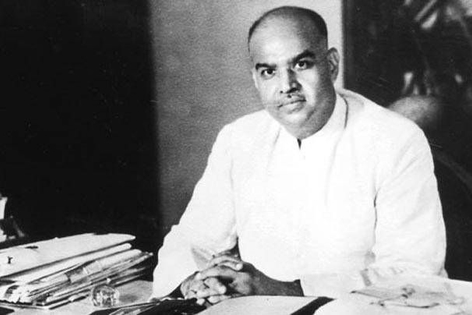
The article frames the BJP's 2026 West Bengal Assembly win as a historic landslide and a symbolic reclamation of the state where the Bharatiya Jana Sangh first won seats in 1952. It highlights the ideological legacy of Syama Prasad Mookerjee, including his role in opposing Partition-era United Bengal and in founding the Jana Sangh on 21 October 1951. The piece is primarily political and historical commentary, with limited direct market relevance.
The immediate market read is not a broad policy shock but a change in state-capital allocation at the margin. A dominant regional mandate in India’s largest eastern state typically increases the probability of cleaner execution in infrastructure, land aggregation, urban services, and industrial permitting over the next 6-18 months, which is constructive for domestically oriented cyclicals and companies with meaningful exposure to eastern India. The bigger second-order effect is not the state itself, but the signaling to national contractors, lenders, and industrial land banks that project timelines may compress if political fragmentation around approvals declines.
The underappreciated beneficiary set is the logistics and consumption stack that feeds off corridor build-out: ports, rail-linked freight, warehousing, cement, electrical equipment, and organized retail. If governance improves even modestly, the operating leverage is high because eastern India remains underpenetrated versus western and southern states; that means incremental capex can translate into outsized volume growth rather than just substitution. However, the trade is time-sensitive: the market will likely price the mandate immediately, while actual earnings uplift will lag by 2-4 quarters and depend on tender flow, not rhetoric.
Contrarianly, consensus may overestimate the durability of sentiment and underestimate the risk of policy overreach or labor/land backlash if the new administration moves too aggressively on symbolic priorities versus execution. Also, if national politics are already embedding this outcome into stock prices, the first-order beta may be in, leaving only the less obvious winners intact. The best risk/reward is to own enablers of capex and logistics rather than politically exposed names; those businesses can benefit even if the ideological narrative fades.
Tail risk is a reversal in center-state coordination or delays in fiscal transfers that would push projects out by 6-12 months and hit local industrial names first. Conversely, if the new government uses its first 100 days to clear stuck projects, the market could see a second leg in order inflows into contractors and capital goods. The key catalyst to watch is the first budget, land-reform announcements, and the pace of award wins rather than headline politics.
AI-powered research, real-time alerts, and portfolio analytics for institutional investors.
Request DemoOverall Sentiment
moderately positive
Sentiment Score
0.70
