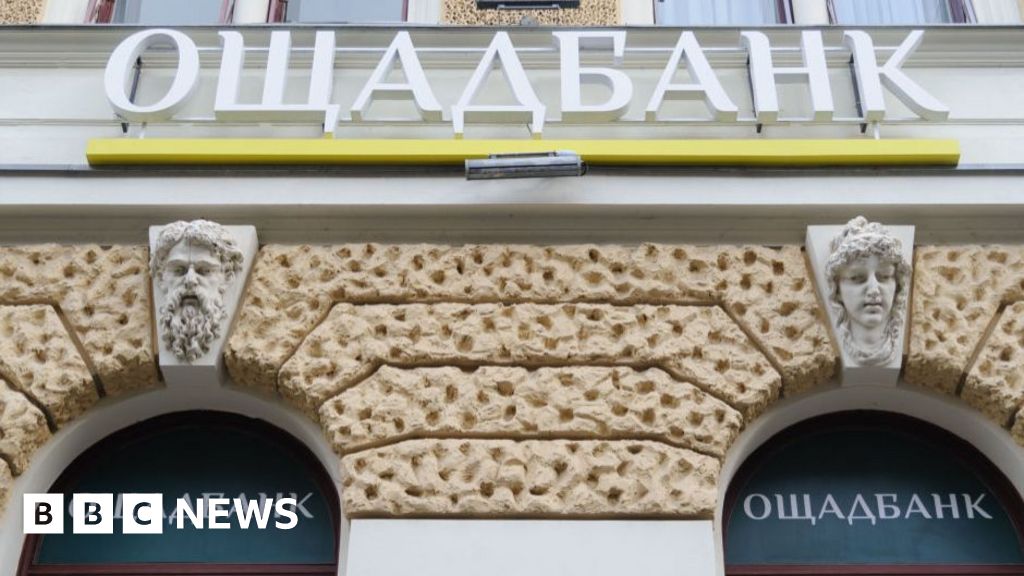
Hungary detained seven Ukrainian bank workers transporting $80m and 9 kg of gold in a cash convoy, with Hungarian tax authorities citing suspected money laundering while Ukraine's Oschadbank calls the shipment routine; Budapest says it has overseen large cash and gold transits this year ($900m, €420m and 146 kg of gold). The incident has escalated into a diplomatic row amid Prime Minister Viktor Orbán's election campaign and his blockade of a €90bn EU aid package to Ukraine tied to a dispute over the Druzhba oil pipeline, raising short-term political and energy-supply risks in the region and creating uncertainty around cross-border banking logistics and seized assets.
Market structure: The incident raises operational/legal risk for cross‑border cash/logistics providers and reputational risk for Ukrainian banks using cash corridors; expect short‑term pressure on Hungarian banking names (OTP) and on logistics/insurer peers. Energy winners are non‑Russian suppliers and traded oil (Brent/WTI) as the Druzhba disruption tightens European refined product balances; a sustained outage could lift regional refining margins by 5–10% over 1–3 months. Precious metals and miners (GLD/GDX) are likely beneficiaries if seizures prompt safe‑haven flows; the article’s note of >$1bn+ equivalents transiting Hungary this year signals systemic operational scale, not an isolated $80m event.
Risk assessment: Tail risks include (1) escalation to EU sanctions or reciprocal asset seizures (low prob, high impact), (2) a freeze of cash corridors causing Ukrainian liquidity stress and contagion to regional banks, and (3) election‑driven policy shocks in Hungary that last quarters. Immediate (days) risks: FX volatility (HUF) and equity gap moves; short term (weeks–months): energy price shock and higher CDS/borrowing costs for Hungarian sovereign/banks; long term (quarters+): rerouting of supply chains away from Hungary and persistent political risk premium. Hidden dependency: EU funding blockage is the central lever — restoration would materially reverse moves.
Trade implications: Prioritize directional trades with explicit timeboxes. Energy: 1–3 month long on Brent via ICE Brent futures or XLE sized 2–4% portfolio to capture a 5–8% price move if Druzhba remains offline. Gold: 2–3% long GLD and 1% long GDX for 3–6 months to capture 3–7% upside on risk‑off flows. Hungary/FX: establish a 1–2% notional long EUR/HUF (short HUF) via forwards or spot with a 30–90 day horizon; add if EUR/HUF rallies >3% from entry. Hungary equity/bank: consider a 2–3% short in OTP (ticker OTP) for 1–3 months—target −10% if EU aid stays blocked; stop +6%.
Contrarian angles: The market may overprice permanent decoupling — if Orbán secures election and reopens Druzhba or a negotiated EU compromise restores funding, Hungarian assets and HUF could recover 8–15% over 3–6 months. Consider a mean‑reversion pair: long MOL (Hungarian refiner; recovers from reopened flows) and short OTP to express recovery in industrial cashflows vs continued regulatory risk; enter if MOL underperforms OTP by >7% over 10 trading days. Watch these catalysts: Hungarian election result (within ~1 month), EU Council decisions on aid (30–60 days), and any formal asset seizure rulings in Hungarian courts.
AI-powered research, real-time alerts, and portfolio analytics for institutional investors.
Request TrialOverall Sentiment
moderately negative
Sentiment Score
-0.45
