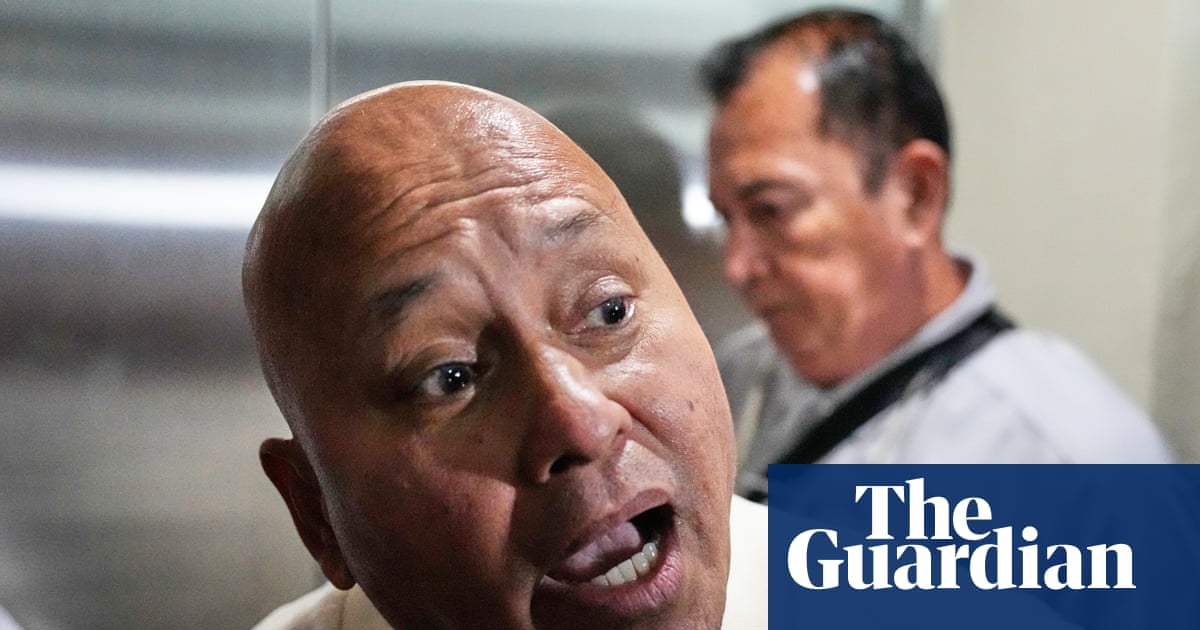
The ICC has issued an arrest warrant for Philippine Senator Ronald dela Rosa over alleged crimes against humanity tied to Duterte’s 2016-2022 drug war, and authorities say he is currently a fugitive. The case centers on claims that he helped implement and legitimize killings, with the warrant unsealed this month and law enforcement ordered to apprehend him after the supreme court rejected his bid to block arrest. The news is politically significant for the Philippines but has limited direct market impact.
This is less a one-off legal headline than a test of whether Philippine institutions will actually enforce supranational legal risk against entrenched political networks. The first-order market impact is modest, but the second-order effect is a meaningful rise in governance risk premium for Duterte-aligned assets and any domestic campaign financing ecosystem tied to them. In EM terms, this is a classic “rule-of-law re-rating” event: it can remain contained for days, but if enforcement proceeds it tends to widen until investors see whether the state is willing to absorb political retaliation.
The more important catalyst is not the arrest itself but the follow-through. If authorities move decisively, expect short-term volatility in local financials, casinos, property, and consumer names with exposure to politically connected capex, procurement, or licensing decisions; if they hesitate, the market reads that as institutional weakness, which is usually worse for valuations over a 3-12 month horizon. The hidden beneficiary is not an obvious long but the anti-corruption / governance factor: names with cleaner balance sheets, diversified revenue, and lower political dependency tend to outperform when headline risk rises.
The contrarian take is that the immediate selloff in “Philippines risk” may be overdone if investors assume broader contagion. This case is highly personalized; unless it spills into coalition instability, the index-level macro damage should be limited, especially with no direct read-through to external balances or corporate earnings. The real medium-term risk is retaliation inside the ruling alliance: if this turns into a succession fight around Sara Duterte and aligned senators, the reform agenda stalls and policy unpredictability rises, which matters more for local multiples than the legal case itself.
From a trading perspective, the best expression is relative rather than outright EM short. A basket short of politically sensitive Philippine domestic names versus a long in cleaner ASEAN peers offers better convexity than selling the index, because the market may quickly fade the headline while idiosyncratic governance discounts persist. Near-term, any rally on “search and containment” news is an opportunity to re-establish downside protection, since institutional enforcement uncertainty should stay elevated for weeks.
AI-powered research, real-time alerts, and portfolio analytics for institutional investors.
Request DemoOverall Sentiment
strongly negative
Sentiment Score
-0.60
Ticker Sentiment
