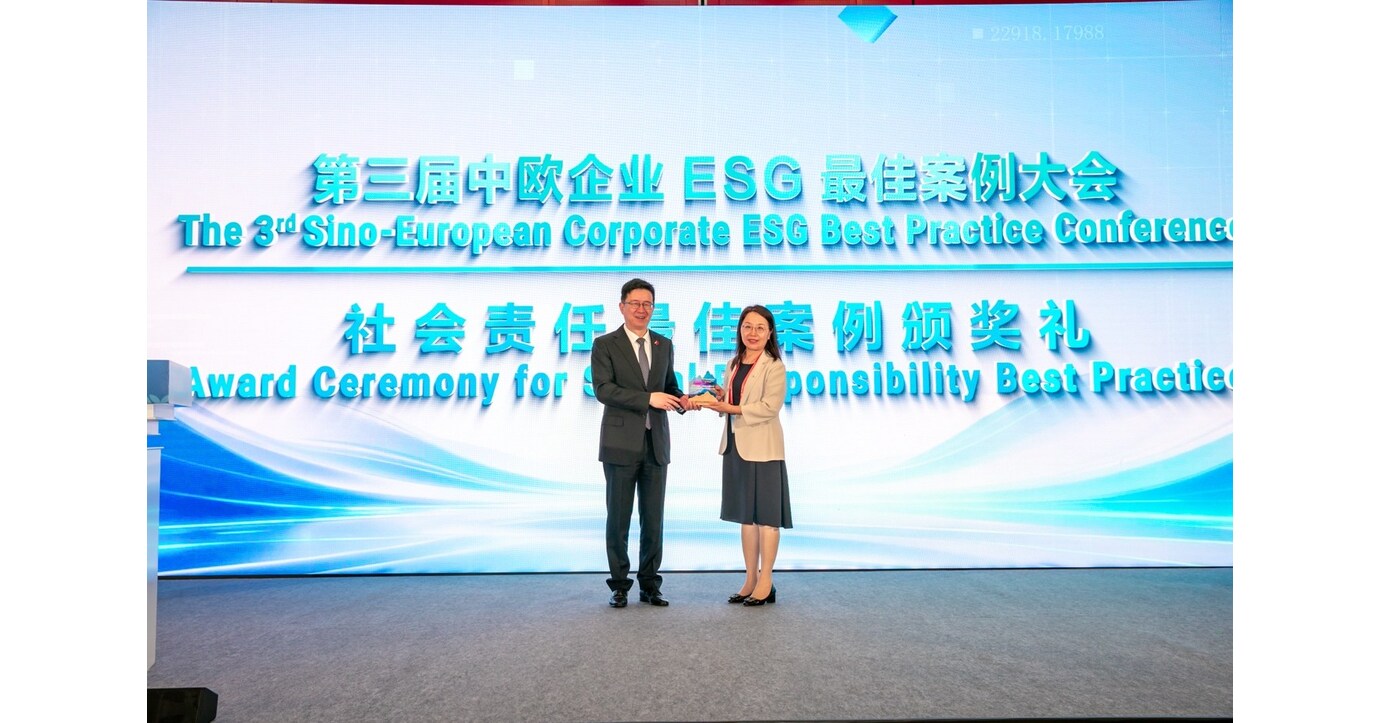
Sinopec received a “Social Responsibility Best Practice” award at the 3rd China-Europe ESG best-practice conference (June 26, Mainz, Germany), citing its green innovation and end-to-end carbon footprint management across the product value chain. The company also became the first to achieve mutual recognition with BASF on carbon- and footprint-calculation methodologies, creating a cross-border model for emissions accounting. Overall, the news is constructive for ESG credibility but is unlikely to materially move near-term financials.
This reads less like a tradable earnings event and more like a credibility signal for cross-border carbon accounting. The real mechanism is procurement access: if Sinopec can produce supplier-acceptable product-level carbon data that European buyers trust, it reduces friction in commodity chemical sales and can modestly improve retention in tenders where Scope 3 screening is becoming standard. The second-order winners are large industrials that can consume audited carbon data across their supply chains; the losers are smaller refiners and chemical producers that still cannot document emissions intensity at the product level.
Near term, I would not expect a P&L impact or multiple re-rating in SNPMF from an ESG award alone. The catalyst window is 1-3 months for investor-relations follow-through and customer references, but the structural effect is 6-18 months if product carbon methodology becomes embedded in China-Europe trade flows and financing. The key falsifier is simple: if Sinopec’s next capital plan does not tilt meaningfully toward low-carbon capex or if European customers never cite this methodology in sourcing, the market should ignore the headline.
Contrarian view: consensus often overweights the reputational upside and underweights the operational burden of ESG disclosure in heavy industry. A standardized carbon framework can become a barrier to entry for peers without metered data, but it can also expose Sinopec to scrutiny if the numbers do not translate into actual emissions reduction. Net: mildly positive for long-duration competitiveness, but not enough to override oil/refining fundamentals in the next quarter.
AI-powered research, real-time alerts, and portfolio analytics for institutional investors.
Request DemoOverall Sentiment
mildly positive
Sentiment Score
0.25
Ticker Sentiment
