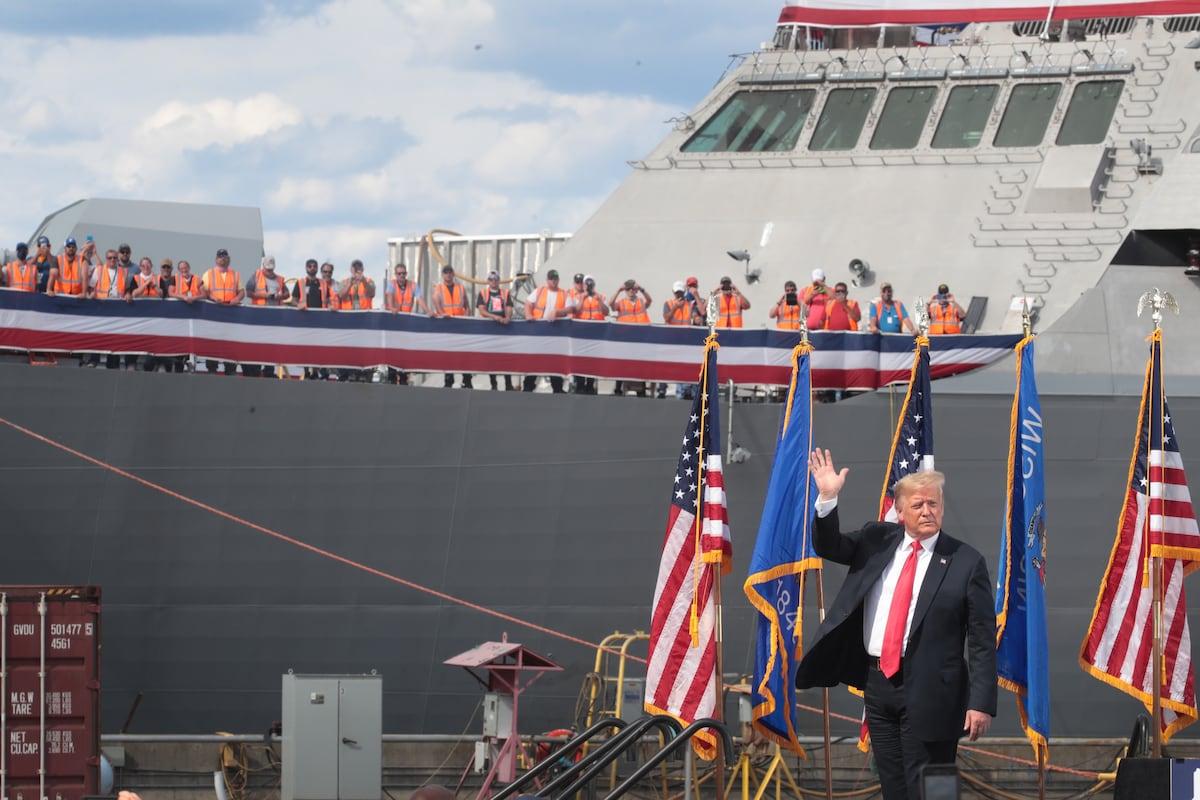
The U.S. Navy is cancelling the Constellation-class frigate program, terminating the last four ships on contract that have not begun construction while keeping the first two being built at Fincantieri’s Wisconsin yards under review. The initial six-ship effort is valued at roughly $5.5 billion according to published updates and sources, with continuing work on the first two plus indemnities put at about $3 billion and planned replacement orders near $2 billion; Fincantieri has invested over $800 million in U.S. yards and employs ~3,750 people. The move follows GAO findings of major design changes, weight growth and delays, and reflects a strategic Navy decision to accelerate fleet expansion with new classes — a negative near-term hit to the Constellation contractor but with indemnities and potential new U.S. ship orders partially mitigating industry impact.
Market structure: Cancellation centrally redistributes Navy backlog from an Italy-origin FREMM derivative to U.S. yards and large primes that can scale production fast. Immediate winners are large U.S. defense primes and yards with proven throughput (HII, GD, LMT, NOC) and steel OEMs (NUE) as program volume is reallocated; clear loser is Fincantieri (FCT.MI) and niche FREMM suppliers where ~$2.5–3.0bn in cancellable work sits.
Risk assessment: Tail risks include prolonged litigation/indemnity disputes, congressional reprogramming that reduces FY2026 funding, or a workforce exodus in Marinette that undermines capacity—each could move equity prices +/-30% over 3–12 months. Near-term (days–weeks) volatility will center on indemnity terms and DoD reallocation guidance; medium-term (3–12 months) risk is constrained yard capacity driving bid inflation; long-term (1–3 years) upside if Navy consolidates to fewer standardized classes and accelerates build rate.
Trade implications: Favor large-prime backlog exposure and ETFs (ITA) via 1–3% sized positions; short or buy puts on FCT.MI sized 1–2% to reflect lost revenues and indemnity uncertainty. Use 9–18 month call spreads on HII/GD to capture backlog reallocation with defined risk; reduce mid/small-cap shipbuilder exposure by ~50% and rotate into primes and steel names.
Contrarian angle: Market may underprice the benefit to big integrators from faster fleet pacing—standardization + scale can lift margins 200–400bps over 2 years. Conversely, consensus underestimates capacity constraints: if yards cannot ramp, cost inflation and schedule slips could benefit incumbents but hurt margins, so size trades with explicit stops and prefer option-defined-loss structures.
AI-powered research, real-time alerts, and portfolio analytics for institutional investors.
Request DemoOverall Sentiment
moderately negative
Sentiment Score
-0.35
