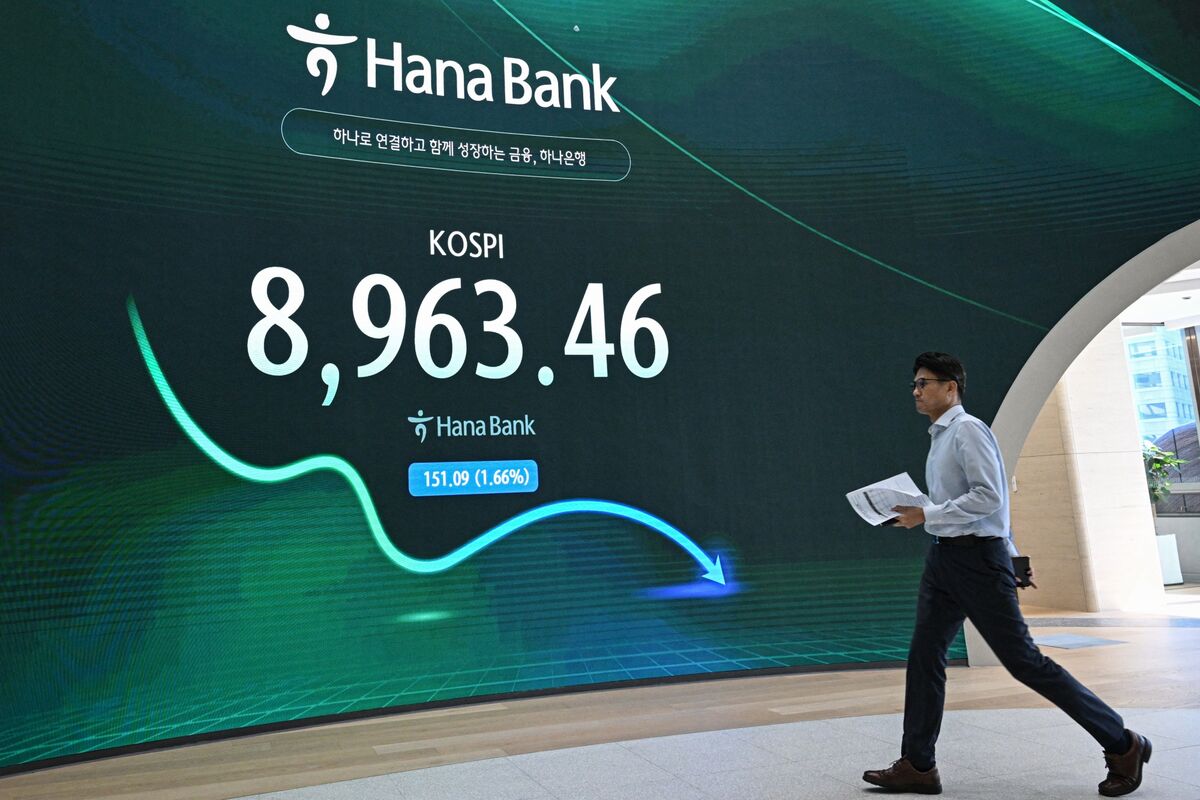
Leveraged ETFs tracking Samsung Electronics and SK Hynix were likely forced to sell a combined $6 billion of the chipmakers’ shares on Tuesday to reset leverage ratios. That selling represented about 14% of turnover in Samsung and SK Hynix, highlighting how leveraged products can intensify downside moves in single stocks. The flow-driven rout is negative for near-term sentiment and may pressure Korean chip equities further.
This is less a fundamental read-through on Korean semis than a microstructure stress event. When a product structure is mechanically forced to sell into falling prices, it creates a self-reinforcing liquidity vacuum: passive and derivative-linked holders widen spreads, intraday volatility jumps, and discretionary buyers tend to step back until forced selling is exhausted. The immediate losers are the underlying large-cap chip names, but the second-order loser is any factor basket or regional ETF with concentrated exposure to Korea semis, since the same flow shock can bleed into index rebalance and risk-parity deleveraging.
The bigger implication is that leverage reset rules can act like a hidden vol targeter, especially in single-name products tied to a few dominant constituents. If this continues for several sessions, it can suppress near-term price discovery and delay the usual dip-buying response, because every rebound mechanically triggers more rebalancing supply rather than creating clean oversold signals. That said, once the forced flow clears, the rebound can be sharp because the incremental seller disappears while fundamental buyers are still benchmarked to the same earnings base.
Consensus may be overestimating how durable this move is if it treats it as a repricing of chip fundamentals. The better read is that this is primarily a timing event, not a regime change: the risk window is days to a couple of weeks, not quarters, unless the drawdown bleeds into broader Korean equity de-risking or prompts product outflows. The contrarian opportunity is to fade the panic after forced selling peaks, but only once turnover normalizes and intraday ranges compress.
From a competitive lens, weaker price action in the leaders can temporarily benefit second-tier memory and component suppliers outside the direct ETF flow, as relative-value desks rotate to cleaner liquidity. But if the decline extends, capex expectations across the supply chain can compress, which is a longer-duration negative for equipment vendors and materials names that rely on a stable DRAM/NAND upcycle. The key catalyst to watch is whether underlying spot and forward demand data remain intact enough to separate flow from fundamentals.
AI-powered research, real-time alerts, and portfolio analytics for institutional investors.
Request DemoOverall Sentiment
moderately negative
Sentiment Score
-0.35
