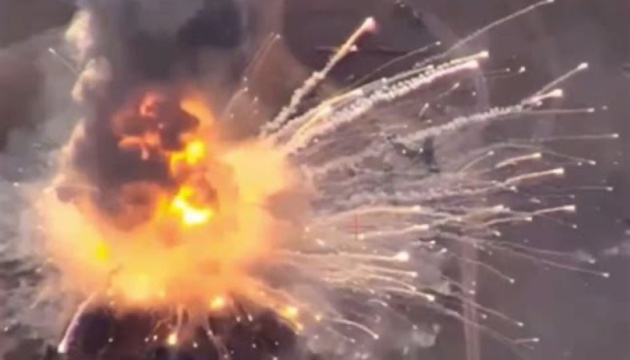
Ukraine's Unmanned Systems Forces said it destroyed a drone training and production facility in Donetsk region, eliminating at least 65 enemy personnel and four repaired Tigr armored vehicles. The strike also destroyed ammunition and UAV components, reducing the enemy's ability to train drone crews, repair armor, and support front-line units. The article is military-focused and does not indicate a direct market-moving financial event.
This is a marginal tactical negative for any asset tied to Russian ground-force persistence, but the more interesting read is on drone-warfare throughput: the target set suggests Ukraine is trying to degrade not just operators, but the adjacent ecosystem of training, repair, and consumables. That matters because these capabilities scale nonlinearly; taking out a small number of instructors, repair nodes, and component stock can temporarily reduce sortie quality and recovery rates across a wider area than the headline body count implies.
The listed tickers don’t have a direct earnings linkage here, so the main market angle is defense supply-chain sentiment rather than company-specific fundamentals. If strikes on drone-production and repair nodes become a pattern, the second-order effect is stronger demand for counter-UAS, ISR, EW, and protected vehicle kits rather than legacy armor alone; that favors higher-margin electronics and systems integrators over commodity platform names. In contrast, any vehicle OEM exposed to armored utility fleets sees only a transient reputational overhang unless there is evidence of accelerated attrition replacing damaged inventory.
The contrarian point is that battlefield adaptation usually compresses the benefit window: training pipelines can be relocated quickly, dispersed into smaller cells, and partially digitized, so the operational disruption may last days to weeks, not quarters. Markets often overprice one-off strike videos as structural attrition when the real impact is a temporary increase in replacement cost and logistics friction. If similar hits keep recurring, then the trade shifts from a headline reaction to a sustained premium in defense-electronics multiples.
Bottom line: this is a risk-off geopolitical event with low direct alpha for TIGR, but it modestly supports the broader defense modernization complex if the campaign broadens. The cleaner expression is to own the enablers of drone defense and battlefield networking rather than legacy vehicle makers.
AI-powered research, real-time alerts, and portfolio analytics for institutional investors.
Request DemoOverall Sentiment
moderately negative
Sentiment Score
-0.35
Ticker Sentiment
