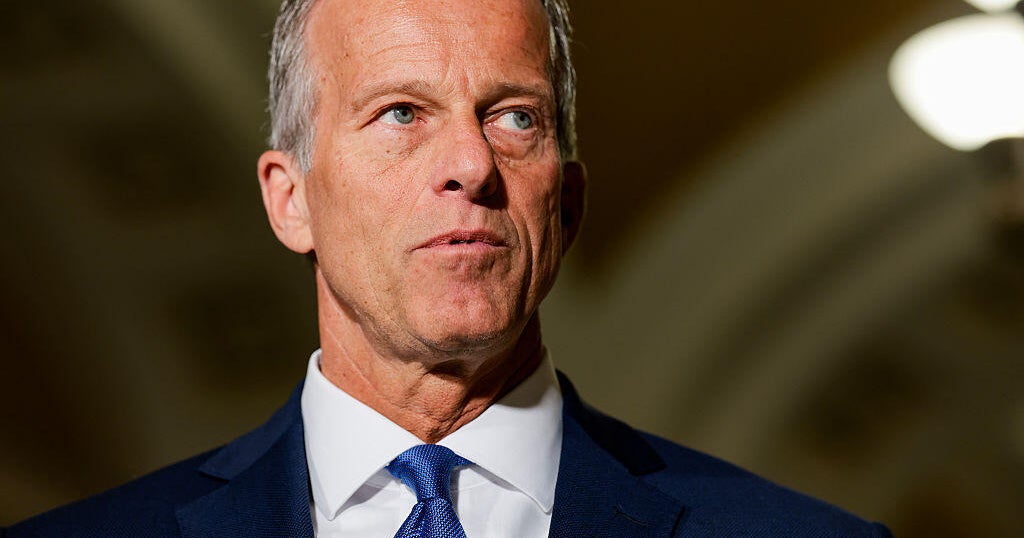
Congress will miss its Memorial Day deadline on a $72 billion reconciliation package after GOP opposition to a new $1.776 billion DOJ anti-weaponization fund derailed plans in both chambers. The bill, which would fund ICE and Border Patrol for three years, now faces delay until lawmakers return on June 1, with additional friction over a separate $1 billion Secret Service/East Wing ballroom provision. The setback highlights rising intra-party resistance and makes passage before the June 1 target less likely.
The immediate market read is not about immigration funding itself but about procedural fragility: when a supposedly narrow, must-pass package can be derailed by intra-party veto points, headline risk extends from this week into the post-recess window. That raises the odds of a short-term squeeze in anything trading on a clean June funding path, while also increasing the probability of more concession-heavy language that weakens the eventual bill’s fiscal punch.
The more important second-order issue is governance risk around IRS-linked settlement mechanics. Even if the DOJ fund remains legally separable from reconciliation, the optics of off-budget discretion and weak oversight create a template for litigation, clawback demands, or inspector-general scrutiny later this summer. That matters for the IRS ecosystem because it reinforces uncertainty around enforcement capacity, staffing, and administrative bandwidth, which can show up with a lag in collections efficiency and rule implementation rather than in same-day headlines.
For ICE, the setup is asymmetrically better than the market likely assumes. The core funding need is still bipartisan enough to survive, but the timing slips by at least one session and probably compresses implementation into late Q3, which reduces near-term sentiment support for contractors and adjacent service providers. If the bill re-emerges stripped of controversial add-ons, the beneficiary is not the most ambitious policy scope but the base-case federal spend stream; that favors vendors with existing DHS/immigration exposure and penalizes names priced for a faster ramp.
Consensus is probably overestimating how much this becomes a clean partisan win/loss trade. The more durable signal is that Trump-aligned pressure can raise the cost of coalition management inside the GOP, which increases the odds of more policy drag, not necessarily policy reversal. In other words, the right trade is against timing certainty, not against the underlying funding trajectory.
AI-powered research, real-time alerts, and portfolio analytics for institutional investors.
Request DemoOverall Sentiment
moderately negative
Sentiment Score
-0.20
Ticker Sentiment
