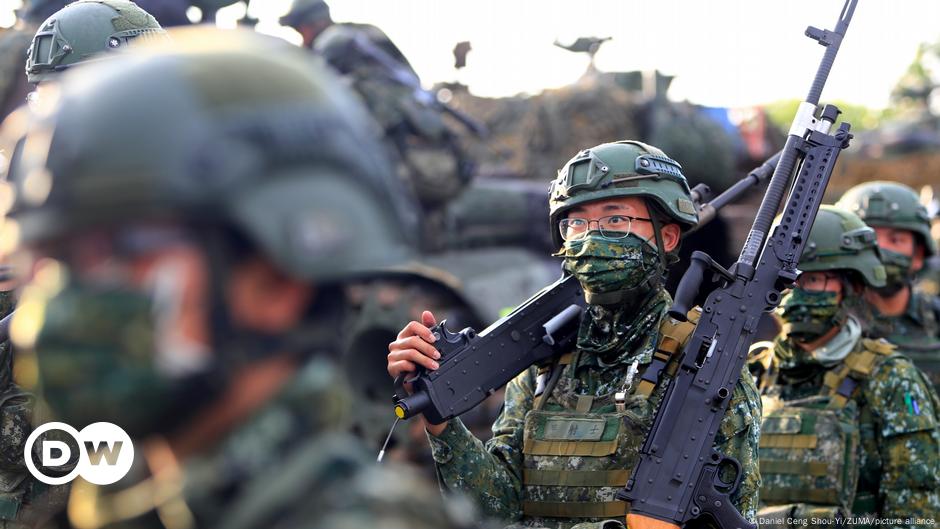
Taiwan is pressing the Trump administration to approve a second arms package, reportedly worth about $14 billion, after Trump said he has not decided on future sales following his summit with Xi Jinping. The article highlights renewed uncertainty around US commitment to Taiwan under the Taiwan Relations Act and the potential for heightened cross-strait tensions. While no decision has been made, the issue could materially affect defense-related sentiment and broader geopolitical risk.
The key market signal is not Taiwan demand for weapons; it is the potential re-pricing of US signaling credibility after a high-level China dialogue. If Washington slows or dilutes the package, the immediate loser is not just Taipei but the broader US deterrence premium across Indo-Pacific defense names and adjacent supply chains that depend on multi-year procurement visibility. The second-order effect is on inventory planning: primes with Taiwan-relevant export exposure may see ordering delays even before any formal denial, which tends to hit backlog expectations faster than reported revenue.
A delay would likely matter more than a denial in the near term because it creates a “frozen optionality” state: Taipei still budgets, but suppliers lose timing certainty. That uncertainty usually compresses multiples for defense electronics, missile, and maritime systems names first, then spills into smaller component vendors with less diversified end markets. In contrast, a fast approval would likely be read as evidence that trade normalization is not substituting for security commitments, supporting a relief bid in defense equities and in select Asian industrials tied to air-defense and C4ISR spending.
The contrarian angle is that the market may be over-focusing on headline approval odds and underpricing process risk. Even if the package is eventually approved, a prolonged review window can be enough to delay production ramps and push revenue into later quarters, which is more relevant for valuation than the binary outcome. The geopolitical tail risk is a misread by Beijing or Taipei leading to sharper rhetoric around formal independence; that would raise escalation risk over weeks to months, not years, and could force a more hawkish US response than current option pricing implies.
AI-powered research, real-time alerts, and portfolio analytics for institutional investors.
Request DemoOverall Sentiment
mildly negative
Sentiment Score
-0.15
Ticker Sentiment
