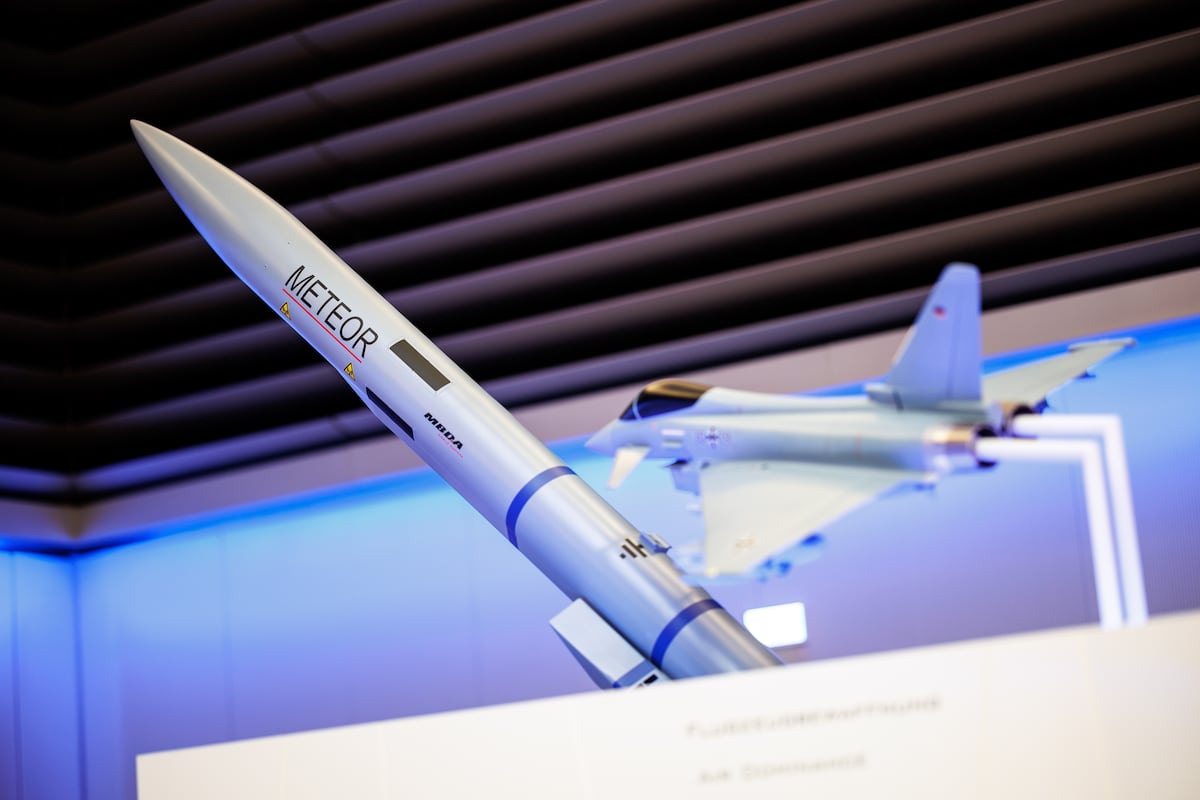
Sweden plans to donate 16 Gripen C/D fighter jets to Ukraine next year, and the aircraft may come equipped with MBDA Meteor long-range air-to-air missiles. If confirmed, Meteor would materially improve Ukraine’s ability to counter Russian Su-34 jets launching glide bombs from 60-70 km behind the front line. The article underscores ongoing battlefield pressure from nearly 7,000 guided aerial bombs in April and 7,987 in March, while noting the missile fit remains unconfirmed.
This is less a near-term revenue event for U.S. defense primes and more a signaling event that shifts the perceived feasibility of sustaining Ukraine’s air defense and strike-denial regime over the next 6-18 months. The key second-order effect is that a credible long-range air-to-air capability forces Russia to move its bomber and launch aircraft farther back, which reduces glide-bomb sortie efficiency and raises mission cost per strike. That matters because Russia’s current air campaign is optimized around standoff launch geometry; even a modest increase in required launch distance can materially cut bomb accuracy and sortie generation rates.
For RTX, the direct read-through is limited because this is not a new missile procurement win or a fresh U.S. budget catalyst; the market should not extrapolate a near-term step-up in earnings. The more relevant angle is indirect: if Ukraine demonstrates that Western fighter/missile integration can blunt glide bombs, it strengthens the export case for high-end air-to-air and integrated air defense ecosystems across Europe, where restocking cycles tend to be multi-year and politically durable. That dynamic is structurally favorable to Western missile inventory replenishment, but the timing is long-dated and susceptible to budget noise.
The contrarian risk is that the operational payoff is being overstated. Ukraine has already improved electronic-warfare disruption against glide bombs, so the marginal benefit of this capability may be smaller than headlines imply, especially if delivery is delayed, missile supply is limited, or training/integration bottlenecks slow sortie rates. The bigger upside surprise would come if this accelerates broader European procurement of Meteor-class and complementary air-defense systems, not from the first donated jets themselves.
Near term, the trade is more about relative positioning than outright defense beta: names tied to European air-defense replenishment and missile inventory rebuilds should outperform headline-sensitive primes if follow-on orders materialize. Over 3-6 months, watch whether Sweden/other NATO buyers convert this into additional Meteor and IRIS-T orders; that is the real revenue catalyst, not the donation announcement itself.
AI-powered research, real-time alerts, and portfolio analytics for institutional investors.
Request DemoOverall Sentiment
neutral
Sentiment Score
0.15
Ticker Sentiment
