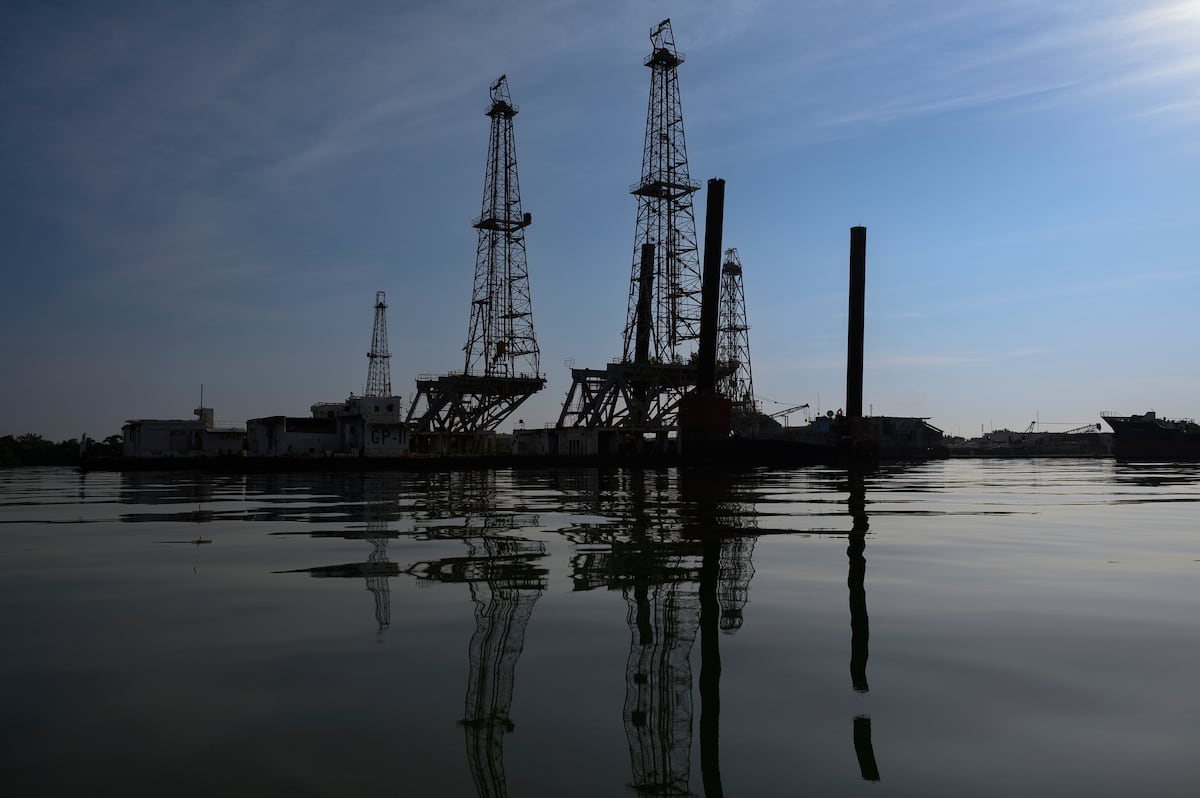
Venezuela holds the world’s largest crude reserves (Orinoco Belt accounts for more than 15% of global reserves) but production has collapsed to just over ~1.0 million barrels per day from ~3.5 million bpd in the late 1990s, with oil representing ~95% of foreign revenue. The U.S. has tightened sanctions and announced a “total and complete blockade” of sanctioned oil tankers while China has increased Venezuelan imports by ~95% this year via covert shipments; Chevron is the only major foreign firm still licensed to operate in partnership with PDVSA. Persistent underinvestment, expropriations and political risk keep Venezuelan output constrained, creating geopolitical supply risk and a large potential prize for foreign energy firms should sanctions or licensing change.
Market structure: Short-term winners are integrated majors with lawful footholds (Chevron/CVX) and specialist service firms able to rebuild heavy-sour production; losers are foreign contractors exposed to expropriation risk and Venezuela-dependent sovereign credit. A tightened tanker blockade could remove ~0.5–1.0 mbpd of seaborne supply, supporting crude +$3–8/bbl in weeks and increasing refinery crack spreads for complex refiners that process extra-heavy Venezuelan sour.
Risk assessment: Tail risks include a kinetic confrontation or broader sanctions that trigger insurance/transport spikes, shutting more of Venezuela’s ~1.0 mbpd offline and spiking Brent >$15/bbl (low-prob/high-impact). Time horizons: days–weeks for price/volatility shocks, months for sanctions regime shifts, and 3–10 years before Venezuelan production can meaningfully recover absent massive capex and governance change. Hidden dependency: access is as political as technical — license to operate (not geology) will drive returns.
Trade implications: Tactical trade: favor CVX exposure (as sole licensed major) and convex crude optionality; underweight pure-play foreign E&P names and Venezuelan sovereign debt. Options: use cost-limited call spreads on WTI (3-month) and 6–12 month 25-delta calls on CVX to capture asymmetric upside if sanctions roll back.
Contrarian angles: Consensus overestimates speed of re-entry — rebuilding PDVSA requires $20–50bn+ and years; markets may be overstating near-term upside for all majors. Also China’s 95% increase in offtake shows alternative buyers can entrench supply chains that deny U.S. firms an exclusive prize even after regime change.
AI-powered research, real-time alerts, and portfolio analytics for institutional investors.
Request DemoOverall Sentiment
moderately negative
Sentiment Score
-0.44
Ticker Sentiment
