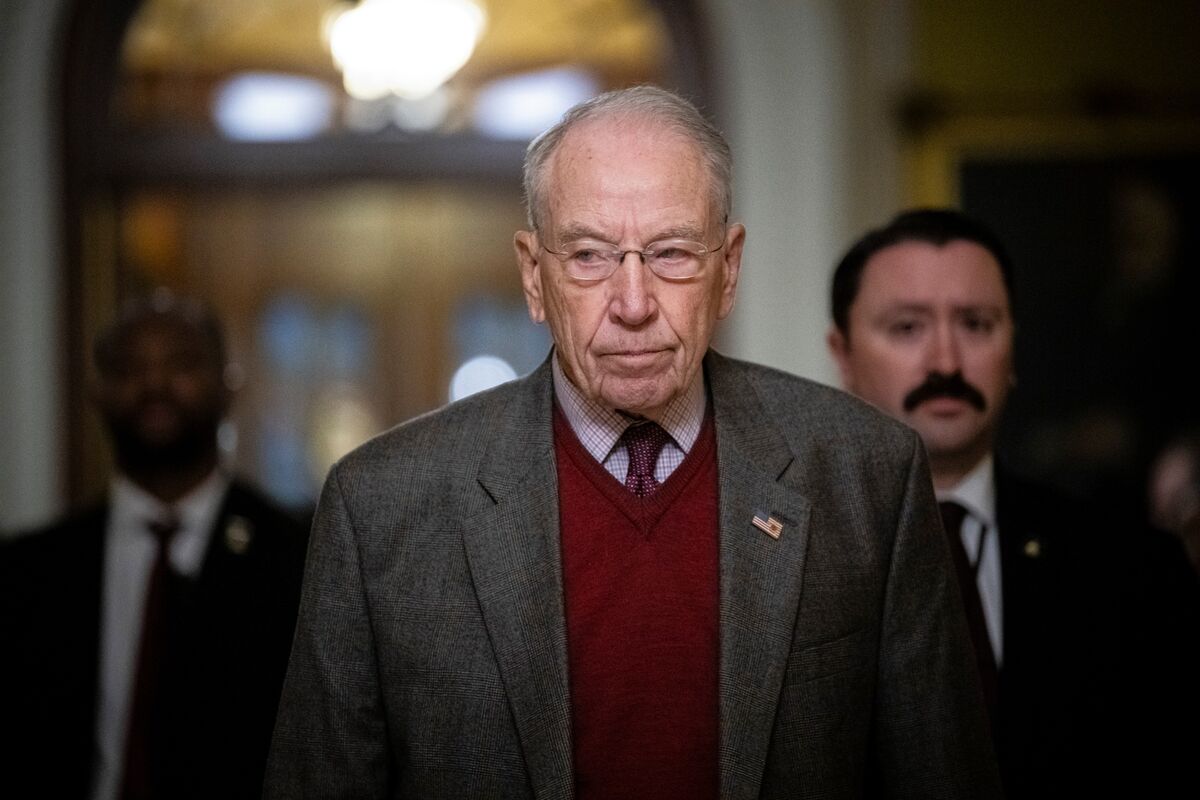
A top Senate Republican is seeking up to $1 billion in reconciliation funding for US Secret Service security upgrades, including adjustments tied to President Donald Trump’s planned White House ballroom. The proposal is part of legislation from Judiciary Committee Chairman Chuck Grassley and could advance without a filibuster, making it a notable but mostly policy-driven budget item rather than a direct market catalyst.
This is less about the headline spend itself than the signal it sends about the coming budget architecture: once security and ceremonial capital items get embedded in reconciliation, the barrier between politically sensitive spending and must-pass fiscal vehicles drops. That raises the probability of incremental federal outlays being front-loaded into the next 1-2 quarters, which is modestly supportive for contractors with exposed federal security, systems integration, and specialty construction revenue streams even if this specific dollar pool is small relative to total market cap.
Second-order beneficiaries are likely to be firms that can monetize compliance-heavy, site-specific work with limited competitive bidding: access control, perimeter security, surveillance, blast-resistant materials, and high-end interior buildout. The more important effect is on sentiment toward agencies and departments that have funding urgency but low public scrutiny; that can pull forward procurement timelines and widen margins for incumbents with existing federal contracts, especially if the government uses sole-source or IDIQ vehicles to accelerate execution.
The main risk is that the market overreads this as a broad defense-spending impulse when it is really a narrow, politically durable one-off. If reconciliation language stalls, or if the project becomes politically toxic and gets scaled back in committee, the spend could slip from months into years, and any beneficiaries tied to near-term award expectations would give back quickly. A broader reversal would come from any White House/appropriations push to keep the item symbolic rather than operational, which would reduce the probability of actual cash outlays despite the headline.
Contrarian view: the best opportunity may not be the obvious defense primes, which are too diversified to move materially on a sub-$1B item, but smaller-cap niche contractors and materials names where a handful of federal awards can re-rate backlog quality. The market likely underestimates how often politically sensitive projects create repeatable demand for engineering, security tech, and specialty labor beyond the initial build, making the long-duration revenue tail more important than the initial capex.
AI-powered research, real-time alerts, and portfolio analytics for institutional investors.
Request DemoOverall Sentiment
neutral
Sentiment Score
0.00
