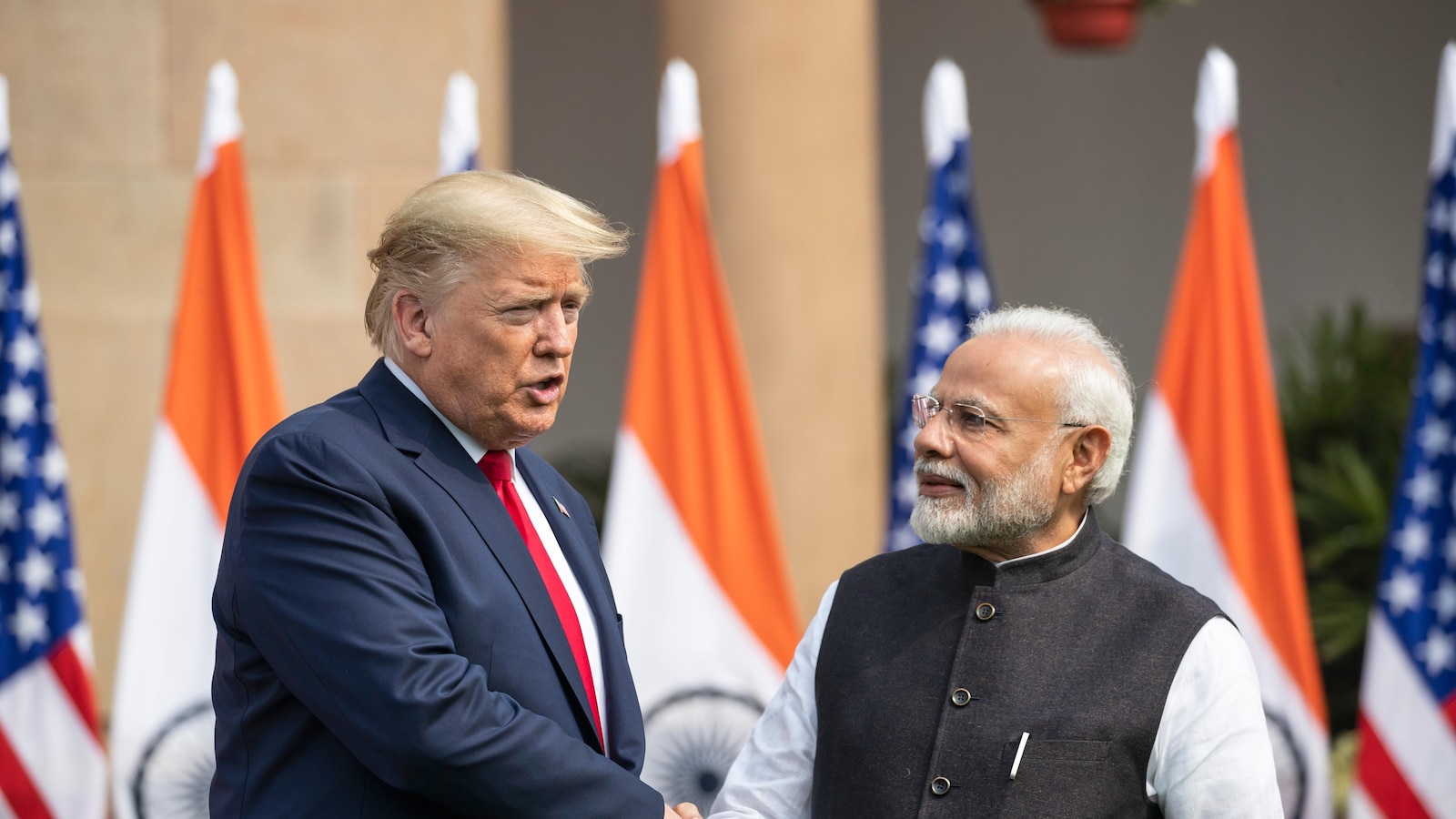
The U.S. announced a deal with India to reduce an import tariff on Indian goods from 25% to 18% and, according to the U.S., for India to phase U.S. import taxes to zero and purchase $500 billion of U.S. goods — claims the Indian government has not fully detailed. The move appears to remove a penal tariff tied to India’s purchases of discounted Russian crude (India became a major buyer of Urals), easing a combined tariff burden that had reached roughly 50% for some exporters; officials say sensitive sectors such as agriculture and dairy are protected. Key uncertainties — exact product coverage, timelines, and whether India will curtail Russian oil purchases — plus domestic political pushback and the implausibility of a rapid rise from ~$50bn to $500bn of U.S. imports mean market effects are conditional and likely moderate unless further specifics are released.
Market structure: A negotiated cut in U.S. tariffs on Indian goods (25%→18%) materially improves price competitiveness for Indian exporters (textiles, chemicals, pharma, IT services margins) and reduces effective U.S. import price for intermediates; however India’s stated protection for agriculture/dairy limits upside for U.S. farm exporters near-term. Expect accelerated Indian export volumes to U.S. over 6–24 months if rules-of-origin and product lists are clarified; market-share gains most likely in labor‑intensive manufacturing and advanced-tech components where tariffs were binding.
Risk assessment: Key tail risks include a) India publicly denying the deal or limiting scope (probability ~30% in 0–60 days), b) renewed U.S. political reversal ahead of elections (30–50% event risk into 2026), and c) India continuing Russian oil purchases (disrupting energy flows). Near-term volatility will hinge on formal documentation in 30–90 days; long-term trade re‑balancing toward the U.S. could take 5–15 years to reach the $500bn aspiration.
Trade implications: Tactical long exposure to India equities and INR is warranted on confirmation; conditional long U.S. agriculture names if India opens ag imports. Cross-asset: expect modest INR appreciation (1–4%) if capital inflows rise, tightening on 10y Indian yields and supportive for Indian sovereign credit; Brent volatility could increase if Russian crude offtake shifts.
Contrarian view: The market may overrate immediate U.S. farm export wins — $500bn is an aspirational target likely requiring decades; structural protections mean early winners are exporters of manufactured goods and intermediates, not bulk agriculture. Validate trades on two binary catalysts (public MOUs within 30 days; tariff schedule publication within 90 days) to avoid being long a headline before legal text.
AI-powered research, real-time alerts, and portfolio analytics for institutional investors.
Request DemoOverall Sentiment
mixed
Sentiment Score
0.05
