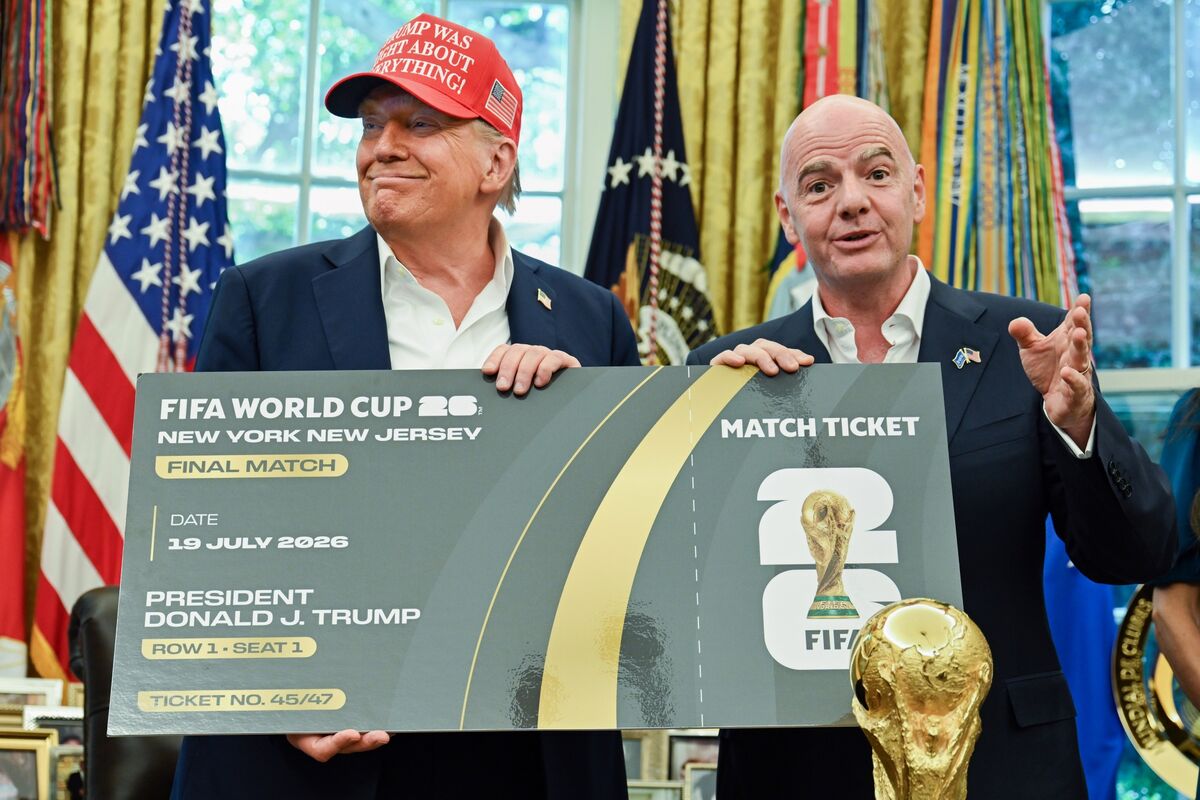
President Trump’s immigration crackdown and broader America First policies are creating diplomatic friction with countries — including World Cup co-hosts Canada and Mexico — that is complicating preparations to welcome international fans ahead of next year’s tournament. With the tournament draw approaching as a high-profile promotional milestone, the tension introduces reputational and operational risks for travel, hospitality and sponsorship revenues tied to the event, though immediate market disruption is likely limited.
Market structure: The immediate winners are event security and defense contractors (LHX, GD) and domestic broadcasters (CMCSA, FOXA) who capture advertising and rights revenue even if inbound tourism falters; losers are travel & leisure (MAR, HLT) and airlines with heavy Mexico/Canada routes (AAL, DAL, AC.TO). Expect a 5–10% downside to international attendance/bookings for affected venues over 6–12 months if visa or travel frictions persist, shifting pricing power toward firms selling security/logistics and digital remote-viewing ad inventory.
Risk assessment: Tail risks include diplomatic escalation (tariffs, reciprocal travel rules) that could cause 10–20% operational revenue shocks for border-city hotels/stadiums and force rescheduling/logistics costs; time horizons split into immediate sentiment moves (days–weeks), booking/FX effects (months), and reputational/branding impacts (quarters–years). Hidden dependencies include cross-border labor and equipment supply chains for venue build-outs and local tax/municipal support agreements; catalysts to watch in the next 30–90 days are official bilateral statements, FIFA interventions, and visa-policy memos.
Trade implications: Direct plays favor modest long positions in LHX/GD (6–12 month horizon) and selective long exposure to CMCSA/FOXA into World Cup ad cycles; hedge or trim MAR/HLT and buy 3–6 month put spreads on AAL/DAL sized to 1–3% NAV. FX: position USD vs MXN/CAD via 6-month call options (target 5–8% move, stop-loss 3%); enter trades around major policy announcements or the tournament draw and reassess within 30–90 days.
Contrarian angles: Consensus may overstate long-term tourism damage — domestic viewership and sponsorship dollars could rise 10–20% into the event, supporting broadcasters and streaming platforms even if cross-border travel falls. Historical parallels (1994 U.S. World Cup) show operations can absorb political noise; therefore avoid panic-selling hotels unless share drops exceed 15% or booking declines surpass 10% vs prior-year as measured over two consecutive months.
AI-powered research, real-time alerts, and portfolio analytics for institutional investors.
Request DemoOverall Sentiment
mildly negative
Sentiment Score
-0.25
